Why You Should Remove Personal Items When Staging a Home
Removing personal items is perhaps the most important thing when it comes to home staging. It can feel uncomfortable at first. Family photos, awards, and keepsakes represent meaningful memories. However, when preparing a home for sale, the focus shifts from telling your story to helping buyers imagine theirs.
Potential buyers don’t want to know about the family that lived on the property before and they don’t want to see empty rooms. Buyers want to see a blank slate full of potential. According to the NAR 93% of agents surveyed, recommend decluttering the home as the most important home improvement step. 68% of survey agents recommend depersonalizing the home to ensure buyer satisfaction. Depersonalizing a home is not about removing warmth or character. It is about creating a neutral environment where buyers can easily picture themselves living in the space.
Key Takeaways About Depersonalizing a Home
Before diving deeper, here are the main reasons why removing personal items matters during home staging:
- It helps buyers visualize themselves living in the home
- It reduces visual distractions during showings
- It creates a cleaner, more neutral environment
- It supports stronger emotional connection with buyers
- It improves how the home photographs for online listings
These small adjustments can significantly influence how buyers perceive the property.
Why Depersonalizing Matters in Home Staging
When buyers walk into a home, they are subconsciously asking one question “Can I see myself living here?” Personal photos, religious items, memorabilia, or highly specific décor can interrupt that mental process. Imagine walking into someone else’s home for the first time. You’re likely on your best behavior and very hesitant about breaking something or going into a room you’re not supposed to be in. It’s not as comfortable as your own home because the space simply is not your home. That’s the opposite of what you want your buyers to feel. Ideally, when someone walks into a staged property, they can easily visualize the space as their home. Lining the walls with personal artifacts ruins that illusion. Nobody wants to feel like they’re intruding.
According to many real estate professionals, decluttering and depersonalizing are among the most important preparation steps before listing a home. Why? Because buyers need emotional comfort, neutral surroundings, and freedom to imagine their own lifestyle. If a property feels strongly tied to someone else's life, buyers may feel like visitors rather than potential owners.
How Personal Items Affect Buyer Psychology
Personal items can influence how buyers experience a home more than most sellers realize. While these details may feel small or meaningful on a personal level, they often shape first impressions in subtle but important ways.
When buyers walk into a space or even scroll through photos online they are not just observing the home. They are trying to imagine what it would feel like to live there. The moment a space feels too personal, that mental shift becomes harder. Instead of seeing their own life in the home, they begin to notice someone else’s. For example:
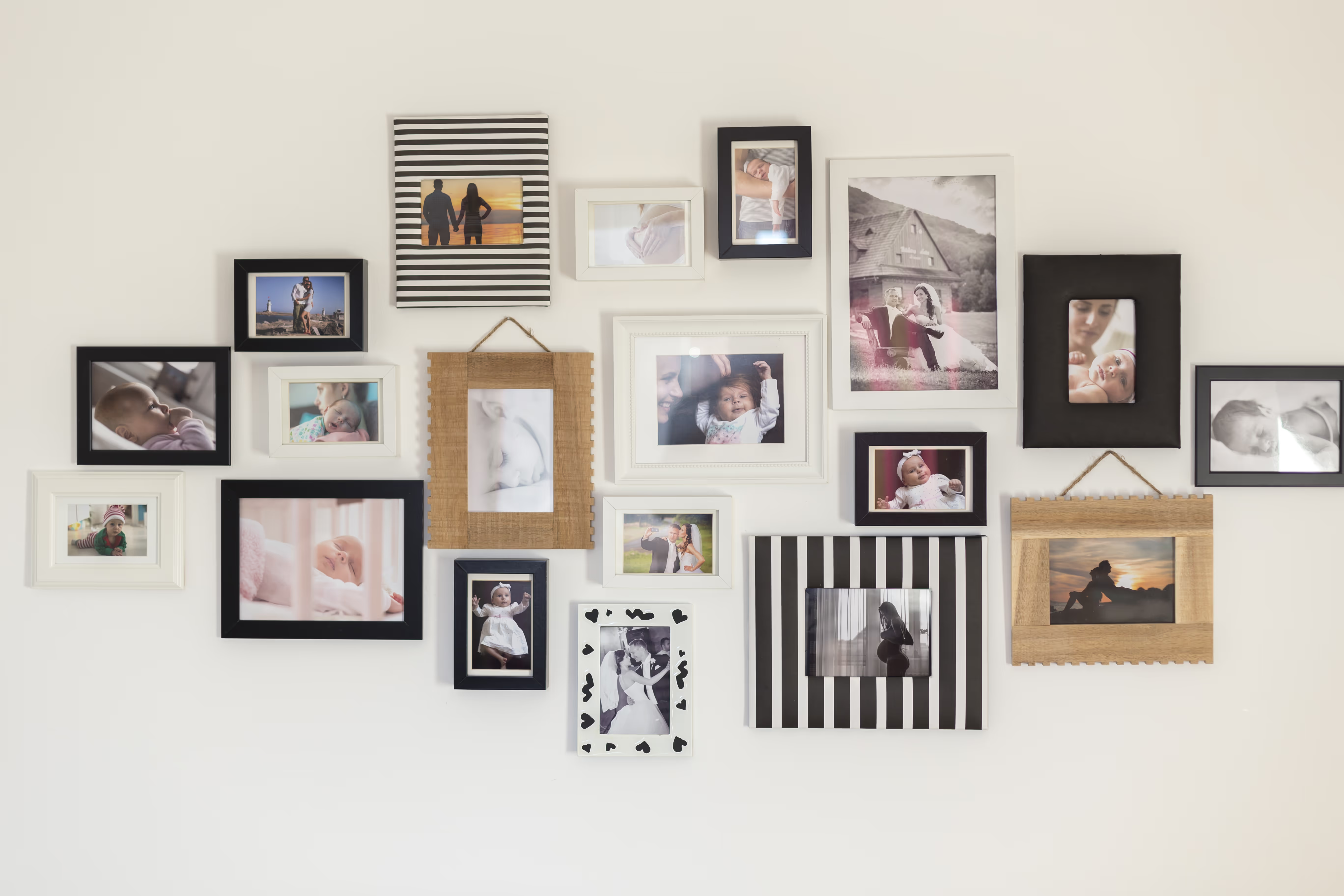
- Family photos remind buyers the home belongs to someone else
- Niche hobbies may not resonate with every viewer
- Political or religious items can unintentionally create bias
- Large collections may draw attention away from the home itself
Even larger personal collections can have an impact. While they may be impressive or sentimental, they often draw attention away from the space itself, shifting focus from the home’s layout and features to the items within it.
Home staging, at its core, is a form of marketing. It’s not about removing personality entirely, but about creating a space that feels open, approachable, and easy for a wide range of buyers to connect with. Neutral environments tend to support this best. They allow buyers to focus on the home itself its flow, its potential, and how it might fit into their own lives.
And in a competitive market, that clarity can make a meaningful difference in how quickly a buyer moves from interest to action.
What Personal Items Should You Remove?
Depersonalizing a home goes beyond simply taking down a few photos. The goal is to create a space where buyers can see themselves not the current homeowner.
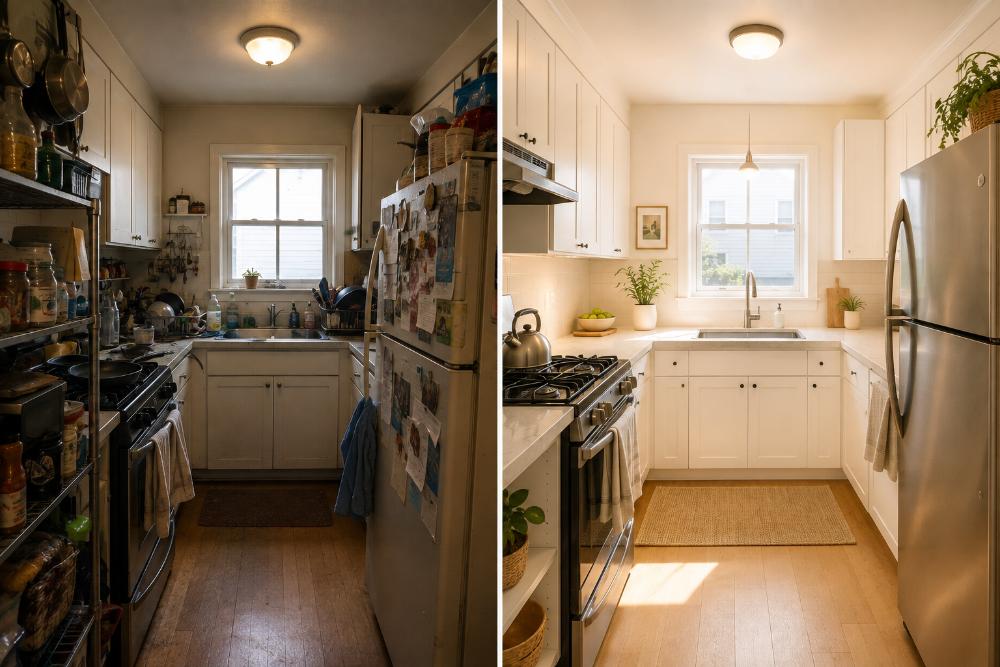
Start by removing highly personal items such as family portraits, framed photographs, diplomas, and awards. Religious or political décor, sports memorabilia, and large personal collections can also make it harder for buyers to connect with the space. Even smaller details like refrigerator magnets, children’s artwork, or hobby-related items can subtly shift attention away from the home itself.
It’s also important to remember that buyers often open closets and cabinets during showings. Instead of hiding personal items in storage areas, it’s best to remove them from the home entirely whenever possible. This helps maintain a clean, intentional feel throughout the entire space.
Where Should You Store Personal Belongings?
Many sellers choose to move personal items off-site during the listing period. This can be done by renting a short-term storage unit, storing belongings with friends or family, or using portable storage containers.
Keeping excess items out of the home doesn’t just reduce clutter, it helps each room feel more open, more functional, and easier to understand. That sense of space can make a meaningful difference in how buyers perceive the home.
Depersonalizing Also Includes Design Choices
Personal expression doesn’t only show up in objects, it often appears in design choices as well. Bold paint colors, statement wallpaper, or highly specific decorative themes may reflect personal taste, but they can also limit how broadly the home appeals to potential buyers.
When preparing a home for sale, it’s often more effective to lean toward neutral wall colors, simple décor, and timeless finishes. Neutral doesn’t mean boring, it means flexible. It allows buyers to imagine how their own style would fit naturally into the space.
The Emotional Side of Letting Go
For many homeowners, this step can feel personal. Photos, collections, and everyday items often carry years of memories. But depersonalizing isn’t about removing those memories, it’s about creating space for someone else to imagine theirs. And in most cases, sellers who take the time to prepare their home thoughtfully tend to see stronger interest and a smoother selling process overall.
Does Depersonalizing Actually Help Sell a Home?
Yes because it makes the home easier to connect with. When a space feels clean, neutral, and uncluttered, buyers are more likely to picture their own furniture in place. They can focus more clearly on layout, architectural details, and how the home flows from one room to the next. That clarity often leads to a stronger emotional connection. It also improves how the home presents online. Since most buyers begin their search digitally, a well-prepared, visually clear home tends to attract more attention from the start.
Conclusion
At its core, home staging is both a visual and psychological strategy one that helps a property feel accessible to a wide range of buyers. The goal is not to remove personality entirely, but to create enough neutrality for buyers to imagine their own life in the space. Details like wall art, décor choices, and even color direction play a bigger role than expected. When these elements feel too specific, they can limit connection. When they’re simplified and more neutral, they allow buyers to focus on the home itself, its layout, flow, and overall potential.
By reducing visual distractions and making the space easier to understand, the home becomes easier to connect with and that often translates into stronger interest and more confident offers. For a more detailed breakdown, including practical tips on styling, wall art, and common mistakes to avoid, explore our home staging do’s and don’ts guide. While the process of depersonalizing can feel temporary and even emotional, it’s often one of the most effective steps in positioning a home for a successful sale.
Related Posts: