CLOSE

BETA
Get in touch
If you would like more information, a quote, or to set up a consultation or meeting, please fill out the form or give us a call.

Yes, home staging is worth it in South San Francisco in almost every case.
According to the National Association of Realtors (NAR), 29% of sellers' agents reported that staging increased offer values by 1–10%, while 49% reported reduced time on market.
In South San Francisco, where biotech and pharma professionals, Peninsula families, and SFO corridor workers are the primary buyer segments, staged homes communicate move-in readiness that this buyer demographic actively prioritizes.
The return on staging in SSF almost always exceeds the cost by a wide margin at closing, and the competitive advantage is even greater here because professional staging is less common in SSF than in San Francisco proper.
Home staging in South San Francisco costs between $3,000 and $8,000 for most properties.
A one-bedroom condo typically falls in the $3,000–$4,500 range; a two- or three-bedroom home runs $5,000–$8,000; larger or luxury properties can exceed this.
SSF pricing is consistent with the broader Bay Area market. Through BoldRM's Agent Dashboard, agents receive instant transparent estimates without a phone call or in-person visit.
Always confirm what's included in any quote. Photography, removal fees, and term length vary significantly between companies.
Yes, staged homes often sell faster. According to NAR, 49% of sellers' agents reported reduced time on market after staging.
NAR research confirms this speed advantage holds across market conditions and property types nationwide, including the mixed single-family, townhome, and condo inventory typical of South San Francisco.
In SSF's market, buyer attention is highest in the first 48–72 hours after a listing goes live. Faster showing requests mean more competing offers, which pushes the final sale price above asking.
The more offers a listing attracts in its first week, the greater the seller's position at the offer table.
Yes, staged homes in the South San Francisco area often attract stronger offers compared to unstaged properties. According to NAR, 29% of sellers' agents reported offer increases of 1–10% after staging.
The Real Estate Staging Association (RESA) documents this premium consistently across Bay Area markets.
On a $1.2M South San Francisco property, a 5% lift equals $60,000 in additional proceeds at closing. SSF's price points are similar to broader Bay Area benchmarks, which means the financial case for staging is equally strong here.
This premium holds across market cycles, including both competitive and slower market periods.
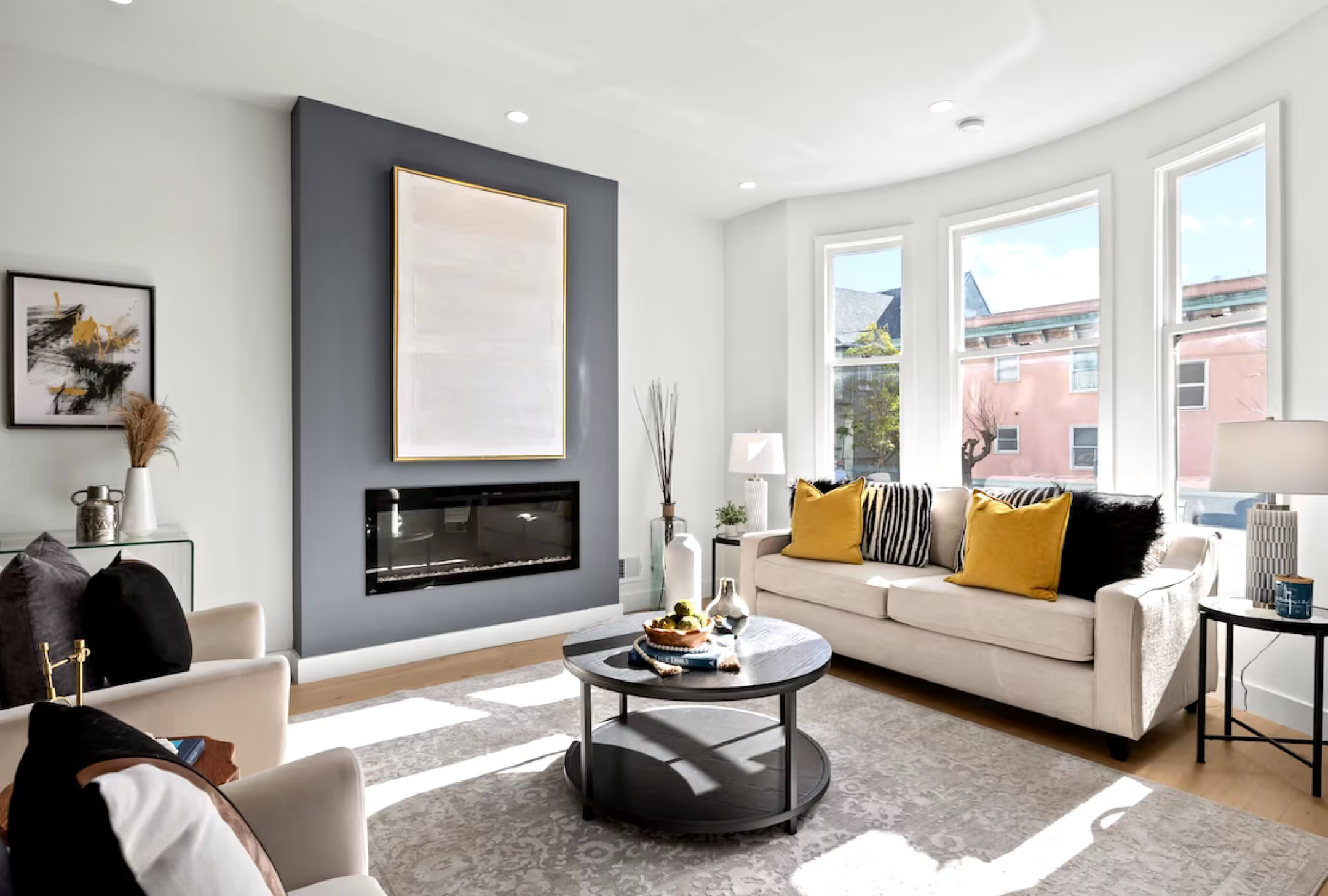
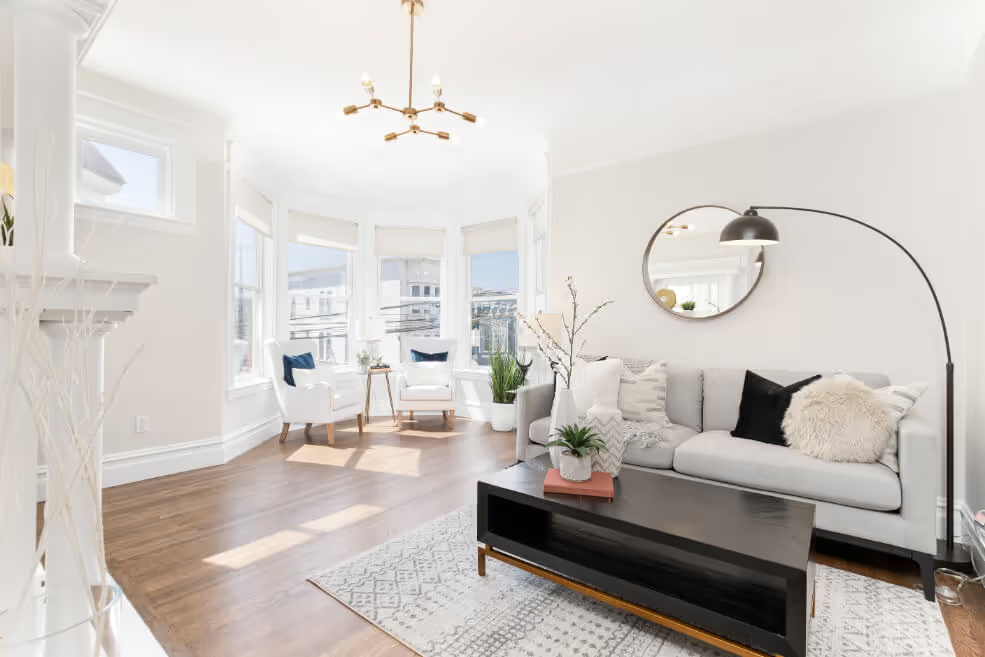
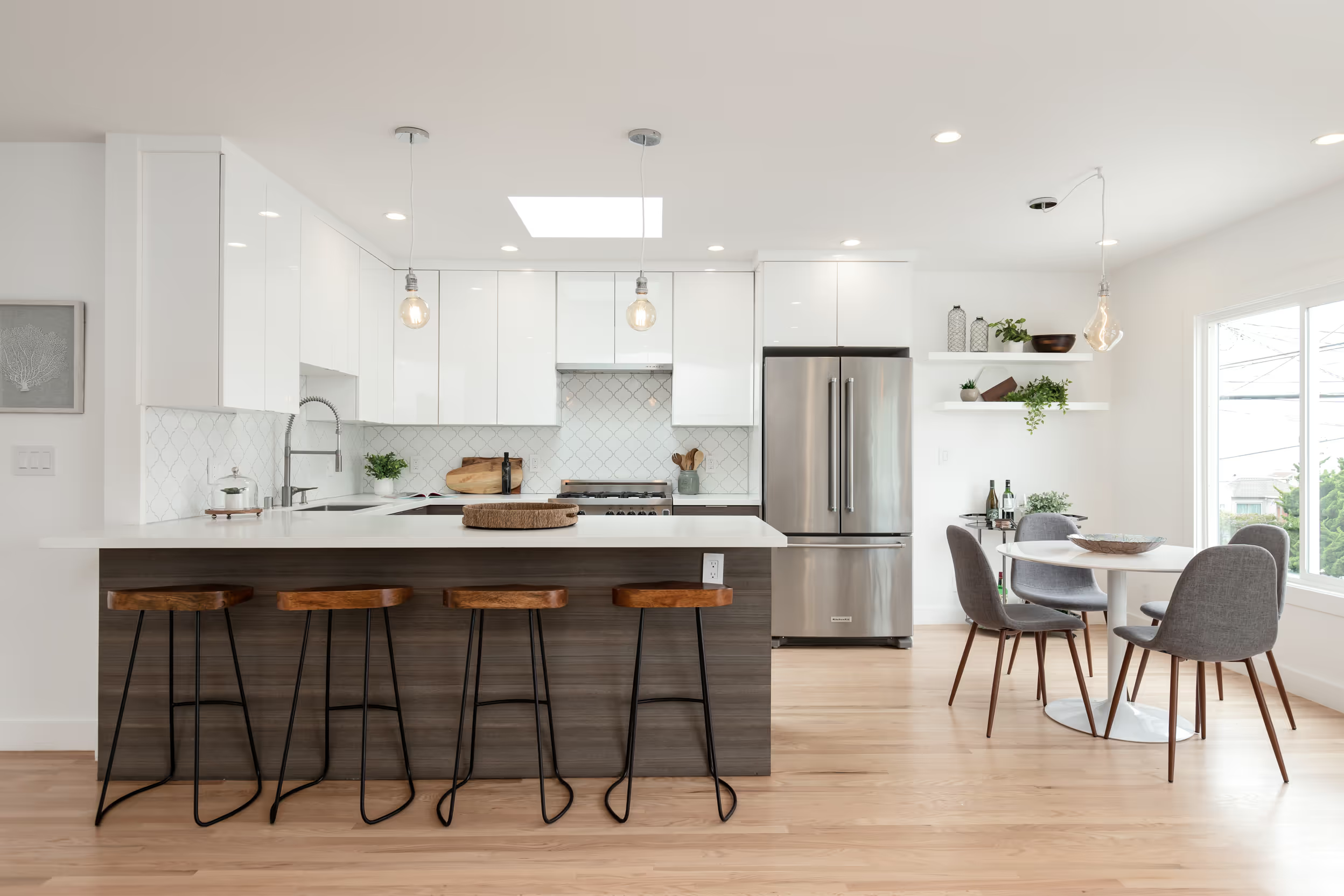
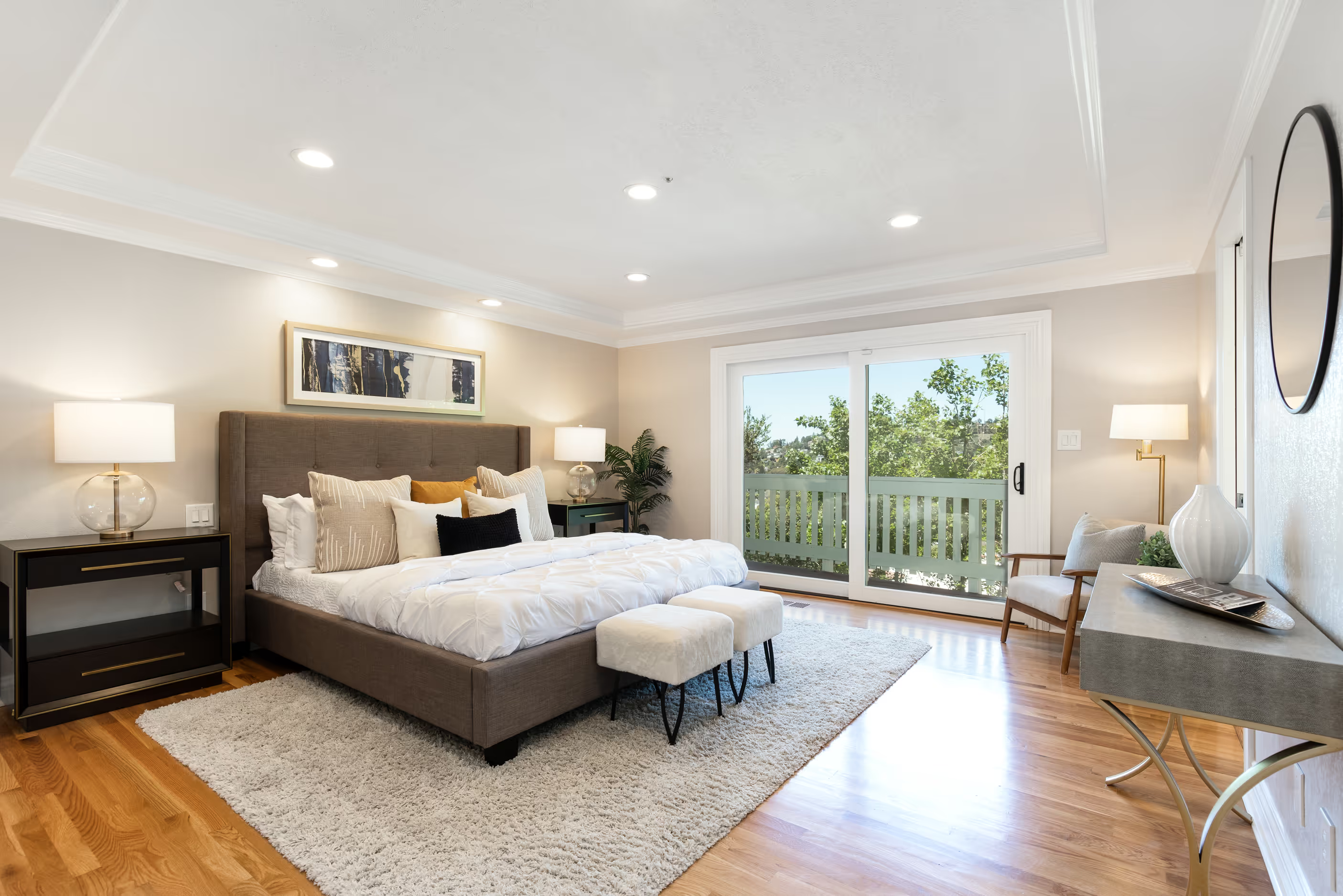
Home staging is the process of furnishing and styling a property so it photographs beautifully, shows well in person, and appeals to the widest possible range of buyers.
Professional stagers select furniture, rugs, art, and accessories that complement the architecture, maximize the sense of space, and help buyers emotionally connect to the home.
In South San Francisco, where listings range from classic single-family homes on hillside streets to newer townhomes near the bay, staging is what makes each property type show at its absolute best regardless of age, size, or layout.
Staging is not interior design. It is a buyer-focused sales strategy designed to maximize sale price, not to reflect the seller's personal taste.
Yes, staging matters significantly in South San Francisco, and the competitive edge it provides is stronger here than in more saturated markets.
Professional staging is less common in SSF than in San Francisco proper, which means a staged listing stands out more visibly against unstaged competition in the same price range.
SSF buyers, many of whom work in biotech, pharma, or at SFO-adjacent companies, are often comparing properties across multiple Peninsula cities simultaneously. A staged listing that photographs and shows better consistently wins that comparison.
In SSF's market, staging is not just a presentation choice. It is one of the most effective ways to generate competing offers on a listing.
Home staging typically returns $2–$5 for every $1 invested, according to the Real Estate Staging Association.
In South San Francisco, a $4,500 staging investment on a $900,000 property that sells 5% higher returns $45,000 in additional proceeds.
ROI comes from two sources: a higher final sale price, and fewer days on market, which cuts carrying costs like mortgage payments, property taxes, and insurance during the listing period.
When both factors are combined, the total financial benefit of staging in SSF typically exceeds the cost by a meaningful margin.
South San Francisco buyers have rising expectations for staging, particularly in the $800,000–$1.5M price segment where most SSF transactions occur.
The buyer pool in SSF includes biotech and pharma professionals accustomed to well-designed work environments, SFO corridor commuters comparing SSF against other Peninsula cities, and Peninsula families evaluating move-in readiness carefully before making offers.
All three segments respond strongly to staged listings because staging communicates quality, care, and move-in readiness at a glance.
As professional staging becomes more common across the Bay Area, SSF buyers are increasingly factoring presentation into their offer decisions even if they don't articulate it directly.
Yes, staged listings significantly outperform unstaged ones on both Zillow and Redfin in South San Francisco.
Both platforms surface listings based on engagement metrics: saves, clicks, and time spent viewing. Staged listings generate more of all three because they photograph better and hold buyer attention longer.
SSF buyers are often searching across multiple Peninsula cities at once, including San Mateo, Burlingame, and Daly City. A staged SSF listing that earns more engagement consistently rises above unstaged alternatives in search results.
Higher platform engagement translates directly to more showing requests, more offers, and a stronger final sale price.
No, virtual staging is not as effective as physical staging for most South San Francisco residential listings.
Virtual staging digitally inserts furniture into photos of an empty room at a lower cost, but creates a disconnect: buyers see a furnished space online and walk into an empty one in person.
In SSF's market, where buyers are often comparing properties across multiple cities before committing to a showing, the in-person experience matters significantly. A staged home that matches its online photos consistently generates stronger showings and offers than a virtually staged one that disappoints in person.
Physical staging delivers a consistent experience from the first photo to the first showing, which is what drives competitive offers.
Home staging in South San Francisco takes one to two weeks from initial inquiry to photo-ready installation.
The staging consultation takes 45–60 minutes; after the walkthrough, the staging company finalizes the furniture plan and confirms the installation date.
Installation is completed in one day for most SSF properties, leaving the home ready for professional photography the same evening or the following morning.
For properties in condo buildings or gated communities in South San Francisco, additional lead time may be needed to coordinate access, parking for the staging truck, and building logistics.
The living room, primary bedroom, and kitchen or dining area are the three rooms that must always be staged.
NAR research identifies these as the spaces buyers evaluate most carefully, both in listing photos and during in-person showings.
In South San Francisco, where many properties have family-oriented layouts with dedicated dining rooms and larger living areas than typical SF condos, staging the main living spaces and primary bedroom delivers the strongest return. Outdoor areas, particularly decks and yards in hillside properties, are also worth staging in SSF given buyer interest in outdoor living.
Secondary bedrooms and home offices add value but are not always essential depending on the property's layout and price point.
Always stage before listing. Never after.
The first 48–72 hours after a listing goes live in South San Francisco are the highest-traffic window on Zillow, Redfin, and the MLS. Buyers with saved searches are notified immediately.
A listing that launches without staging burns its peak visibility moment. There is no recovering from a weak launch by adding staging after the fact.
Staging after listing means going back to buyers who have already formed a judgment and trying to change their minds, which is far harder than making a strong first impression.
An unstaged home in South San Francisco typically receives fewer showing requests, attracts lower offers, and sits on the market longer than staged competition.
Most buyers decide whether to book a showing based on listing photos alone. An unstaged listing loses buyers at the photo stage before they ever schedule a visit.
Longer days on market signal to remaining buyers that something may be wrong with the property, which invites lower offers and price reduction conversations.
At closing, the cost of not staging almost always exceeds the cost of staging itself.
Every property type in South San Francisco benefits from staging, with particularly strong returns for single-family homes, townhomes, and mixed-use residential properties.
Single-family homes in Westborough and on Sign Hill often have layouts with multiple living areas, dedicated dining rooms, and outdoor spaces that show dramatically better staged than empty.
Townhomes near Oyster Point and newer developments near the bay benefit from staging that showcases the lifestyle appeal of the location. Condos near the BART station benefit from staging that maximizes the sense of space in more compact floor plans.
Older SSF homes with dated finishes benefit most of all, because professional staging shifts buyer attention from what needs updating to how well the space functions and feels.
Staging a South San Francisco condo costs $3,000–$5,000 for a one- or two-bedroom unit.
Studios and junior one-bedrooms generally come in at $3,000–$3,800; two-bedrooms with a living room and dining area run $4,000–$5,000.
SSF condos near the downtown BART station and newer buildings near the bay tend to be more compact than Peninsula single-family homes, which keeps the furniture volume and cost at the lower end of the range for well-targeted staging.
The final cost depends on how many rooms are included in the staging scope and the furniture volume required for each space.
Staging a single-family home in South San Francisco generally ranges from $4,000 to $10,000.
SSF's hillside neighborhoods like Westborough and Sign Hill have homes with multiple bedrooms, dedicated living and dining rooms, and sometimes outdoor decks that benefit from staging.
Partial staging focusing on living room, primary bedroom, and kitchen can bring the cost down while still delivering strong competitive results.
Always request an itemized quote so you can evaluate exactly what's included and compare providers on equal footing.
The average cost of professional home staging in South San Francisco is $4,000–$6,000 for a standard two-bedroom property.
This is higher than the national average of $1,500–$3,000, reflecting Bay Area furniture rental costs, labor rates, and the design expectations of local buyers.
SSF's mix of property types means the range varies: compact condos near the BART station fall at the lower end, while larger single-family homes in Westborough or on Sign Hill with more rooms to furnish fall at the higher end.
When comparing quotes, always confirm what's included: photography, removal fees, and term length vary significantly between providers.
Home staging costs more in South San Francisco than the national average for three main reasons: higher furniture rental costs, higher Bay Area labor rates, and elevated buyer design expectations.
SSF's mixed-property market adds coordination complexity that some cities don't face: parking logistics for hillside homes, elevator reservations for condo buildings, and access planning for townhome developments all add time and overhead to installation.
Additionally, staging quality must meet a higher bar in South San Francisco because buyers are comparing listings against a market baseline that increasingly includes professional staging.
The higher cost reflects the higher standard the property needs to meet to compete effectively in the Bay Area.
The main factors that affect staging cost are number of rooms staged, square footage, furniture volume required, design complexity, and property access logistics.
SSF properties with outdoor spaces, multiple levels, or hillside access may require additional staging coordination compared to a standard condo or flat.
Term length also affects cost. A 30-day term is cheaper upfront but may cost more in extensions if the property takes longer to sell than a 60-day term would.
Photography inclusion, delivery fees, and removal charges are additional variables that cause significant price differences between seemingly similar quotes.
Yes, vacant staging is more expensive than occupied staging because it requires furnishing every room from scratch.
Occupied staging works with the seller's existing furniture, adding or rearranging pieces to optimize presentation, which reduces furniture rental costs.
In South San Francisco, many sellers have already relocated before listing, particularly in the biotech and pharma corridor where job transfers are common. Vacant staging is therefore the more frequent scenario in SSF.
Vacant staging generally produces stronger results because the stager has complete control over every visual element without compromising around existing personal belongings.
Yes, partial staging is a smart, cost-effective option when budget is a constraint.
The three highest-impact rooms are the living room, primary bedroom, and dining area. Staging these three consistently delivers the strongest return per dollar invested.
In South San Francisco, where many homes have outdoor spaces like decks, yards, or patios, adding basic outdoor staging to the three core rooms can significantly enhance the lifestyle appeal of the listing.
Partial staging is a strategic middle ground. Full staging may create the strongest overall impact, but partial staging is often far more effective than no staging at all.
Yes, staging is worth the cost financially in South San Francisco in almost every case. According to The Real Estate Staging Association (RESA) survey cited by NAR, staged homes sold an average of $40,000 over list price and 9 days faster.
A $4,500 staging investment on a $900,000 South San Francisco property that sells 5% higher returns $45,000 in additional proceeds, a 10x return on investment.
SSF price points are similar to broader Bay Area benchmarks, which means the same financial case applies here as it does in San Francisco proper.
The more meaningful question is not whether staging pays off, but how much money is left on the table by skipping it.
No, staging is proportionally affordable at every price point in South San Francisco.
At SSF's typical price range of $800,000–$1.3M for single-family homes and $600,000–$900,000 for condos, a $3,500–$5,000 staging investment is less than 1% of the sale price.
The typical 5–10% price lift returns 5–10x that investment. In reduced proceeds and extended carrying costs, not staging almost always costs more than staging does.
Professional staging at every price tier is becoming standard practice across the Bay Area, including South San Francisco.
Investing in staging almost always delivers a better financial outcome than reducing the price.
A $10,000 price reduction costs the seller $10,000 directly and signals to buyers that something is wrong with the property, which invites further negotiation.
A $4,500 staging investment typically produces a 5–10% price premium, which on most South San Francisco properties far exceeds the reduction amount in additional proceeds at closing.
Staging creates value at the negotiating table. Price reductions give it away.
During a staging consultation, the staging team walks through the property, measures each room, assesses natural light, and develops a room-by-room plan for furniture, decor, and accessories.
The consultation typically takes 45–60 minutes for a standard South San Francisco property.
After the walkthrough, the staging company produces a proposal with a clear breakdown of what will be staged, the furniture plan, the total cost, and the proposed installation date.
The thoroughness of the consultation directly determines the quality of the installation. A detailed walkthrough produces a more precise, better-executed result.
On installation day, the staging team arrives with a truck of pre-selected furniture, rugs, art, and accessories and sets up each room according to the design plan from the consultation.
The team handles furniture arrangement, art hanging, accessory placement, and lighting adjustments. The seller or agent does not need to be actively involved.
In South San Francisco, the team also accounts for property-specific logistics: hillside access for Sign Hill homes, parking coordination for staging trucks near downtown SSF, and elevator or common area protocols for condo buildings.
By end of day, the property is fully styled and ready for the photographer, typically the same evening or the following morning.
Most professional staging companies serving South San Francisco can schedule a walkthrough within 3–5 business days of an inquiry.
Installation is typically confirmed 7–14 days after the walkthrough, allowing time to finalize the furniture plan and coordinate logistics.
For properties with parking or access constraints, which are common in SSF hillside neighborhoods and some older condo buildings, additional lead time ensures the installation runs smoothly.
Rush scheduling is sometimes available. Confirming access logistics early is the most effective way to protect a tight listing timeline in SSF.
No, when planned properly, staging fits within the standard pre-listing timeline without causing delays.
The recommended sequence is: staging walkthrough, installation, professional photography, MLS listing. This runs smoothly with a two-week lead time from initial inquiry.
Delays occur when staging is arranged too close to the listing date, or when property-specific logistics such as parking access for the staging truck or elevator reservations in condo buildings are not coordinated in advance.
Building two weeks of staging lead time into the listing plan from the start removes virtually all timeline risk.
Yes, for vacant staging the property should be completely empty before the installation begins.
All personal furniture, clothing, and belongings should be removed so the staging team has full control over every visual element in the space.
The property should also be professionally cleaned, with utilities active before the team arrives. The cleaner and more neutral the canvas, the stronger the staging result.
Sellers in South San Francisco who have relocated for work, particularly common in the biotech and pharma community, often have properties that are already vacant, which makes the process straightforward.
Yes, professional staging companies bring all furniture, rugs, art, and accessories needed to stage the property.
Sellers and agents do not need to source, rent, or move any furniture. The staging company selects pieces appropriate for the property's size, architecture, and target buyer demographic. Everything is delivered and installed on installation day and removed by the staging company after the sale closes.
This full-service model is what distinguishes professional staging from DIY attempts in terms of both quality and convenience.
A standard professional staging package includes furniture rental for the agreed term, delivery and installation, interior styling with rugs and art, and removal after the sale.
Some staging companies also include professional photography, one of the most significant differentiators between providers.
For South San Francisco properties with outdoor spaces, ask whether deck or patio staging is available as an add-on. Outdoor areas are a meaningful selling point in SSF and worth including in the staging scope where possible.
Getting a fully itemized quote is the best way to compare what different companies actually deliver for their stated price.
Most staging companies offer a standard 30-day rental term; some offer 60-day terms as their baseline.
A 60-day term gives listings more time to find the right buyer without the pressure of an immediate renewal conversation. Monthly extensions are typically available after the initial term at a reduced rate.
When comparing staging quotes, always confirm the term length. A cheaper 30-day quote may cost more overall in extensions than a slightly higher 60-day quote.
All staging furniture, rugs, art, and accessories are removed by the staging company after the sale closes.
Pickup timing is coordinated between the staging company, the listing agent, and the seller. Most companies schedule removal within a few days of close of escrow. Sellers do not need to arrange storage, handle furniture, or be present for the pickup.
For properties with access constraints, the staging company also manages pickup logistics as part of the standard removal process.
You don't need to be actively involved, but either the seller or their agent should be reachable on installation day.
Most staging teams work independently once they have property access. A lockbox arrangement is common when the seller has already moved out. Being available by phone in case any in-the-moment decisions arise is typically sufficient.
For South San Francisco properties where parking or access requires coordination, confirming logistics the day before installation prevents delays.
Staging a single-family home in South San Francisco differs from condo staging primarily in scope, scale, and outdoor opportunity.
SSF single-family homes, particularly in Westborough and on Sign Hill, tend to have more rooms to stage, larger living areas, dedicated dining rooms, and outdoor spaces that add significant lifestyle appeal when staged.
Condo staging in SSF focuses on maximizing the sense of space in more compact floor plans, while single-family staging emphasizes family living flow and the emotional appeal of a full home.
Both benefit equally from professional staging in terms of ROI, but the staging plan and furniture selection differ significantly based on the property type.
Townhomes in South San Francisco have multi-level layouts that require staging to create a cohesive flow between floors.
The main living area, primary bedroom, and any outdoor space such as a rooftop deck or private patio are the highest-impact areas to stage in a South San Francisco townhome.
SSF's newer townhome developments near Oyster Point and the bay corridor attract biotech and tech professionals who respond strongly to lifestyle staging that showcases how indoor and outdoor spaces connect.
A well-staged townhome in SSF that demonstrates its full lifestyle potential consistently outperforms an unstaged equivalent in both showing requests and final offer prices.
Yes, condos in South San Francisco benefit significantly from professional staging.
SSF condos near the downtown BART station and newer developments near the bay range from compact studios to larger two-bedroom units. Staging maximizes the sense of space, defines the purpose of each area, and makes the listing photograph significantly better.
Buyers comparing condos across multiple SSF buildings, or weighing SSF condos against options in Daly City or San Mateo, consistently gravitate toward staged listings because they communicate value and move-in readiness more clearly.
Professional staging in SSF's condo market is a meaningful competitive advantage, particularly because staging penetration is lower here than in San Francisco proper.
Staging itself generally does not require HOA approval, but moving furniture through common areas is subject to building rules.
Most SSF condo buildings require advance notice for any large delivery, and some require proof of vendor general liability insurance before allowing furniture into the building.
These requirements vary by building. Sellers should confirm their building's specific rules with management before locking in an installation date.
Failure to coordinate building logistics in advance is the most common cause of staging delays for SSF condo properties.
Many South San Francisco condo buildings require elevator reservations for large furniture deliveries, particularly in mid-rise and high-rise buildings.
Some buildings require 24–48 hours notice; others require up to a week depending on building rules and current reservation availability.
Failing to reserve the elevator can result in the staging crew being unable to move furniture on installation day, which directly delays the listing timeline.
Confirming elevator access requirements with building management as soon as the installation date is set prevents this entirely.
Yes, most South San Francisco condo buildings require staging companies to carry general liability insurance and provide a certificate of insurance before the installation.
This certificate must typically be submitted to building management a few days before the installation date, not on the day itself.
A professional staging company should be able to provide insurance documentation on request without delay.
Always confirm your building's insurance requirements before booking. Failure to do so can result in the staging crew being turned away on installation day.
Outdoor spaces are a meaningful selling point in South San Francisco, particularly for hillside homes with views and townhomes with private decks or patios.
Staging an outdoor area with appropriate furniture, cushions, and planters helps buyers visualize the lifestyle potential of the space, which is especially effective for SSF's biotech and family buyer segments who prioritize outdoor living.
The investment in outdoor staging is modest relative to interior staging but can meaningfully elevate the overall presentation and appeal of the listing.
Discuss outdoor staging options with your staging company during the walkthrough to determine which outdoor spaces are worth including in the scope.
Yes, older SSF homes with dated finishes benefit most from professional staging because staging shifts buyer attention from what needs updating to how well the space functions and feels.
Many South San Francisco single-family homes were built in the 1950s–1980s and may have original kitchens, bathrooms, or flooring. Staging with contemporary, neutral furniture creates a visual contrast that makes the home feel more current than the finishes alone would suggest.
Buyers viewing a well-staged older SSF home spend more time imagining themselves living in the space and less time cataloguing what they would need to update.
The ROI on staging older SSF homes is often higher than on newer properties precisely because it addresses the perception gap between dated finishes and move-in desirability.
South San Francisco's hillside neighborhoods and dense downtown areas can present parking challenges for staging trucks, particularly in older residential streets near Sign Hill.
Professional staging companies account for this in the scheduling process by confirming parking access in advance, coordinating with the seller about street parking permits if needed, and planning installation sequences that minimize the time the truck needs to be stationary.
Sellers should inform the staging company of any known parking or access constraints at the time of the walkthrough so the installation plan accounts for them.
Proactive communication about access logistics is the single most effective way to ensure an on-time, smooth installation in SSF.
Staging and photography are inseparable. Staging creates the scene and photography captures it.
According to NAR, 52% of buyers used online websites as the first step in their home search. For most buyers, listing photos are the first showing.
In South San Francisco, where buyers are often comparing properties across multiple Peninsula cities simultaneously, listing photos are frequently the deciding factor in whether a property makes the showing shortlist.
Treating staging and photography as separate decisions rather than one coordinated strategy is one of the costliest mistakes sellers make in the SSF market.
Whether staging includes professional photography depends on the company. Some bundle it; others bill it separately or leave the agent to arrange independently.
Photography inclusion is one of the most significant differentiators between staging providers and one of the highest-value services a staging company can offer.
When evaluating staging companies for South San Francisco properties, always ask whether photography is included, and if so, how the session is coordinated with the staging installation.
Bundled staging and photography eliminates scheduling complexity and ensures the property is captured at its peak presentation.
Yes. According to NAR, 81% of buyers' agents said photos were among the most useful features on listing websites.
Research shows buyers spend significant time reviewing listing photos online before deciding whether to book an in-person showing.
In South San Francisco, buyers searching across multiple Peninsula cities are making preliminary shortlists based on photos before they ever visit a property. A staged listing with strong photography consistently makes those shortlists; an unstaged one often does not.
The photo decision happens before the buyer considers the address, the price, or the square footage. Staging determines whether that decision goes in the seller's favor.
Staged homes photograph better because professional staging controls the three elements that make a photo compelling: light, depth, and composition.
Professionally selected furniture creates natural depth in a frame; consistent color palettes reduce visual noise; deliberate accessory placement gives the camera something compelling at every angle.
Empty rooms give photographers nothing to work with, resulting in flat, cold images that communicate nothing about how the space feels to live in.
No camera or post-processing can compensate for the absence of staging in listing photography.
Yes, staged listings significantly outperform unstaged ones on both platforms in South San Francisco.
Buyers form a judgment about a listing within seconds of seeing the first photo. Staged listings earn more clicks, more saves, and more time-on-listing across both Zillow and Redfin.
South San Francisco listings compete not just against other SSF properties but against inventory in Daly City, San Bruno, and Millbrae. Staged listings earn additional algorithmic visibility because they generate more engagement, which the platforms interpret as relevance.
The staged listing consistently wins the first impression battle, and first impressions determine whether a buyer books a showing.
Some staging companies offer or coordinate video walkthroughs and Matterport 3D tours as add-on services.
These are particularly valuable for South San Francisco listings targeting out-of-area buyers relocating for biotech or pharma positions, who may not be able to visit in person before making an offer.
If your staging company does not offer these services, ask your agent to coordinate with a real estate media specialist.
The combination of professional staging and video content produces significantly stronger results for remote buyer segments, which are common in SSF's employment-driven housing market.
Staging influences buyer perception at three key decision moments: online, at the door, and during the offer. According to NAR, 83% of buyers' agents said staging helped buyers visualize the property as their future home.
Online, better photos generate more showing requests. At the door, first impressions form in 8 seconds. A staged home signals quality and move-in readiness immediately. During the offer, staged homes reduce buyer anxiety about condition, producing stronger offers.
In South San Francisco, where biotech and pharma buyers often have demanding professional schedules and limited time to view properties, a staged home that communicates move-in readiness immediately carries extra weight in the buying decision.
Each of these moments affects the final offer price. Staging is what makes all three work in the seller's favor.
Empty rooms are psychologically difficult for buyers to evaluate because they lose their sense of scale and purpose without furniture.
A perfectly proportioned bedroom can feel both too small and oddly shaped simultaneously when empty; a generous living room can feel cold and undefined.
Empty rooms amplify every imperfection. Every scuff, echo, and uneven corner becomes more prominent without the visual context that furniture provides.
Staging replaces buyer anxiety with buyer desire by giving each room a clear purpose and a livable quality that buyers can connect with immediately.
Staged homes look more valuable because professional staging controls every visual element: furniture scale, color palette, lighting, and accessory placement.
Professional stagers create a sense of quality and intention that makes a space feel curated rather than simply occupied.
The result is that buyers perceive staged homes as better maintained, more valuable, and worth paying more for, even when the underlying finishes are identical to an unstaged property.
This perception premium is the deliberate outcome of staging designed to maximize buyer-perceived value, and it shows up directly in offer prices.
Yes, making spaces feel larger is one of the most practical and measurable things professional staging does.
The right furniture scale, strategic placement, consistent color palette, and deliberate removal of visual clutter all contribute to making a compact space feel open and functional rather than cramped.
In South San Francisco, where older single-family homes sometimes have smaller room proportions and condos near downtown are compact, this skill is particularly valuable.
Buyers who might hesitate over square footage often reconsider when they see a well-staged version of the same space, because staging answers the question 'can I actually live here?' with a clear yes.
Yes, addressing awkward layouts is one of the most valuable things professional staging does for South San Francisco properties.
Older SSF single-family homes, particularly those built in the 1950s–1970s, sometimes have closed-off floor plans, low ceilings, or unusual room proportions that are hard for buyers to evaluate when empty.
Professional staging directs buyer attention toward positive features and provides visual cues that make unusual spaces feel intentional and livable rather than confusing.
A stager's job is to make buyers think 'this works' rather than 'I have no idea what I'd do with this room.'
Both matter, but staging influences how buyers perceive condition before they examine anything else.
A well-staged home in average condition often receives stronger offers than a poorly presented home in better condition, because buyers form their impression of quality from visual presentation first.
Staging sets the perceptual baseline, and condition either confirms or disrupts it.
Ideally both staging and condition are strong. The best outcomes combine pre-sale repairs and updates with professional staging.
Staging changes buying decisions. It is not merely decoration. NAR surveys find 83% of buyers' agents say staging helped buyers visualize the property as their future home.
In South San Francisco, where many buyers are evaluating properties while also weighing schools, commute times, and lifestyle fit, a staged home that immediately communicates 'this is the life you want' reduces decision friction and accelerates the buying decision.
Buyers consistently rate staged homes as more move-in ready, better maintained, and worth a higher price, even when the underlying property is physically identical to an unstaged one.
These are measurable behavioral changes, not aesthetic preferences. That distinction is why staging consistently produces higher offers and faster sales.
No, staging is not a marketing gimmick, and the data is clear on this.
The Real Estate Staging Association and NAR both document that staged homes sell faster and for more money across different market conditions and property types.
Staging works because it addresses the psychological process buyers go through when evaluating a home. It is applied behavioral science, not decoration.
Consistent, repeatable results across diverse market conditions are what distinguish staging from a marketing trend.
You can attempt DIY staging, but the results are rarely equivalent to professional staging, and the gap shows up most in listing photos.
DIY staging often falls short because sellers are too emotionally attached to their belongings to edit effectively. Most people also lack access to the furniture inventory, design training, and photography coordination that professionals provide.
In the Bay Area market, the ROI difference between professionally staged and DIY staged is large enough that professional staging almost always pays for itself many times over.
If budget is a constraint, a partial professional staging of the three highest-impact rooms is a better investment than a full DIY attempt.
Yes, because staging is not about how nice the home looks to the seller. It is about buyer psychology.
Personal furniture and decor, however attractive, can distract buyers and make it harder for them to picture their own lives in the space.
Professional staging depersonalizes and neutralizes the home in a way that makes it universally appealing, which is what drives competing offers.
'Looks nice to me' and 'maximizes sale price' are different standards. Staging bridges the gap between them.
Yes, modern homes with clean lines and minimal architecture tend to feel cold and clinical when empty.
Staging adds warmth, texture, and human scale to modern interiors without compromising the architectural aesthetic.
Newer SSF developments near Oyster Point and the bay corridor have modern open-plan layouts that show beautifully staged and feel cold and clinical when empty.
A well-staged modern home consistently outperforms an unstaged one at the same price point regardless of how contemporary the finishes are.
No, staging delivers strong ROI across all price points in South San Francisco.
Mid-range properties benefit most from staging because they compete in higher-volume segments where buyers have more choices and compare listings more carefully.
The percentage return from staging stays roughly consistent whether a South San Francisco property is $600,000 or $1.8M.
Professional staging is standard practice at every price tier across the Bay Area, including South San Francisco.
Staging backfires only when done poorly: mismatched furniture, wrong scale for the space, or a style that clashes with the architecture.
Professional staging rarely backfires because experienced stagers choose neutral, broadly appealing pieces that complement the property.
The more common risk is under-staging. Too few pieces or too few rooms makes a listing feel inconsistently presented compared to fully staged competition.
Choosing a staging company with a strong local portfolio of SSF and Peninsula properties significantly reduces the risk of a poor staging outcome.
The biggest mistake is assuming buyers will use their imagination when viewing an empty or personally decorated home.
Buyers don't imagine. They evaluate. An empty home shifts buyer attention toward what is missing and what might be wrong.
Personal decor shifts buyer attention toward the seller's taste rather than the home's potential.
Staging redirects buyer attention toward possibility and livability. That shift is what drives strong, competitive offers in South San Francisco's market.
The primary risks of not staging in South San Francisco are fewer showing requests, lower offer prices, and longer days on market.
Most buyers decide whether to book a showing based on listing photos alone. An unstaged listing loses buyers at the photo stage before they ever walk through the door.
Longer days on market signal to remaining buyers that something may be wrong, which invites lower offers and makes price reductions more likely.
At closing, the cost of not staging almost always exceeds the cost of staging itself.
Vacant staging furnishes a completely empty property from scratch; occupied staging works with the seller's existing furniture to optimize presentation.
Vacant staging is more expensive but produces more consistent results because the stager has complete control over every visual element.
In South San Francisco, vacant staging is common because many sellers, particularly those who have relocated for biotech or pharma positions, have already moved before listing. The fully controlled presentation it allows produces stronger listing photos and showings.
Occupied staging is a reasonable option when the seller has not yet moved, but requires significant decluttering and seller willingness to edit personal items aggressively.
Staging is a short-term, buyer-focused strategy designed to maximize sale price. Interior design is a long-term, personalized process that reflects the homeowner's lifestyle.
A professional stager deliberately avoids strong personal style, choosing neutral palettes and universally appealing arrangements that allow buyers to project themselves into the space.
Interior design creates a space the owner loves living in. Staging creates a space the broadest possible pool of buyers wants to purchase.
Confusing the two is one of the most common reasons South San Francisco sellers resist staging. The goal is not to make the home feel personal. It is to make it sell.
For most South San Francisco residential listings, physical staging is significantly more effective than virtual staging.
Physical staging delivers a consistent experience from the first online photo to the in-person showing. Buyers see a furnished space online and walk into the same furnished space in person.
Virtual staging creates a damaging disconnect. Beautiful furnished photos are followed by an empty room in person, which deflates buyer enthusiasm and causes buyers to recalibrate their offer expectations downward.
At South San Francisco price points, the ROI difference between physical and virtual staging almost always justifies the additional investment.
Virtual staging makes sense in limited scenarios: very early pre-sale stages to show potential before committing, investment properties targeting developer buyers, or as a supplement for rooms not included in a physical staging scope.
For primary residential listings in South San Francisco going to market competitively, physical staging is almost always the stronger choice.
Virtual staging may be used in combination with physical staging, for example virtually rendering furniture in a secondary bedroom or garage conversion not included in the physical staging scope.
The decision should be driven by the property's buyer demographic and how much of the buying decision will be made online versus in person.
Occupied staging can be effective but rarely matches vacant staging in quality because the stager does not have full control over every visual element.
The success of occupied staging depends heavily on the seller's willingness to aggressively declutter, depersonalize, and remove furniture that does not serve the staging plan.
Sellers often resist the level of editing that makes occupied staging work, which compromises the result.
When sellers are fully committed to the process and willing to remove personal items extensively, occupied staging can produce strong results, particularly in well-maintained South San Francisco homes with good underlying furniture.
Professional staging is growing in South San Francisco but is still less saturated than in San Francisco proper, Palo Alto, or Burlingame.
This lower saturation is actually a competitive advantage for staged SSF listings. A staged property in a neighborhood where most competing listings are unstaged stands out dramatically in online search results and at showings.
As the SSF market continues to attract biotech and pharma buyers who have high quality expectations from their professional environments, staging adoption is accelerating.
Sellers who stage now are ahead of the curve in a market where staging is becoming the new baseline expectation.
South San Francisco's buyer pool is distinct from San Francisco proper and reflects the city's unique employment base.
The three largest buyer segments in SSF are: biotech and pharma professionals working in the Oyster Point corridor; SFO-adjacent workers including airline and airport industry professionals; and Peninsula families priced out of Burlingame, San Mateo, or Foster City who are seeking more space at a lower price point.
All three segments respond strongly to staged listings because they prioritize move-in readiness, functional space, and a property that photographs well for out-of-area family viewing.
Understanding who is buying in SSF helps agents and sellers make smarter decisions about which rooms to stage and which lifestyle elements to emphasize.
Staging delivers strong ROI across all price ranges in South San Francisco, with the strongest relative advantage in the $800,000–$1.3M single-family segment.
At this price point, SSF competes directly with similar properties in Daly City and San Bruno. A staged SSF listing at $950,000 will consistently outperform an unstaged one in buyer engagement, showing requests, and final offer prices.
In the condo segment below $800,000, staging is equally valuable but the scope can be more targeted, focusing on the living area and primary bedroom to keep costs proportional.
At the higher end of SSF's market above $1.3M, staging is essentially expected and not staging creates a visible disadvantage against competition.
Experienced Peninsula agents recommend staging for the vast majority of SSF listings, particularly vacant properties, homes competing against similar inventory in nearby cities, and properties that need to maximize appeal to justify their asking price.
The rare exceptions are properties where demand so dramatically exceeds supply that condition is largely irrelevant, or where the buyer pool is primarily investors purchasing for development value.
Even in strong seller's markets, staged SSF listings consistently outperform unstaged ones when offers come in.
For the typical South San Francisco residential listing, professional staging is the standard recommendation from experienced agents, not an optional add-on.
Yes, staging is even more important during slower market periods when fewer buyers are actively searching.
In a slower market, each showing matters more because there are fewer of them. Staged homes convert showings to offers at a significantly higher rate than unstaged ones.
Price reductions are the typical alternative for sellers who do not stage, but staging preserves asking price integrity far more effectively than discounting.
In SSF's market, where the buyer pool is already more concentrated than in San Francisco proper, a slower period makes the competitive advantage of staging even more pronounced.
Evaluate staging companies on five criteria: portfolio quality, pricing transparency, process reliability, included services, and local market knowledge.
For South San Francisco specifically, look for companies with experience staging the mix of property types found here: single-family homes, townhomes, and condos, not just high-rise SF condos.
Ask for agent references in SSF or the Peninsula specifically. A company with strong SF condo experience may not have the same expertise staging a multi-level Westborough home.
Companies that offer online estimates without requiring an in-person visit first signal a more professional, agent-friendly operation that understands listing timelines.
The key qualities are a strong Peninsula portfolio, transparent itemized pricing, proof of general liability insurance, professional photography inclusion, and a confirmed installation timeline.
For SSF specifically, look for experience with the property types and access logistics common here: hillside home access, townhome multi-level staging, parking coordination for staging trucks in denser areas.
The most agent-friendly staging companies combine transparent pricing, fast turnaround, online estimates, and a seamless process from walkthrough to pickup.
The ability to get an instant online estimate is a practical signal that the company is built for professional, high-volume use rather than occasional residential projects.
Referral arrangements between real estate agents and staging companies do exist in the industry, and this is a fair and important question to ask directly.
Some staging companies pay agents a referral fee or percentage commission for recommending their services, which creates a conflict of interest where the recommendation may reflect financial incentive rather than quality.
When evaluating any staging referral from an agent, ask directly whether a financial relationship exists with the company being suggested.
A trustworthy agent and staging company will answer this question without hesitation. Transparency on this point is a strong signal of integrity from both parties.
In most cases, agents recommend staging companies they have worked with successfully and trust to perform. The recommendation is usually based on experience, not financial arrangement.
However, healthy skepticism is reasonable. Look at the company's portfolio independently, read recent reviews, get a competing quote, and ask the agent directly whether any financial arrangement exists.
The best agents welcome this scrutiny because it reinforces their recommendation rather than undermining it.
An agent confident in their staging recommendation will not discourage you from verifying it independently.
Staging quotes vary significantly because different companies include fundamentally different things under similar-sounding service names.
Photography inclusion, term length (30-day vs 60-day), delivery and removal fees, furniture quality, and design complexity all vary, and each variable can shift the true all-in cost substantially.
The lowest quote on the page is rarely the lowest all-in cost when all variables are standardized and compared fairly.
Always ask each company for a fully itemized breakdown covering the same scope, term, and included services before making a final comparison.
Some staging companies avoid upfront pricing because their costs genuinely vary by project and they prefer to assess the property before committing to a number.
Others use the required in-person visit as part of their sales process, which adds friction for agents managing multiple listings on tight timelines.
The inability to get a quick online estimate is one of the most common sources of friction in the listing preparation process.
Companies that offer instant online estimates give agents the ability to budget and plan without scheduling overhead, a meaningful operational advantage on a busy listing timeline.
Yes, getting two or three quotes is reasonable and common practice.
Multiple quotes help calibrate pricing, clarify what different companies include, and identify outliers in either direction.
The goal is not the cheapest quote but the best value: the company that includes the most in the base price and has the strongest local track record.
Use competing quotes to ask sharper questions: why does one include photography and another does not? What explains the difference in term length?
Key differences between Bay Area staging companies include furniture quality, pricing structure, term length, photography inclusion, local market experience, and process tools.
For South San Francisco specifically, the most meaningful differentiator is experience with SSF's mixed property types. A company that primarily stages SF high-rise condos may not have the right furniture inventory or design approach for a hillside single-family home or a multi-level townhome.
The best staging companies combine strong design with operational reliability. They hit their installation dates, include photography, and make the process easy for agents.
Portfolio quality is the best proxy for future performance. Always look at recent projects in properties similar to yours before committing.
Not always, but frequently in the Bay Area market where buyer expectations are high.
Lower-cost staging often means lower-quality furniture, limited inventory that does not suit the property's style, and less experienced teams.
A poorly staged South San Francisco home can actually hurt perceived value. Buyers notice when staging feels inconsistent with the property's price point.
The better question is not 'how cheap can I go?' but 'what is the best value for this specific property and buyer demographic?'
Some staging companies serving South San Francisco offer online estimates based on property details submitted through a web form or agent portal.
This capability lets agents budget and plan without scheduling an in-person visit, a meaningful time-saver on a busy listing timeline.
Companies that offer instant online estimates signal a more process-driven operation, which tends to correlate with greater reliability on installation day.
Not all companies offer this capability. It is worth specifically asking when evaluating staging providers for SSF properties.
The staging companies that consistently stand out combine three things: design quality that photographs well and impresses buyers in person; operational reliability that meets deadlines without surprises; and a process that is easy for agents to manage.
In South San Francisco, local market knowledge matters more than in larger cities. A staging company that understands SSF's buyer demographics, property mix, and access logistics will produce better results than one that treats SSF as interchangeable with San Francisco proper.
Operational reliability is often underweighted when choosing a staging company. A beautiful portfolio means nothing if the team misses the installation date.
Ask about the company's on-time installation record and request references from agents who have used them on South San Francisco and Peninsula listings specifically.
Staged homes in South San Francisco often sell faster. According to NAR, 49% of sellers' agents reported reduced time on market after staging.
In South San Francisco's market, the speed advantage is most pronounced in the first week after listing. Staged homes generate showing requests faster, which leads to offers sooner.
SSF listings that attract offers in their first week are far more likely to close above asking than those that sit for two or three weeks, because early offers reflect genuine buyer enthusiasm.
Speed and price are directly linked in SSF's market. Faster offers mean less negotiating power for buyers and stronger outcomes for sellers.
According to NAR, 29% of sellers' agents reported offer increases of 1–10% after staging. The Real Estate Staging Association documents staged homes selling an average of $40,000 over list price.
In dollar terms at SSF price points, a 5% lift on a $1M property is $50,000, typically 10–15x the cost of staging.
Individual results vary based on neighborhood, property type, execution quality, and market conditions at the time of listing.
Yes, staging is most powerful when buyers are comparing multiple properties simultaneously.
South San Francisco listings compete not just against other SSF properties but against inventory in Daly City, San Bruno, Millbrae, and South San Francisco's own diverse neighborhoods.
Properties that attract multiple competing offers in SSF are almost always staged, because staging creates the emotional urgency that drives competitive bidding.
In a competitive market, the question is not whether to stage but how quickly it can be scheduled before the listing goes live.
The optimal time to begin the staging process is two to three weeks before the planned listing date.
This allows sufficient time for the staging walkthrough, furniture plan finalization, installation, and professional photography, all before the listing goes live on the MLS.
Staging arranged less than one week before listing creates unnecessary scheduling risk and often compromises the quality of the final result.
Building two weeks of staging lead time into the listing plan from the start removes virtually all timeline risk.
Always stage before the listing goes live. Staging after launch is not an equivalent strategy.
The first 48–72 hours after a South San Francisco listing goes live are the highest-traffic window on Zillow, Redfin, and the MLS. Buyers with saved searches are notified immediately.
A listing that launches without staging burns its peak visibility moment, and there is no equivalent second chance once buyers have evaluated and passed.
Staging after listing means going back to buyers who have already formed a negative judgment and trying to change their minds.
Staging an already-listed property is better than leaving it unstaged, but the advantage is significantly diminished.
A property that has been sitting on the market unstaged carries days-on-market history. New buyers read that history as a signal that something was wrong with the original presentation.
If staging is being added to an already-listed South San Francisco property, the stronger move where possible is to temporarily withdraw, stage, and re-launch as a fresh listing.
Every additional day of market time without staging increases buyer skepticism. Act quickly if this situation applies.
If a property remains on the market beyond the initial staging term, monthly extensions are typically available at a reduced rate.
Extensions keep the home looking its best while it continues to attract buyers. Removing staging mid-listing creates the same empty-home disadvantage as never staging at all.
When evaluating staging companies, ask about extension rates upfront. They vary significantly between providers.
A 60-day initial term reduces the likelihood of needing extensions compared to the industry-standard 30-day term.
Staging helps, but works best when combined with the right pre-sale repairs and updates.
Staging can soften the visual impact of dated finishes and make a home feel more move-in ready, but it cannot disguise structural issues or serious cosmetic problems.
The highest-ROI pre-sale investments are fresh paint, refinished floors, and updated light fixtures. Stage on top of those improvements, not instead of them.
The combination of targeted repairs and professional staging consistently produces stronger outcomes than either approach alone.
Staging does not directly affect the appraised value, which is based on comparable sales and structural characteristics.
However, staging indirectly supports a higher appraisal by driving a higher sale price, and the contract price is the primary reference point appraisers use.
A staged SSF home that sells for $50,000 more than comparable unstaged properties sets a higher comparable sale for appraisers to reference in future transactions in the same neighborhood.
In this way, staging contributes to neighborhood value appreciation over time, not just to the individual sale.
Yes, staging significantly improves performance with relocating buyers, which is a particularly important segment in South San Francisco.
SSF's biotech and pharma corridor attracts a meaningful volume of relocating professionals from other cities who are making housing decisions with limited in-person visits.
These buyers rely heavily on listing photography to assess properties remotely. A staged SSF home with strong photography communicates move-in readiness, quality, and lifestyle appeal far more effectively than an empty one.
For listings targeting relocating professionals, staging combined with strong photography and video content is the primary sales tool, not an optional enhancement.
Yes, staging strategy differs significantly based on the target buyer.
For primary residences in South San Francisco, staging targets emotional connection, helping buyers see themselves and their families living in the space, which drives competitive offers.
For investment properties where the buyer pool is primarily investors or developers, the audience cares less about lifestyle presentation and more about layout, condition, and income potential.
Understanding the target buyer demographic before committing to a staging approach ensures the investment is directed toward the elements that actually influence the relevant buying decision.
The clearest indicators that staging worked are a high volume of showing requests in the first week, multiple competing offers, a final sale price at or above asking, and fewer days on market than neighborhood comparables.
A staged South San Francisco listing that sells in the first week with multiple offers above asking is an unambiguous staging success.
Comparing your listing's performance against the neighborhood average days-on-market and sale-to-list-price ratio provides a quantitative baseline for evaluating staging ROI.
Track these metrics on every staged listing to build a data set that supports staging recommendations for future clients in SSF.
Before the staging team arrives, the property should be completely vacant, professionally cleaned, and all agreed-upon repairs completed.
All personal furniture, clothing, and belongings should be removed; windows should be cleaned; utilities including electricity and heating or cooling should be active.
The cleaner and more neutral the canvas, the stronger the final staging result.
For South San Francisco properties with access or parking considerations, confirm logistics with the staging company at least 24 hours before the scheduled installation to prevent delays.
The next step is to request an estimate from a professional staging company serving South San Francisco and the Peninsula.
BoldRM stages homes across South San Francisco and the greater Bay Area. Agents can get an instant online estimate through the Agent Dashboard at agent.boldrm.com without a phone call or in-person visit required.
If you are ready to move forward, BoldRM will schedule a complimentary walkthrough to finalize the design plan. Then the team handles everything: furniture, installation, and professional photography.
Your listing goes live photo-ready, with complimentary photography, a 60-day staging term as standard, and transparent pricing from start to finish.