How Much Does Home Staging Cost in the Bay Area? (2026 Real Numbers)
Home staging in the Bay Area typically costs between $2,000 and $10,000 for a full-service package, though the final price depends heavily on your home's size, condition, and how long it stays on the market. Understanding what drives these numbers helps you make smarter decisions before listing your property.
If you're preparing to sell in one of the most competitive real estate markets in the country, knowing exactly what you'll spend on staging, and what you'll get back, is essential. The Bay Area is not a typical market. Buyers here are sophisticated, expectations are high, and the visual presentation of a home can directly influence whether you close above asking price or watch your listing go stale. Let's break down the real numbers, the variables, and the smartest ways to approach staging in 2026.
What Home Staging Actually Costs in the Bay Area Right Now
The Bay Area has some of the highest staging rates in the United States, reflecting both the cost of living and the professional quality buyers expect. Here's a realistic breakdown of what you should budget for in 2026:
Initial consultation: Most staging companies charge between $150 and $500 for a walk-through consultation where they assess your home and provide recommendations. Some firms include this in a full-service package.
Vacant home staging: This is the most common and most expensive option. For a vacant property, stagers bring in furniture, artwork, rugs, lighting, and accessories. Expect to pay:
- 1-2 bedroom condo or home: $2,000 to $4,500
- 3-4 bedroom home: $4,500 to $8,000
- 5+ bedroom luxury property: $8,000 to $15,000 or more
Occupied home staging: If you're still living in the home, stagers work with your existing furniture and supplement with rental pieces. This typically runs $1,500 to $4,000 depending on how much work is involved.
Monthly rental fees: Most staging contracts include the first 30 days. After that, you'll pay a monthly rental fee of 25% to 35% of the original staging cost. If your home sits on the market for 60 days, budget for that extra month.
Partial staging: Some sellers choose to stage only high-impact rooms like the living room, primary bedroom, and kitchen. This can reduce costs to $1,200 to $3,000.
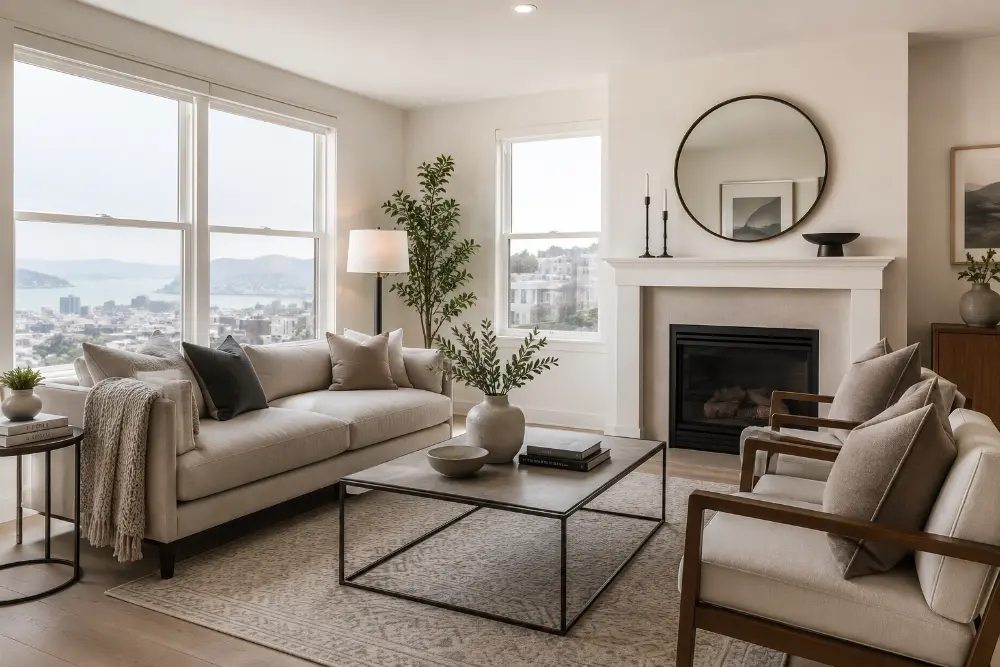
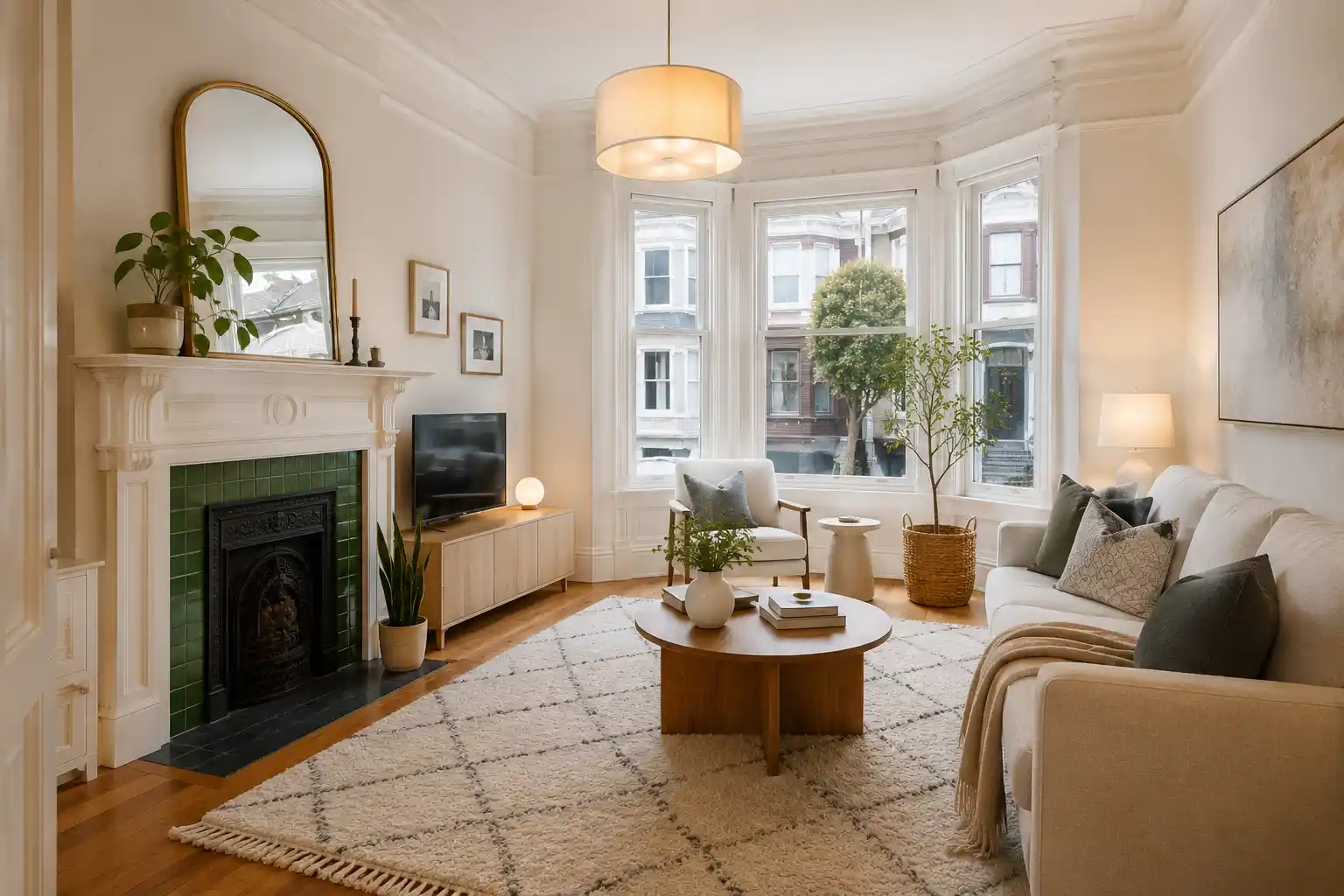
A beautifully staged Bay Area living room showing modern furniture, neutral tones, and natural light to illustrate professional staging results.
Things to Know
Before you sign any staging contract, here are a few details that often catch sellers off guard:
- Delivery and installation fees are sometimes charged separately and can add $300 to $800 to your total bill.
- Occupied staging is almost always cheaper than vacant staging, but it requires you to de-clutter, depersonalize, and potentially store personal items, which has its own cost.
- Storage unit rental in the Bay Area averages $150 to $300 per month for a 10x10 unit, which is often necessary when clearing space for staging.
- Professional photography is typically NOT included in staging packages. Budget an additional $300 to $700 for a real estate photographer.
- Staging ROI varies but the National Association of Realtors reports that staged homes sell for 1% to 5% more than unstaged ones. On a $1.2 million Bay Area home, that's $12,000 to $60,000 in additional return.
- Luxury staging in areas like Palo Alto, Atherton, or Pacific Heights operates in a completely different price tier, sometimes exceeding $25,000 for high-end properties.
What Drives the Price Up (and What You Can Control)
Home staging pricing isn't random. Several specific factors push costs higher in the Bay Area market, and understanding them gives you room to negotiate or adjust your approach.
Square footage: The more space there is to fill, the more furniture is needed. A 2,500 sq ft home in San Jose will cost significantly more to stage than a 900 sq ft condo in Oakland.
Home condition: Properties that need minor repairs, fresh paint, or deep cleaning before staging can add $500 to $2,000 in prep costs. Staging professionals will often delay bringing in furniture until the home is market-ready.
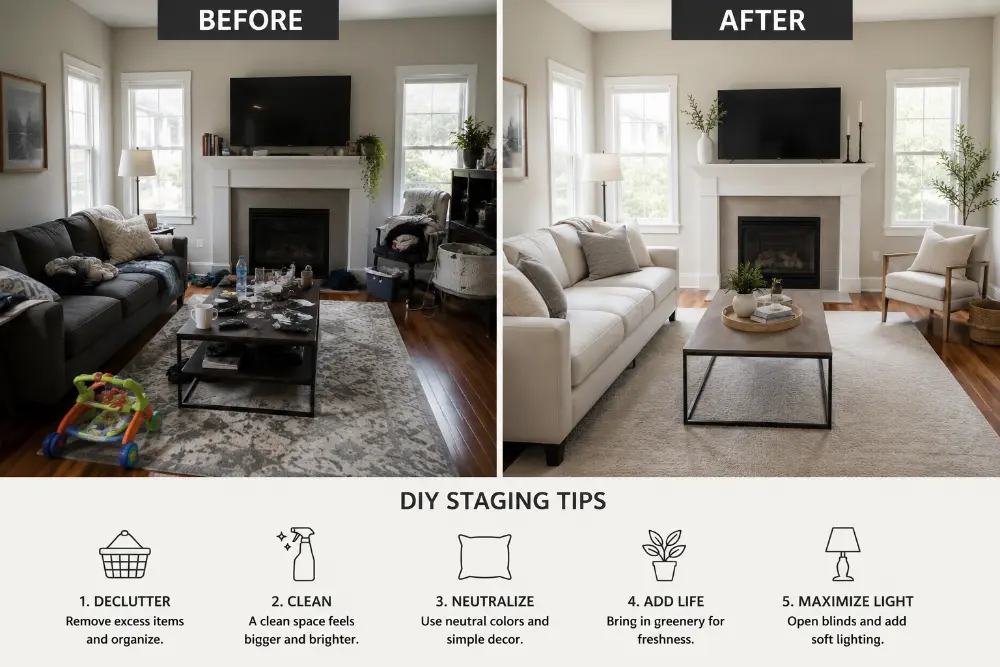
Staging duration: The longer your home sits, the more you pay. Bay Area homes staged by experienced professionals tend to sell faster because they're optimized for buyer psychology. Checking a company's before after transformations gives you a clear sense of how dramatically professional staging changes buyer perception.
Location and access: High-rise condos with elevator restrictions or homes with difficult access can result in higher delivery fees for staging furniture.
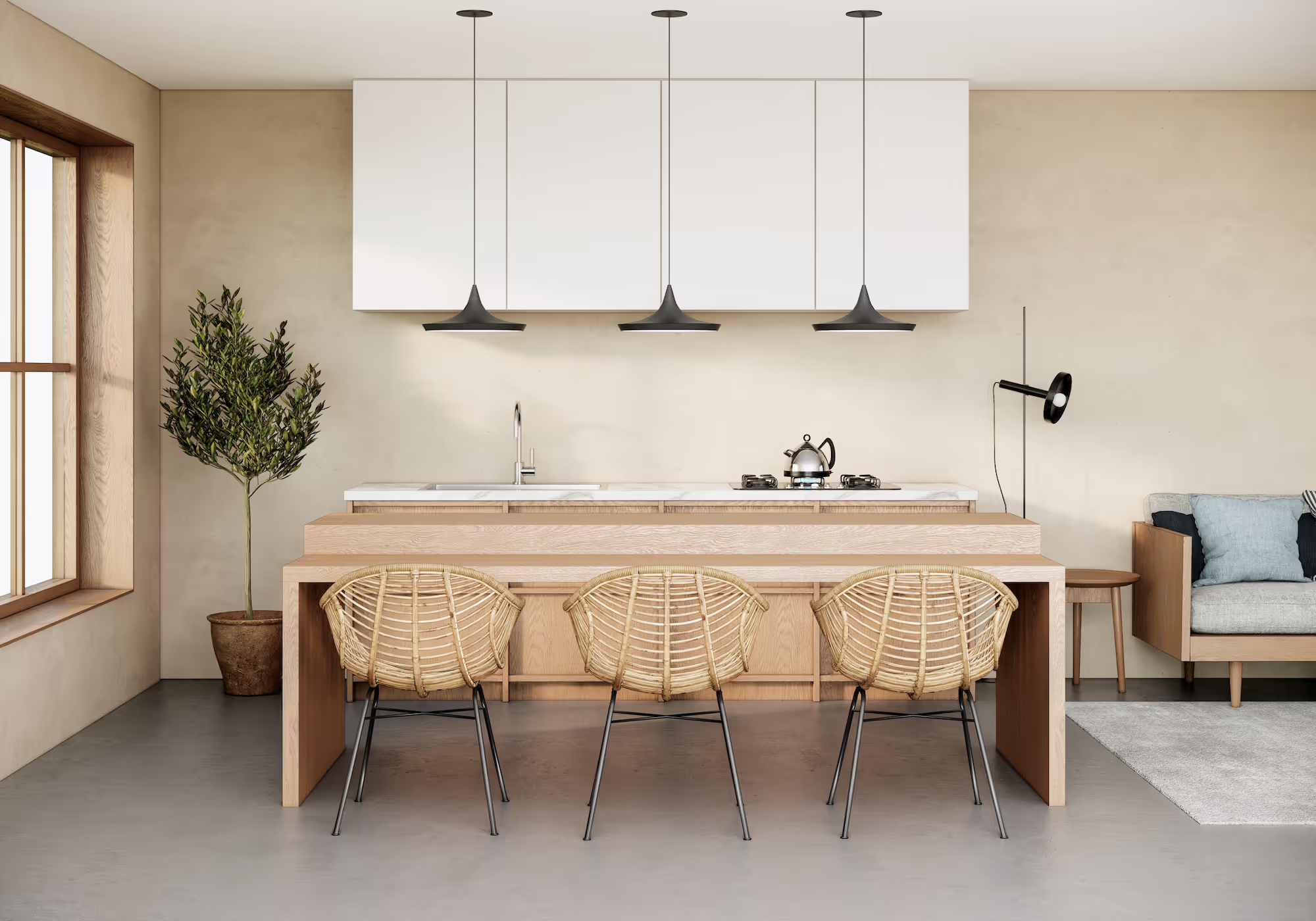
Current design trends: In 2026, buyers in the Bay Area respond strongly to clean, minimalist interiors with warm wood tones, biophilic design elements (think plants and natural materials), and flexible multi-use spaces that signal work-from-home functionality. Stagers who stay current with these trends tend to charge more because their inventory reflects what buyers actually want right now.
Modern Home Staging Ideas for 2026 That Actually Move Properties
The visual language of home staging has shifted noticeably heading into 2026. What worked in 2018, heavy gray tones and cold industrial fixtures, no longer resonates with Bay Area buyers.
Here's what's working right now:
- Warm neutrals over cool grays: Creamy whites, soft taupes, and warm greiges are replacing the stark gray palettes of the past decade.
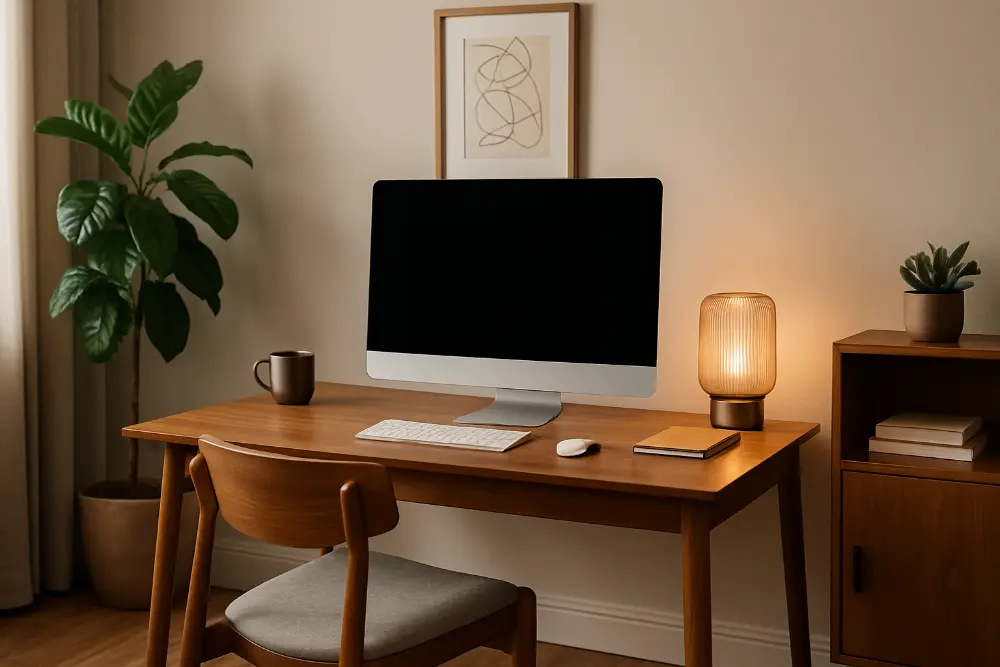
- Multifunctional rooms: With remote work normalized, showcasing a dedicated office nook or a flex room as a home office is a major selling point.
- Textural layering: Linen throws, natural wood furniture, woven baskets, and stone accents create depth without clutter.
- Statement lighting: Replacing builder-grade fixtures with contemporary pendants or sculptural floor lamps can elevate a space dramatically at relatively low cost.
- Outdoor living spaces: Bay Area buyers value outdoor areas. Staged patios and balconies with seating and greenery add perceived square footage and lifestyle appeal.
When you browse the portfolio at BoldRM, you can see exactly how these design choices translate into compelling, market-ready presentations that appeal to today's buyers.
Comparing Your Staging Options: A Cost Breakdown Table
Virtual staging is worth mentioning specifically. At $100 to $400 per room for digitally edited photos, it's significantly cheaper than physical staging. However, it only works for online impressions. Once buyers walk through a vacant home, the impact disappears. For most Bay Area sellers, physical staging remains the stronger investment.
How the Bay Area Market Shapes Staging Decisions
The Bay Area real estate market has seen significant shifts heading into 2026. After the correction period of 2022-2023, prices in many submarkets have rebounded, particularly in the South Bay and parts of Marin County. Median home prices in Silicon Valley hover around $1.4 million, while San Francisco proper sits closer to $1.2 million for condos and $1.6 million or more for single-family homes.
In this environment, sellers compete for buyers who are discerning and often making significant financial stretches to purchase. A poorly presented home doesn't just sell for less, it creates doubt. Buyers start wondering what else has been neglected. Professional staging removes that uncertainty and signals that the home has been cared for.
The hardest month to sell a house in most U.S. markets, including the Bay Area, tends to be December or January, when buyer activity drops sharply due to holidays and end-of-year financial uncertainty. If you're listing during these slower months, strong staging becomes even more important to attract the fewer buyers who are actively searching.
Reviewing the services offered by BoldRM gives you a detailed look at what professional staging includes and how each element is designed to maximize your home's market appeal in the Bay Area specifically.
The Cheapest Way to Stage a House Without Sacrificing Results
Not every seller has $6,000 to spend on staging, and that's a realistic constraint. Here are the most cost-effective staging strategies that still deliver results:
1. Deep clean and declutter first. This is free and has the highest impact. Remove at least 30% of your belongings. Clear countertops completely. Clean windows inside and out.
2. Repaint in warm neutrals. A gallon of quality paint costs $40 to $70. Painting a main living area yourself over a weekend can transform how the space photographs.
3. Rent only the essential pieces. Focus your budget on the living room and primary bedroom. These are the rooms that influence buyer decisions most.
4. Borrow or purchase key accessories. Fresh white towels in bathrooms, a simple floral arrangement on the dining table, and a new doormat cost under $100 total but significantly improve first impressions.
5. Stage for the camera. In 2026, most buyers see your home online first. Arrange furniture to photograph well from wide angles. Remove anything that competes visually with the space.
6. Use free resources. HGTV, Architectural Digest, and real estate blogs offer specific staging tutorials at no cost.
Frequently Asked Questions
Q: What are some modern home staging ideas for 2026?
In 2026, the most effective staging ideas focus on warm neutrals, multi-functional spaces, and biophilic design elements like natural wood and live plants.
Buyers in the Bay Area and across the U.S. are responding to homes that feel livable and calming, not sterile or overly styled. Showcase a dedicated workspace, use layered textures like linen and wool, and replace outdated light fixtures with contemporary alternatives. Outdoor spaces should be staged as usable living areas, not storage zones.
Q: How much does it cost to build a 2000 sq ft house in bay area?
Building a 2,000 sq ft house in the Bay Area in 2026 typically costs between $400,000 and $800,000 in construction costs alone, not including land.
The Bay Area has some of the highest construction labor and materials costs in the country. Permit fees, impact fees, and lot preparation can add another $50,000 to $150,000 on top of the base build cost. Total project costs including land in a desirable submarket can easily exceed $2 million.
Q: What is the hardest month to sell a house?
December and January are generally considered the hardest months to sell a house in the United States, including the Bay Area.
Buyer activity drops significantly during the holiday season, and fewer listings attract less competition overall. However, motivated buyers in December are often serious and ready to close quickly. If you do list during winter months, professional staging becomes a critical differentiator.
Q: What is the trend of home prices in the Bay Area?
Bay Area home prices have shown a gradual recovery trend heading into 2026 after the correction period of 2022-2023, with prices in Silicon Valley and core San Francisco submarkets trending upward.
Inventory remains constrained, and demand from the tech sector continues to support premium pricing in the South Bay. However, affordability pressures and higher mortgage rates have moderated the explosive growth seen during the 2020-2021 period. Sellers should price carefully and present their homes at their absolute best to capture serious buyers.
Q: What is the cheapest way to stage a house?
The cheapest way to stage a house is a combination of thorough decluttering, a fresh coat of neutral paint, and selective accessory upgrades, which can cost under $500 total.
Focus your energy on rooms that photograph best and influence buyer decisions most: the living room, kitchen, and primary bedroom. If your budget allows anything additional, consider renting just the main living room furniture for one month. Even partial staging consistently outperforms empty or cluttered homes in buyer surveys.
The Bottom Line on How Much Does Home Staging Cost in the Bay Area
Home staging in the Bay Area is one of the most direct investments you can make before listing your property. For most sellers, spending $3,000 to $8,000 on professional staging on a home valued at $1 million or more is a straightforward decision when you consider the potential return.
The key is working with professionals who understand the Bay Area market specifically, know what current buyers respond to, and can execute a staging plan that elevates your home's perceived value. If you're ready to see what professional staging can do for your listing, contact us at BoldRM to get a personalized staging consultation and a clear price estimate before you list.