How to Choose Wall Art for Any Room
Choosing wall art does not require an art degree or a deep knowledge of art history. What matters most is understanding how size, style, and color interact with the space around them. When selected thoughtfully, wall art does more than decorate; it helps define the room. It can anchor furniture, guide the eye, and create a sense of balance that makes a space feel complete.
Whether you are decorating a new home or preparing a property for sale, the right artwork can transform how a room is perceived. It adds personality without overwhelming the space and brings cohesion to all the design elements already in place. This guide explains how to choose wall art that works with your space rather than against it.
Key Takeaways for Choosing Wall Art
Before selecting artwork, it helps to understand a few core design principles. Well-chosen wall art should:
- Match the scale and proportion of the wall
- Complement the room’s overall design style
- Use color to create harmony or contrast
- Establish a clear visual focal point
These principles ensure that artwork feels intentional rather than random. In many cases, the difference between a well-designed room and one that feels unfinished comes down to how wall décor is scaled and placed.
Start with Size and Proportion
One of the most common mistakes in wall décor is choosing artwork that is too small. Scale plays a critical role in how balanced a room feels. Artwork should visually connect to the furniture and architecture around it, rather than appearing isolated on the wall.
Above a Sofa or Console
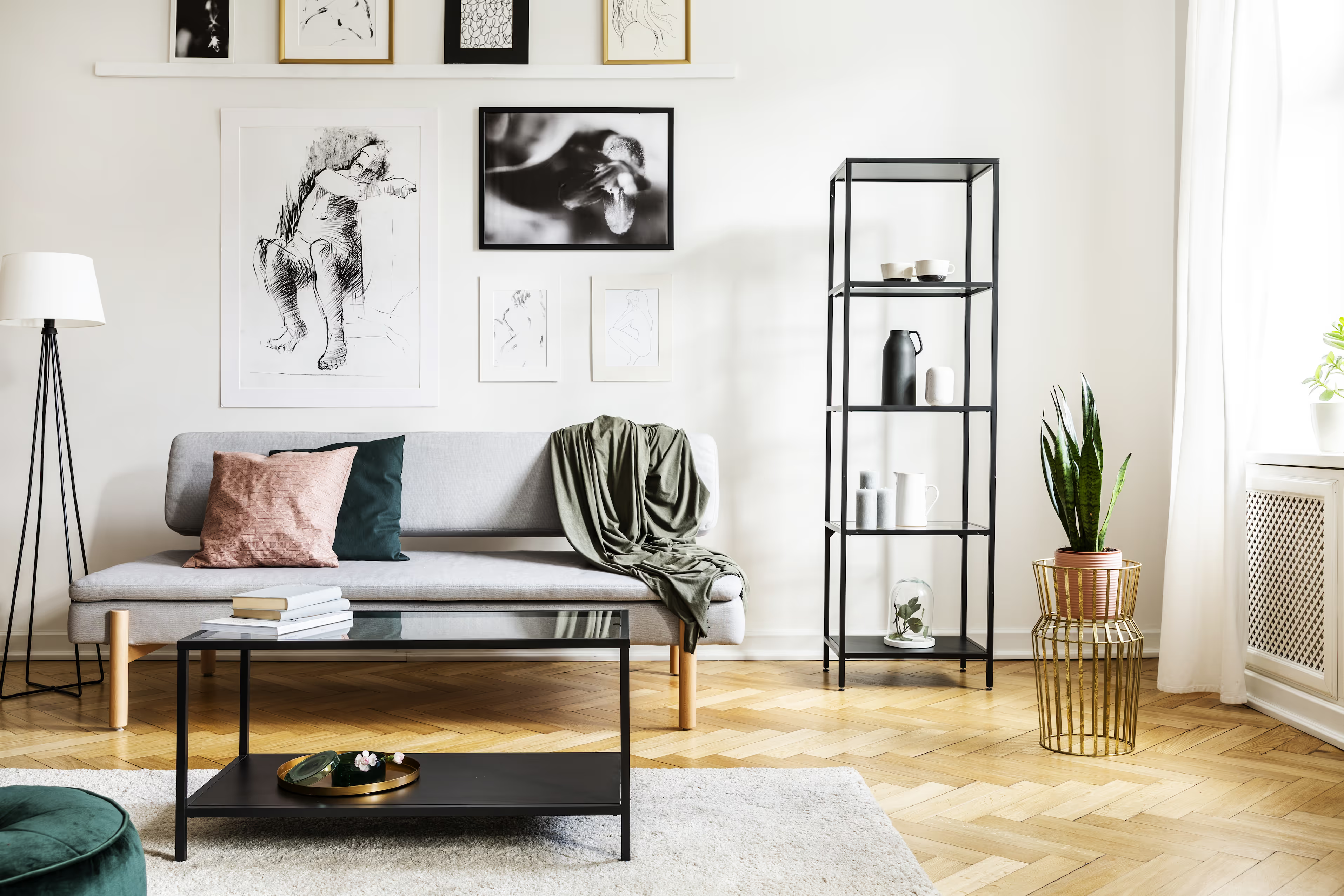
It might be easier to start with larger pieces, filling large chunks of empty wall space before working your way down to the tiny hanging knick-knacks. One rule of thumb is to keep pictures about two-thirds the length of your sofa.
But in general, stick to common sense rules. Small bathrooms would need small art pieces. And very large living rooms could support very large artworks. You could even group smaller (similar) pieces together to fill a bigger space.
For example: a 90-inch sofa pairs well with artwork around 60 inches wide
If you’re using multiple pieces, group them so their combined width creates the same visual proportion. This helps the arrangement feel unified instead of fragmented. The goal is to create a relationship between the artwork and the furniture, not treat them as separate elements.
In Small Spaces
Bathrooms, entryways, and narrow hallways benefit from smaller, more restrained artwork. Vertical pieces can help emphasize height, while simple compositions prevent the space from feeling cluttered. In tighter areas, clarity is more important than complexity.
In Large Rooms
Larger rooms can support more dramatic artwork. Options include:
- Oversized statement pieces
- Gallery walls
- Panoramic or horizontal prints
When in doubt, slightly larger artwork tends to feel more intentional than pieces that are too small. Undersized art often makes walls feel empty rather than styled.
Match the Art to the Room’s Style
Wall art should support the design language already present in the room. It does not need to match perfectly, but it should feel cohesive. When artwork clashes with the surrounding design, it can disrupt the visual flow of the space.
For example:
- Scandinavian interiors pair well with minimal landscapes or soft abstract pieces
- Coastal spaces benefit from light, nautical inspired imagery
- Industrial interiors often work with black-and-white photography or architectural prints
Basically, choose wall art that helps to sell the existing style. If you already have a piece you love that doesn’t fully match, framing can help bridge the gap.
- Wood frames add warmth to minimalist interiors
- Metal frames complement modern or industrial spaces
- Black frames introduce structure and contrast
Framing is often overlooked, but it plays a key role in integrating artwork into the room.
Choose Artwork Using a Color Strategy
Color is one of the most effective ways to select wall art. Rather than guessing, it helps to approach color intentionally through one of two strategies.
Blend with the Room
This approach focuses on harmony. Choose artwork that repeats colors already present in the space such as tones from rugs, pillows, or upholstery. This creates a cohesive, layered look where everything feels connected.
Blended color palettes tend to create calm, refined environments and work especially well in minimalist or neutral interiors.
Create Contrast
Alternatively, artwork can introduce contrast. A bold piece can act as a focal point and bring energy into the room. For example:
- Deep blue artwork against warm neutrals
- Earthy green tones in a light Scandinavian space
- Black-and-white prints in colorful rooms
Contrast draws attention and helps anchor the space visually. The key is balance. Too much contrast can feel chaotic, while too little can feel flat.
Creative Alternatives to Traditional Wall Art
Wall décor does not always need to be framed artwork. In many cases, alternative elements can create just as much visual impact.
Look at the way designer Angel Strawbridge decorates her 19th century French castle in Escape to the Chateau. She’s taught us that just about anything can be used as wall decor, from dried flowers, to old record disks. And you don’t need to spend much money to make a room feel special.
Get quirky and make your home truly unique by repurposing items into decorative masterpieces. A quick Google search will reveal endless wall decor possibilities. Consider options such as:
- Leaning a large mirror to reflect light and expand the space
- Floating shelves with curated objects
- Hanging textiles or woven pieces for texture
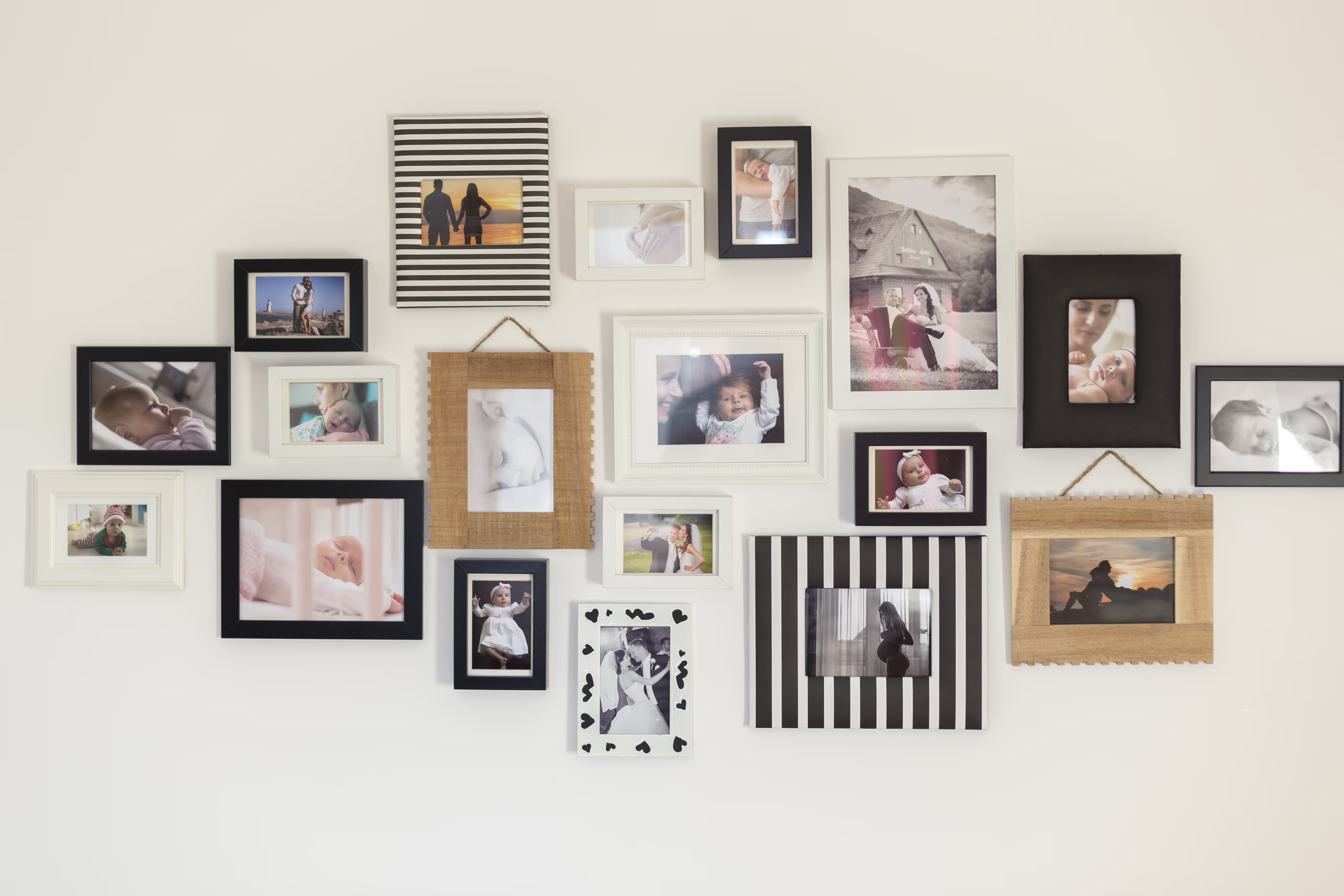
- Gallery walls with personal photography
- Hanging decorative plates or ceramics
- Wall-mounted planters for a natural touch
Even paint can function as wall décor. A well-executed accent wall or subtle color blocking can define a space without adding additional objects. These alternatives are especially useful when you want the space to feel styled but not overly decorated.
How Wall Art Influences the Feeling of a Room
Wall art does more than fill empty walls, it shapes how a room feels. Large-scale artwork can make a space feel more grounded and complete. Smaller, scattered pieces can create visual noise if not arranged carefully.
Artwork placement also affects how the eye moves through a room. A well-placed piece can guide attention toward key features, while poorly placed art can disrupt flow.
In this sense, wall art acts almost like a design tool. It helps define zones, create balance, and reinforce the overall mood of the space.
The simplest solution to wall decor, however, has to be paint. We don’t normally paint statement walls for home stagings here in the San Francisco Bay Area, but it is an easy way to turn an empty wall into a bold statement. Check out this list of accent wall ideas for inspiration or let your creativity run wild.
Angel’s wallpaper collage proves that wall decor inspiration can come from anywhere. And at the end of the day, like any other artistic endeavor, wall art and decor is meant to suit your individual preference and taste. There is no such thing as an artistically-challenged person.
How Wall Art Impacts Home Staging
In home staging, wall art is selected strategically rather than personally. Its role is to support the space and not dominate it. Well-chosen artwork helps:
- Define areas in open floor plans
- Add warmth to otherwise empty rooms
- Create focal points for listing photos
- Reinforce a neutral, buyer-friendly aesthetic
Staging artwork is typically neutral or abstract, scaled appropriately for the wall, minimal and non-polarizing, and coordinated with the room’s palette.
Unlike personal décor, staging art is designed to appeal to a broad audience. The goal is to enhance the home’s presentation while allowing buyers to imagine their own style in the space.