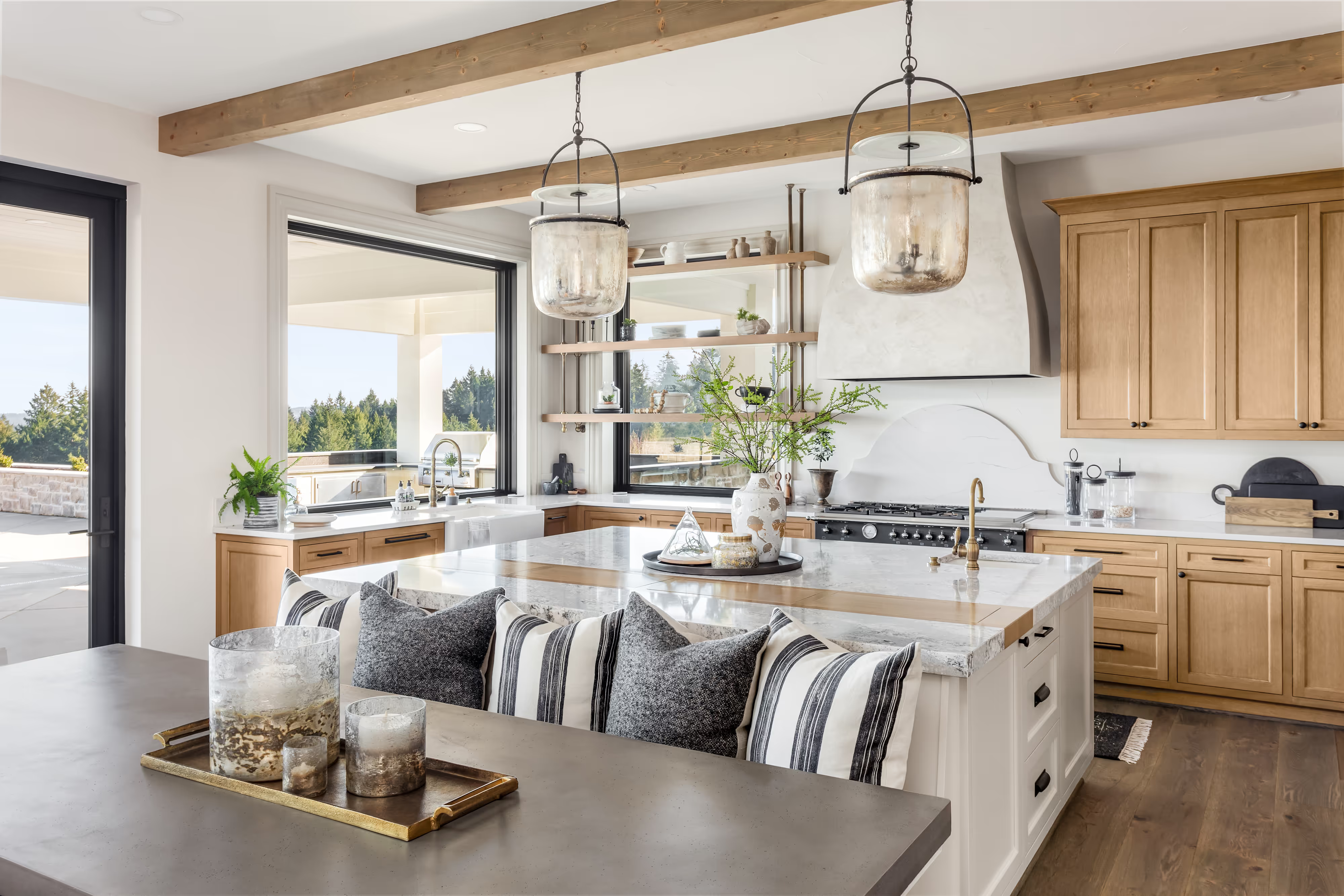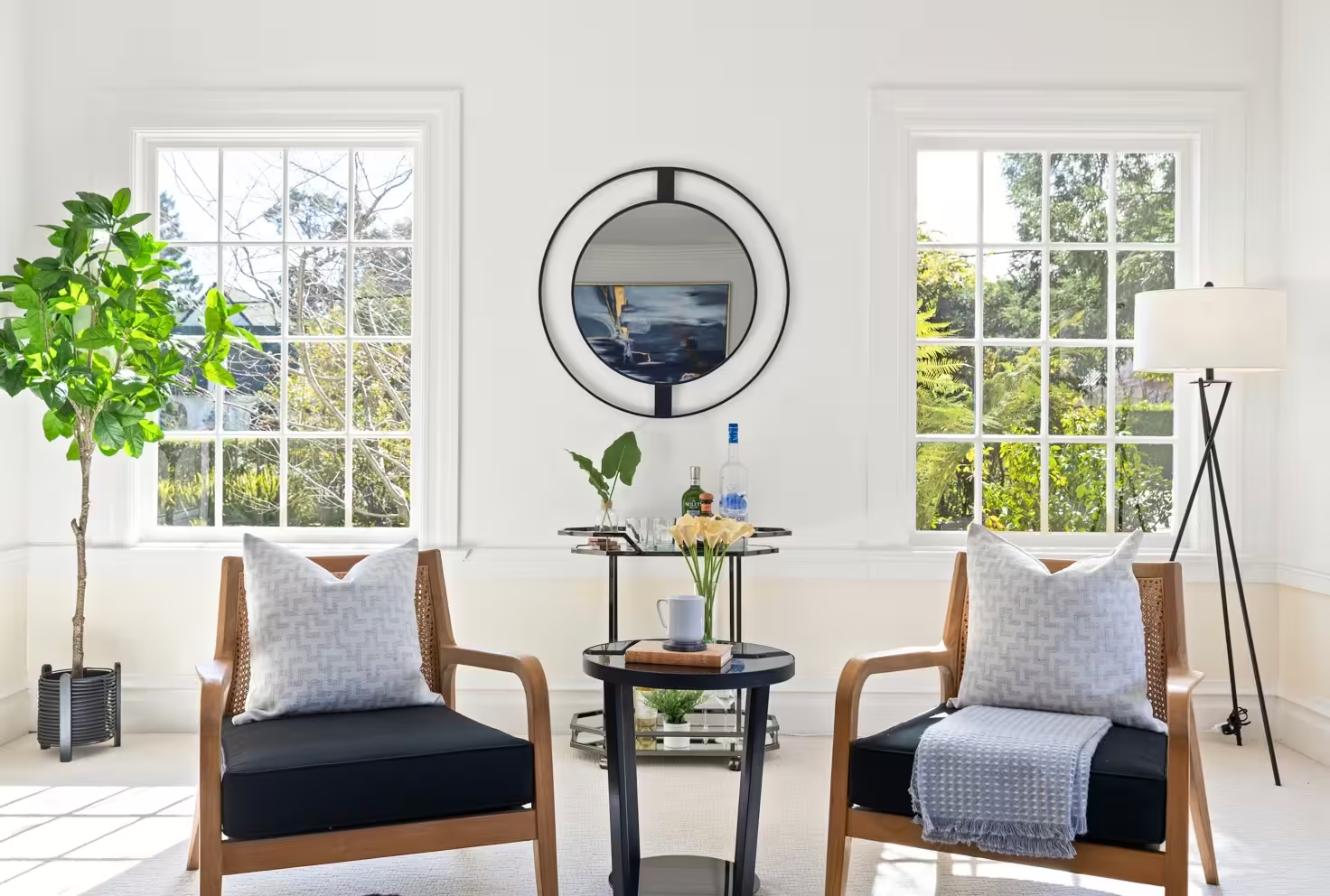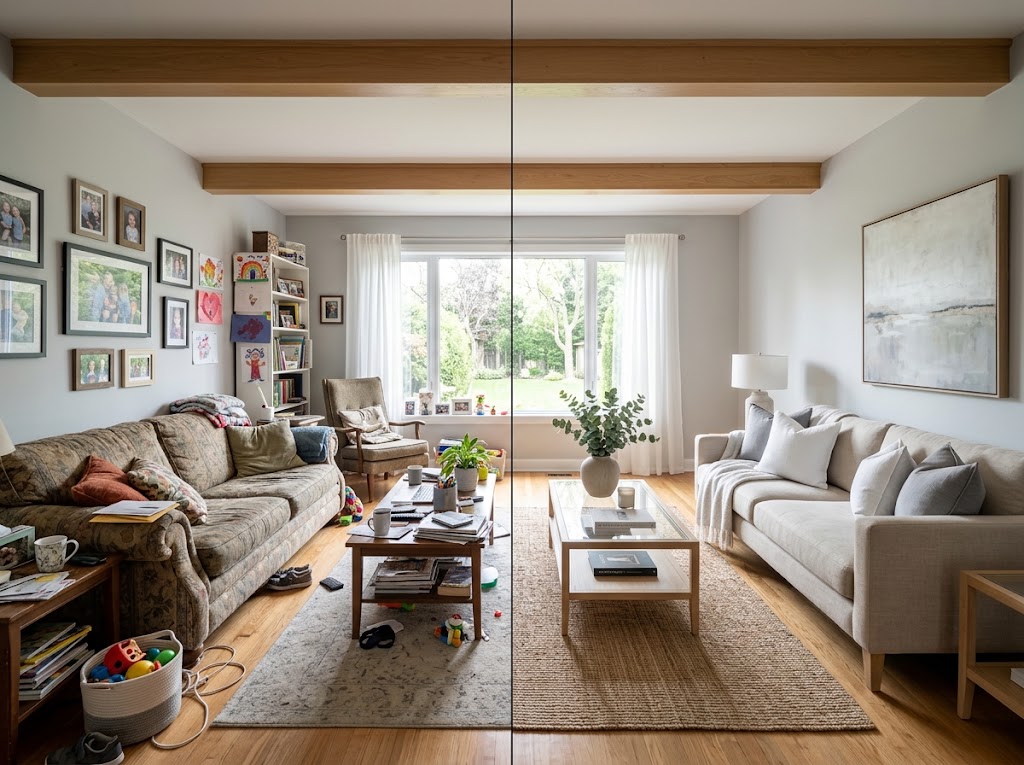
Staging an occupied home is almost always less expensive upfront than staging a vacant one, because you're working with furniture and decor that already exists. However, the total cost depends on factors like how much editing, rearranging, or supplementing a stager needs to do, and whether your existing pieces actually help or hurt your home's appeal on the market.
If you're preparing to list a property and wondering whether is it cheaper to stage an occupied or vacant home, you're asking exactly the right question before you sign anything or move a single piece of furniture. The answer affects your budget, your timeline, and ultimately what a buyer sees when they walk through the door.
Why Vacant Home Staging Costs More
When a home sits empty, it loses a critical psychological advantage. Buyers struggle to visualize scale, purpose, and warmth in bare rooms. Empty rooms also tend to highlight every imperfection, from scuffed baseboards to uneven flooring, because there's nothing else to draw the eye.
To counter that, professional stagers bring in furniture, artwork, rugs, lighting, plants, and accessories from their own inventory or through rental partners. In the United States, the cost of staging a vacant home typically runs higher because every single item in the space is a rental or a placement fee. Most staging companies charge a first-month delivery and installation fee followed by monthly rental fees for each piece of furniture or decor used.
Here's what that often looks like in practice:
- Initial staging fee: Ranges from $1,500 to $6,000+ depending on home size and location
- Monthly rental fee: Usually 30% to 50% of the initial staging cost, billed per month
- Larger homes: A vacant 3,000+ sq ft home could cost $8,000 to $15,000 or more for the first month
If your home sits on the market for two or three months, those monthly rental fees stack up fast. That's a financial reality that sellers often underestimate when they choose to move out before listing.
What Occupied Home Staging Actually Costs
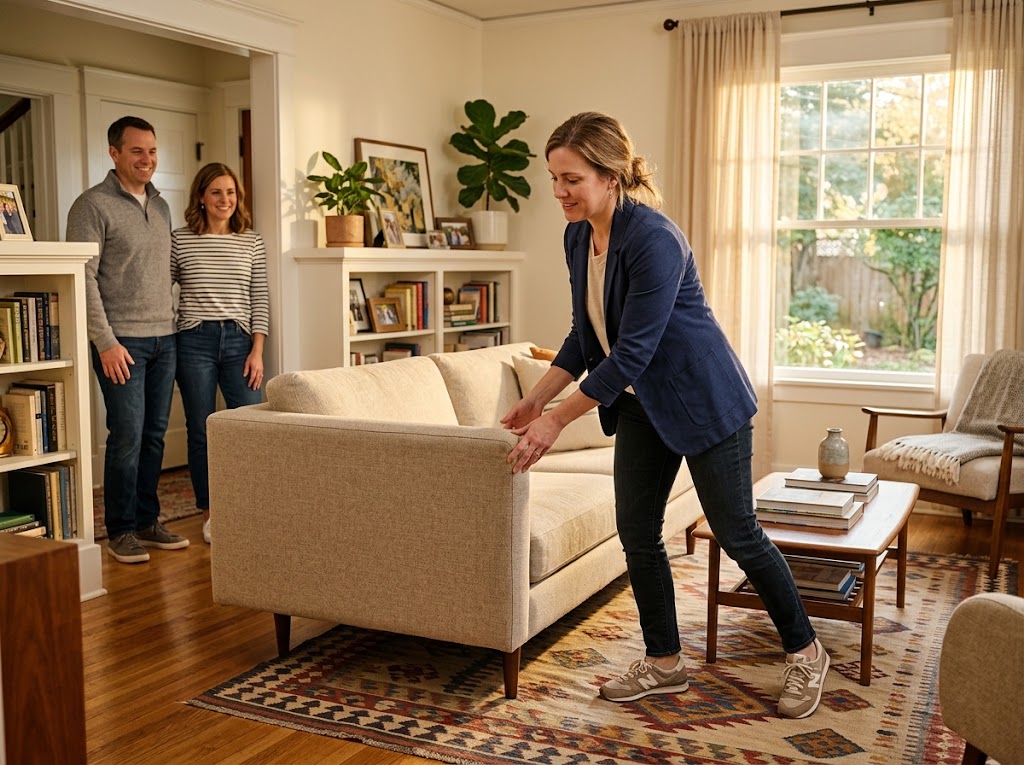
Occupied staging typically involves a professional stager coming to your home, assessing what you already own, and advising on what to remove, rearrange, replace, or supplement. Their goal is to use your existing pieces as much as possible to reduce cost while maximizing visual appeal.
Occupied staging costs generally fall into two categories:
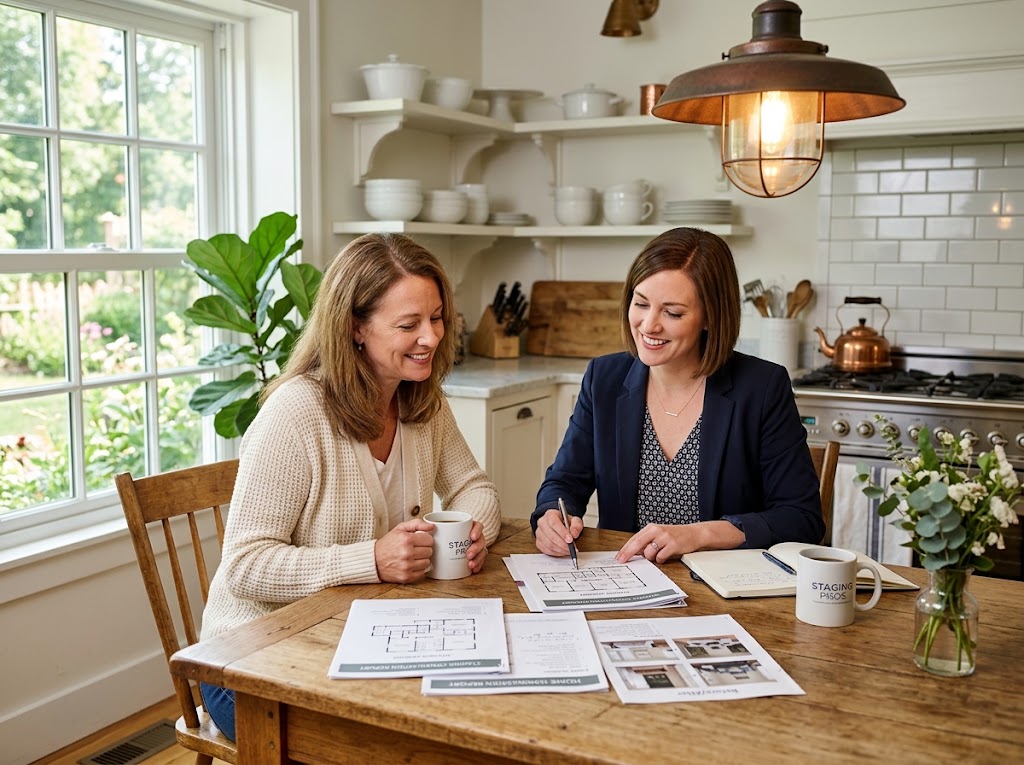
Consultation only: A stager visits, gives you a written report, and you do the work yourself. This can cost anywhere from $150 to $600 depending on the size of the home and market.
Full occupied staging service: The stager and their team physically rearrange your furniture, remove excess clutter, and bring in a small number of supplemental items like accent pillows, artwork, or decor. This typically runs $800 to $2,500 for the initial visit, with little to no ongoing rental fees if they use mostly your existing pieces.
The savings are real. If your home has reasonably neutral, well-proportioned furniture, an occupied staging engagement can cost a fraction of what you'd pay to fill an empty space from scratch.
The Hidden Costs That Shift the Equation
The sticker price of occupied versus vacant staging doesn't tell the whole story. Several factors can quietly tip the scales in either direction.
Your Furniture May Not Be an Asset
One of the biggest surprises sellers face is learning that their existing furniture could actually work against them. Oversized sectionals, heavily personalized decor, worn upholstery, or very niche aesthetic choices can make it harder for buyers to see themselves in the space. When that happens, the stager may recommend renting replacement pieces, which essentially converts an occupied staging engagement into something closer to a partial vacant staging in terms of cost.
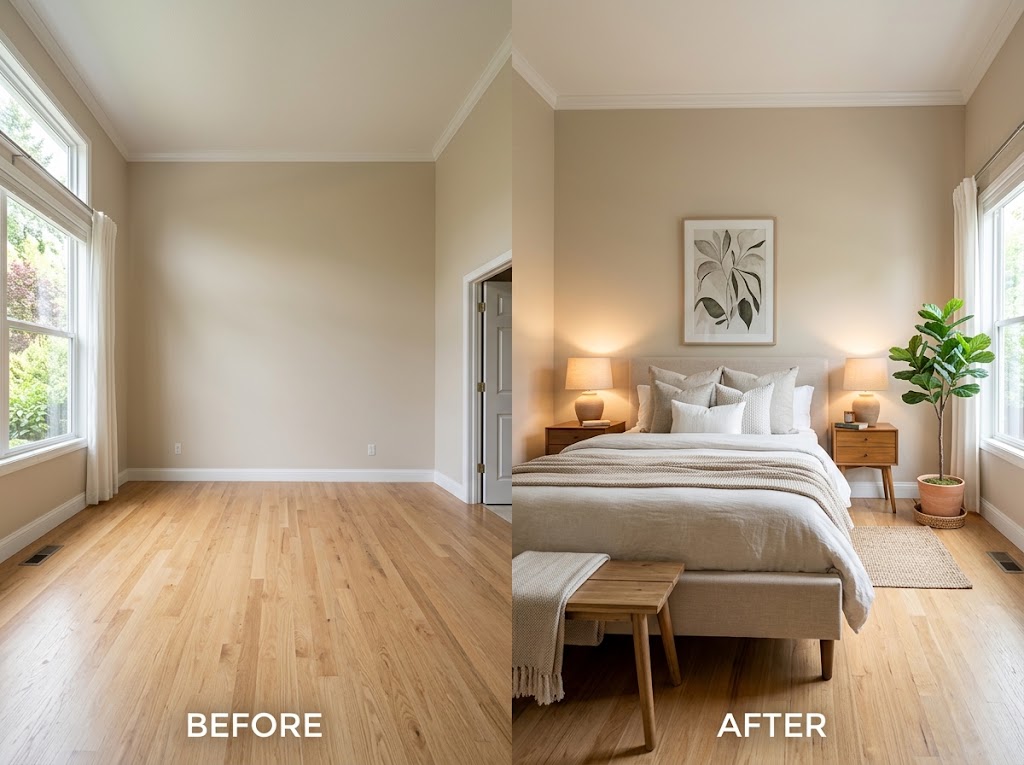
Viewing the before after transformations from professional staging companies can show you exactly how dramatically the right furniture choices change a room's perceived value.
Storage and Moving Costs
When you're living in a home being staged, the stager will almost certainly recommend removing a significant portion of your belongings. Personal photographs, collections, excess furniture, and seasonal clutter typically need to go. That means you're paying for:
- A storage unit rental ($80 to $250 per month depending on size and location)
- Moving labor to transport items to storage
- Potential cleaning services to deep-clean the space
Those costs aren't usually included in an occupied staging quote, but they're real out-of-pocket expenses that close the gap between occupied and vacant staging budgets.
Market Timing and Days on Market
A home that sells quickly costs less in carrying costs: mortgage payments, property taxes, utilities, and insurance. The staging method that gets you to the closing table faster is often the more economical choice in the long run, even if it costs more upfront.
The BoldRM services team works with sellers to identify the most cost-effective approach based on their specific property type, timeline, and budget.
When Vacant Staging Is Worth the Extra Spend
There are situations where paying more for vacant staging is not just reasonable, it's the smarter financial move.
Luxury properties: High-end buyers expect a polished, editorial-quality presentation. Everyday furniture rarely meets that standard. A professional staging inventory curated for luxury homes can make the difference between an offer and a pass.
Problematic layouts: Some homes have awkward room proportions or unusual floor plan. Professional staging furniture is chosen specifically to address those challenges in ways that personal furniture simply can't.
Investment properties and flips: These homes often have no furniture at all. Vacant staging is the only option, and the cost is typically factored into the project budget from the start.
Sellers who've already relocated: If you've moved across the country for a job and your previous home is sitting empty, vacant staging is your only practical path. Trying to manage an occupied staging from another state adds significant logistical complexity.
Exploring the BoldRM portfolio gives you a clear picture of what professional staging looks like across different property types and price points, which can help you set realistic expectations before you budget.
How to Know Which Option Is Right for Your Home
The decision between occupied and vacant staging comes down to a few key questions:
- Are you still living in the home? If yes, occupied staging is the practical starting point.
- Is your existing furniture neutral, proportional, and in good condition? If yes, you'll likely save money with occupied staging.
- Is your furniture very personalized, oversized, or in poor condition? If yes, you may end up spending just as much supplementing or replacing items.
- Is your home a luxury property? If yes, vacant staging often produces a higher return on investment.
- How quickly do you need to sell? If you're on a tight timeline, the approach that presents the home most compellingly takes priority over pure cost savings.
Using a Staging Calculator to Get Real Numbers
Generic cost ranges are useful for context, but they won't tell you what staging actually costs for your specific home in your specific market. Square footage, room count, current furnishings, local labor costs, and your target price point all affect the final number.
The most practical first step is to run your details through a staging calculator that accounts for your actual situation. You can visit and use BoldRM's staging calculator to get a personalized estimate based on your property before you commit to any approach.
This kind of upfront clarity helps you avoid the frustrating experience of getting a quote that turns out to be significantly higher than the general figures you read online. It also helps you compare the true cost of occupied versus vacant staging for your home specifically, not just in the abstract.
The Question That Matters More Than Cost Alone
Here's the perspective shift that experienced sellers often wish they'd had earlier: the cheapest staging option isn't necessarily the one with the lowest upfront invoice. It's the one that produces the fastest sale at the highest price relative to your total investment.
A home that sits on the market for 90 days because it wasn't staged compellingly will cost you far more in carrying costs, price reductions, and negotiating leverage than a staging engagement that cost a few thousand dollars more upfront. Every month your home doesn't sell, you're paying your mortgage, utilities, insurance, and potentially two sets of housing costs if you've already moved.
The question of is it cheaper to stage an occupied or vacant home is ultimately about total economics, not just the staging invoice. When you factor in days on the market, final sale price, carrying costs, and buyer psychology, the right staging approach almost always pays for itself.
Ready to get specific numbers for your property? Reach out and contact us to connect with a staging professional who can assess your home and help you make a confident, informed decision.
Frequently Asked Questions
Q: What is the cheapest way to stage a house?
The cheapest way to stage a house is to hire a stager for a consultation only, then complete the recommended changes yourself using your existing furniture and decor.
A consultation-only engagement typically costs between $150 and $600, and the stager gives you a detailed written report covering what to move, remove, and refresh. From there, you handle the physical work, which eliminates labor fees entirely. Pairing that approach with a deep clean, fresh paint in neutral tones, and improved lighting can dramatically improve buyer perception without a large budget.
Q: What are the biggest home staging mistakes?
The biggest home staging mistakes include over-personalizing the space, neglecting curb appeal, and leaving rooms either too cluttered or completely empty.
Sellers often underestimate how much personal photographs, bold color choices, and niche collections distract buyers from the home itself. On the other end of the spectrum, leaving a room completely bare creates its own problem because buyers lose their sense of scale and function. Skipping the exterior is another costly error since online listing photos form a buyer's first impression before they ever step inside.
Q: What devalues a house the most?
Deferred maintenance, outdated kitchens and bathrooms, and poor curb appeal are consistently among the factors that devalue a house the most in the U.S. market.
Buyers factor the cost of repairs into their offers, often discounting far more than the actual repair would have cost the seller. Visible issues like water stains, worn flooring, peeling paint, or dated fixtures signal neglect and cause buyers to question what else might be wrong beneath the surface. Staging can address presentation, but it cannot substitute for resolving genuine maintenance issues before listing.
Q: Is it better to stage a house?
Yes, staging a house is generally better than listing it unstaged, because professionally presented homes tend to sell faster and at a higher sale price relative to asking price.
The National Association of Realtors has consistently reported that staged homes spend fewer days on the market than unstaged ones, and that a significant portion of buyers' agents believe staging affects how buyers view a property's value. Even modest occupied staging, such as decluttering, rearranging furniture, and improving lighting, shifts buyer perception in meaningful ways. For sellers in competitive markets, skipping staging entirely is a risk that often costs more than the staging itself.
Q: What not to do when staging a house?
When staging a house, do not leave personal items on display, use overly bold color schemes, ignore odors, or stage only the rooms you think buyers care about.
Every room a buyer enters forms part of their overall impression, including secondary bedrooms, hallways, and laundry areas. Strong odors from pets, cooking, or moisture are one of the fastest ways to lose a buyer's interest regardless of how good the visual presentation looks. Sellers should also avoid the temptation to rush the process by skipping repairs or cleaning before the stager arrives, because staging works best on a clean, well-maintained canvas.
The Bottom Line on Is It Cheaper to Stage an Occupied or Vacant Home
When you weigh the full picture, occupied staging is almost always the lower-cost starting point, but the real answer depends on the condition of your existing furniture, how long your home sits on the market, and the price point you're targeting. Vacant staging costs more upfront, yet for the right property it often delivers a return that more than justifies the investment. The smartest move is to stop comparing abstract price ranges and start looking at what staging would actually cost for your specific home.
BoldRM makes that easy. Visit BoldRM's staging calculator and use the tool to get a personalized estimate based on your property's real details, then connect with a professional who can walk you through the most cost-effective strategy for your situation. The numbers may surprise you, and having them in hand before you list puts you in a far stronger position from day one.