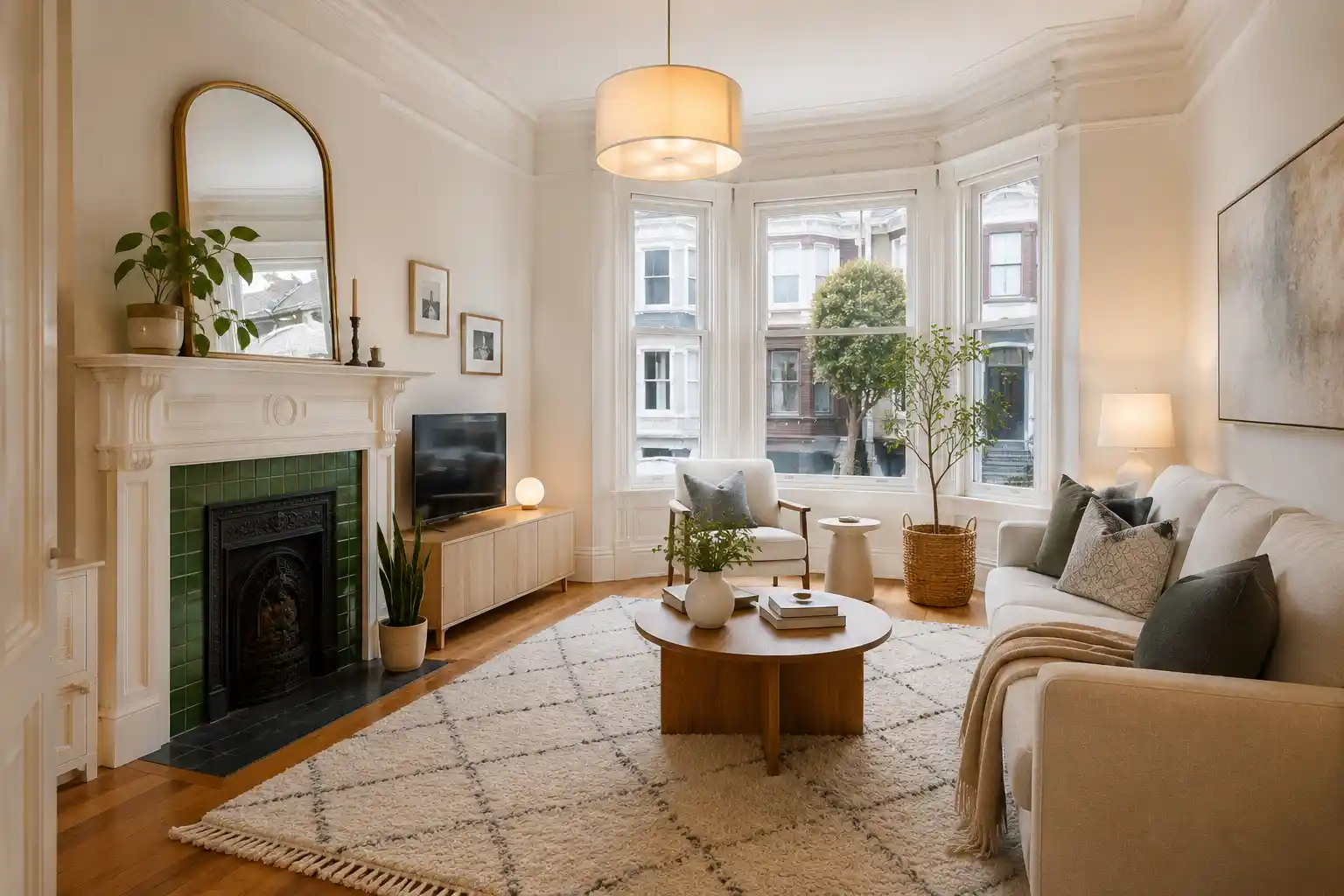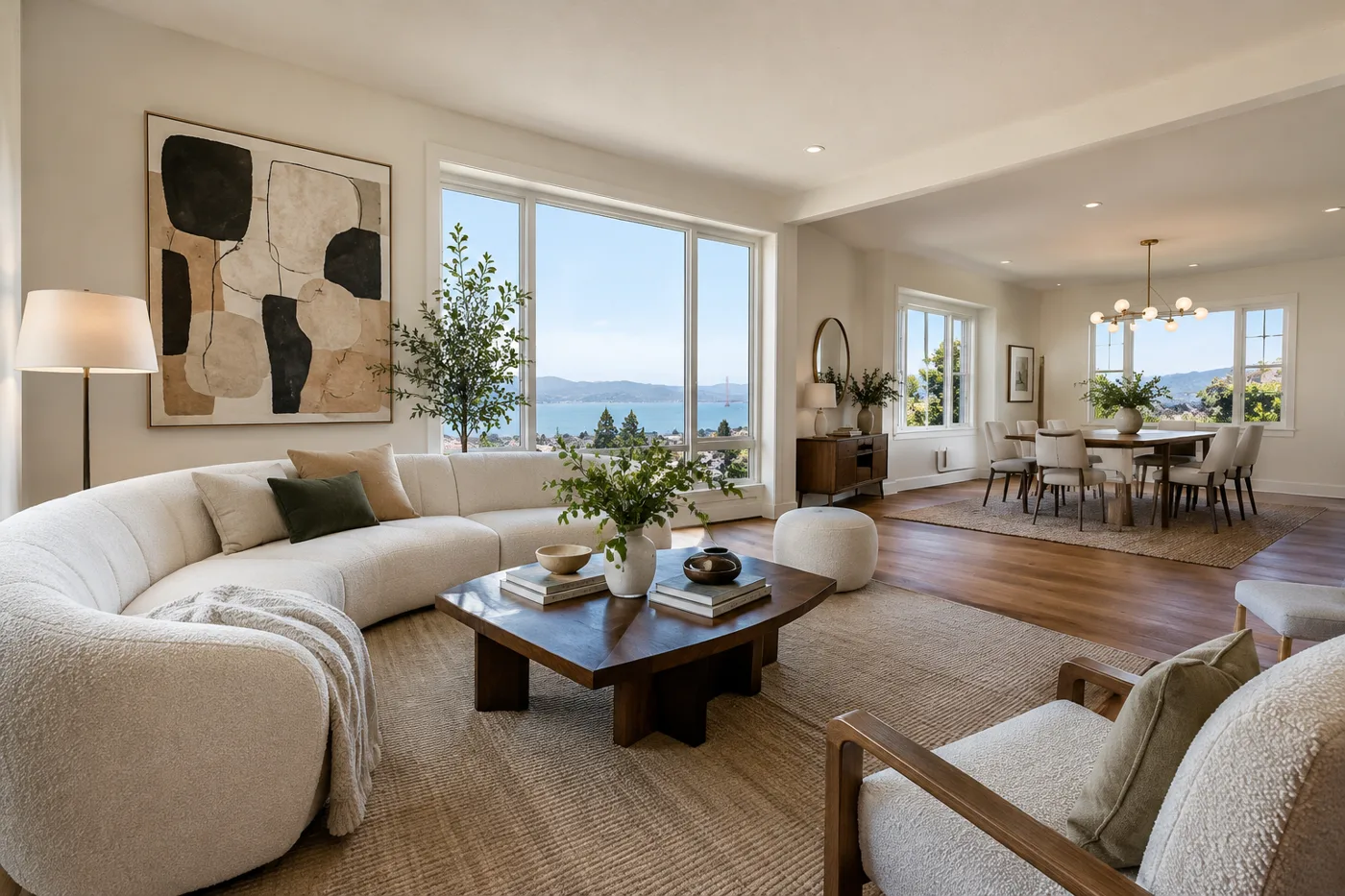
Virtual staging is cheaper and faster, but real staging usually sells a home better, because buyers experience the furniture, scale, and feel of a space in person and not just in photos. For most Bay Area listings, where homes sell for well over a million dollars and buyers tour in person before writing offers, physical staging delivers the stronger return. Virtual staging still has a place, especially for budget-limited or out-of-area listings.
If you're deciding between virtual staging vs. real staging, the right answer depends on your price point, whether the home is vacant, how buyers in your market shop, and how much you're willing to spend upfront. This guide breaks down the costs, the trade-offs, and the California disclosure rules that now apply to every virtually staged photo.
What Is Virtual Staging?
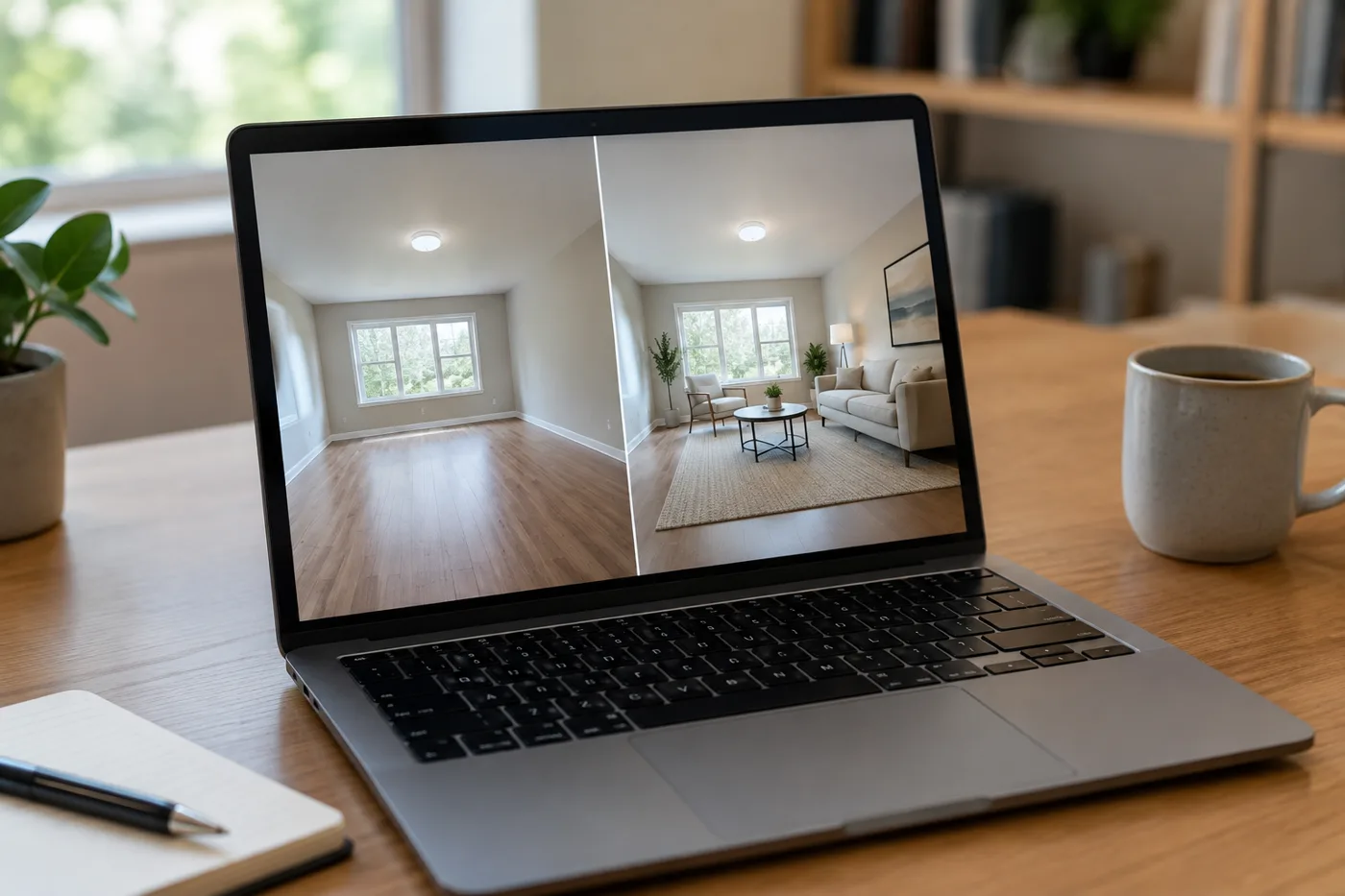
Virtual staging adds digital furniture, rugs, art, and decor to photos of empty rooms. A designer or AI tool edits the listing photos so buyers browsing online see a furnished space, even though the home itself stays empty.
It's fast and inexpensive. AI virtual staging tools cost about $1 to $3 per photo, and human-edited virtual staging typically runs $20 to $50 per photo, according to Snappr's 2026 pricing review. Most orders come back within 24 to 48 hours.
The catch is that nothing changes in the actual home. When buyers walk in, they see the same empty rooms the photos covered up, and the gap between expectation and reality can work against you.
What Is Real (Physical) Staging?
Real staging means a professional team brings actual furniture, art, lighting, rugs, and accessories into the home and styles each room before photos and showings. The home looks the same in person as it does online.
It costs more because it involves inventory, delivery, labor, and a rental period. In the Bay Area, staging a vacant three-bedroom home typically runs $4,000 to $9,000 or more for an initial 30 to 45 day period. You can see the full breakdown in our guide to how much home staging costs in the Bay Area.
What you get in return is a home that performs in both places buyers judge it: online and at the showing. You can see the difference physical staging makes in our before after gallery.
Virtual Staging vs. Real Staging: Side-by-Side Comparison
Here's how the two options compare on the factors that matter most to sellers.
| Factor | Virtual Staging | Real Staging |
|---|---|---|
| Typical cost | $1 to $50 per photo | $4,000 to $9,000+ (vacant 3-bed, Bay Area) |
| Turnaround | 24 to 48 hours | 3 to 5 days to schedule and install |
| In-person showings | Rooms are still empty | Furnished and styled |
| Buyer trust | Can feel misleading if overdone | What buyers see is what they get |
| California disclosure | Required under AB 723, plus access to unaltered photos | Not required |
| Ongoing costs | None | Monthly extension if the home doesn't sell in the rental period |
| Best for | Tight budgets, rentals, out-of-area sellers | Vacant homes, higher price points, competitive markets |
Which Sells Faster in the Bay Area?
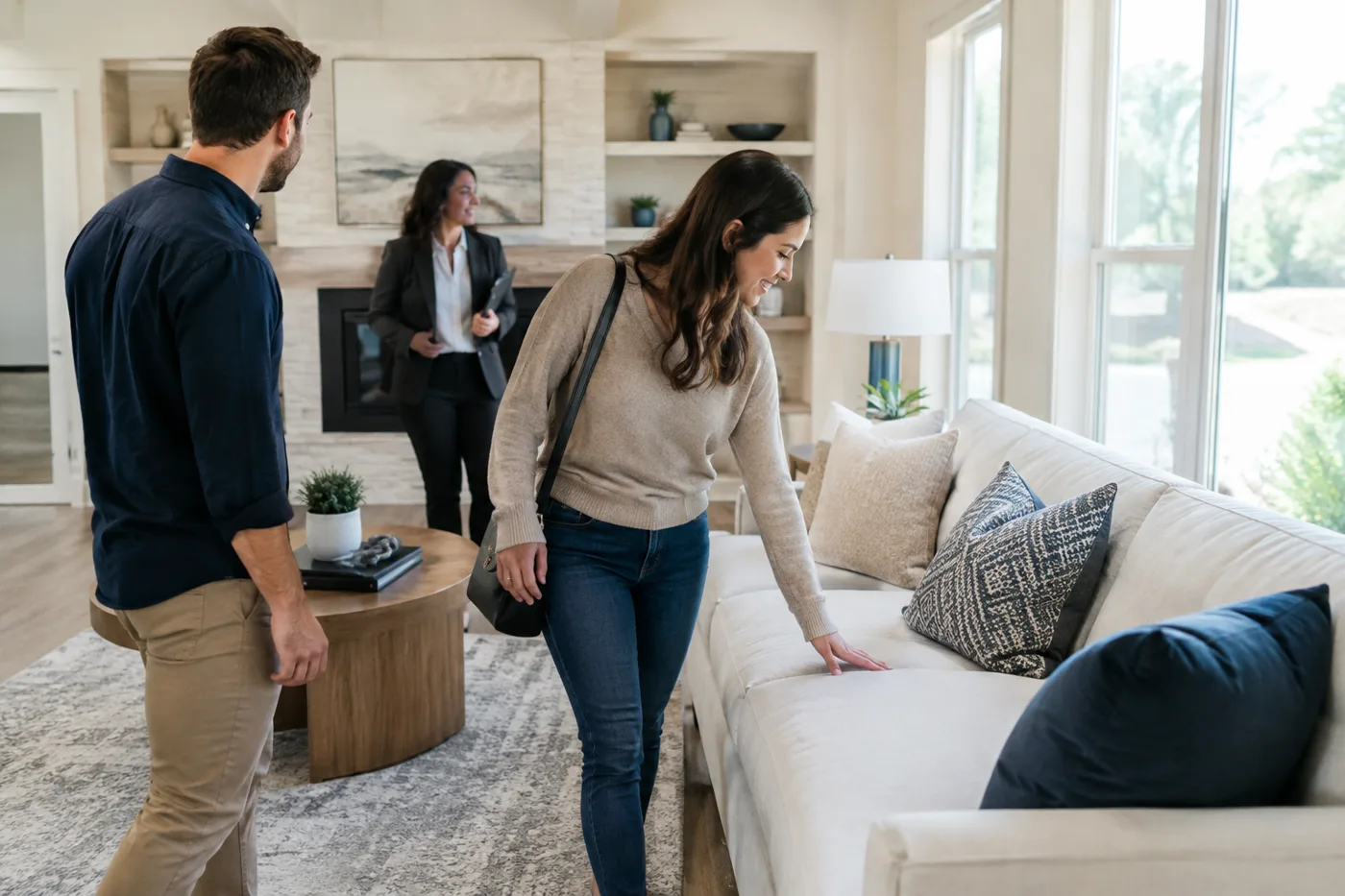
In most Bay Area markets, real staging gives sellers the edge. Homes here commonly sell above asking within a few weeks, and nearly every buyer tours in person before making an offer. That in-person visit is where virtual staging falls short. A buyer who fell for a furnished living room online walks into an empty one, and the emotional pull fades.
Physical staging also helps buyers judge scale in homes with tricky layouts, which is common in the Bay Area's older housing stock. A properly sized sofa in a narrow San Francisco flat or low-profile furniture in a mid-century ranch shows buyers exactly how the space works.
Photography matters too. BoldRM's services include professional-grade photography with every stage, taken in-house right after installation, so your listing photos show the real staging at its best with no digital alteration needed.
When Virtual Staging Makes Sense
Virtual staging isn't the wrong choice in every situation. It can be the smart one when:
- The budget is very tight: If physical staging simply isn't affordable, virtually staged photos are better than empty-room photos online.
- The seller is out of the area: Coordinating delivery and installation from another state adds complexity that virtual staging avoids.
- The property is a rental or lower-priced condo: Where online leads matter more than the showing experience, the savings can outweigh the trade-off.
- You want to show a room's potential: Virtual staging can show a spare room as an office or nursery, as long as it's clearly disclosed.
A hybrid approach also works for some sellers: physically stage the main living areas and virtually stage secondary bedrooms. Just make sure every altered photo follows California's disclosure rules.
California's AB 723: What It Means for Virtual Staging
Since January 1, 2026, California's AB 723 requires real estate agents to disclose digitally altered listing photos, including virtually staged images, according to Inman's summary of the law. The disclosure must be reasonably conspicuous and placed on or next to the image, and buyers must be able to view the unaltered original through a link, URL, or QR code.
Routine edits like brightness, color balance, and cropping are exempt. Adding furniture, removing flaws, or changing how the property looks are not. For Bay Area sellers, that means virtual staging now comes with an extra step, and buyers will see your empty rooms one click away from the staged version. Physical staging photos need no disclosure at all.
Things to Know
- AI virtual staging costs about $1 to $3 per photo, and human-edited virtual staging costs about $20 to $50 per photo.
- Physical staging of a vacant three-bedroom Bay Area home typically costs $4,000 to $9,000 or more for a 30 to 45 day period.
- California's AB 723, effective January 1, 2026, requires a conspicuous disclosure on virtually staged listing photos and access to the unaltered originals.
- Virtual staging improves online appeal, but rooms remain empty during in-person showings.
- Physical staging helps buyers judge room scale, which matters most in older homes with unusual layouts.
- A hybrid approach, real staging for main rooms and virtual for secondary rooms, can balance budget and impact.
Frequently Asked Questions
Q: What is the best virtual staging?
The best virtual staging looks realistic, keeps the room's true size and architecture, matches the home's style and price point, and is clearly disclosed.
Human-edited virtual staging generally looks more convincing than low-cost AI output, especially on higher-value listings. Whatever service you choose, avoid edits that change walls, windows, views, or finishes, and in California follow AB 723 by labeling altered photos and linking to the originals.
Q: What are the key differences between physical staging and virtual staging?
Physical staging puts real furniture in the home for photos and showings, while virtual staging adds digital furniture to photos only, leaving the rooms empty in person.
Virtual staging is much cheaper and faster, often $1 to $50 per photo with a one to two day turnaround. Physical staging costs more, typically thousands of dollars, but it improves both the listing photos and the in-person showing, and it needs no disclosure under California law.
Q: Can ChatGPT do virtual staging?
Yes, ChatGPT and other AI image tools can add furniture to a room photo, but the results often change architectural details and need careful review before they're used in a listing.
General-purpose AI tools may alter window placement, flooring, ceiling height, or room proportions, which can misrepresent the property. In California, any virtually staged photo, AI-made or not, must be disclosed under AB 723 with access to the unaltered image. For a listing, a dedicated staging service or physical staging is the safer choice.
Q: What are the biggest home staging mistakes?
The biggest home staging mistakes are over-personalizing rooms, using furniture that's the wrong size, leaving clutter, and relying on virtual staging that doesn't match what buyers see in person.
Sellers also often skip high-impact rooms like the primary bedroom, ignore lighting, or forget curb appeal. With virtual staging, the most common mistake is going too far, such as adding upgrades or decor that misrepresents the home and creates disappointment at the showing.
Q: How much does virtual staging cost compared to real staging?
Virtual staging typically costs $1 to $50 per photo, while real staging of a vacant Bay Area home usually costs $4,000 to $9,000 or more.
Virtual staging for a full listing might total a few hundred dollars at most. Real staging is a larger investment, but it often pays for itself in a higher sale price and fewer days on market. To see what physical staging would cost for your home, use the BoldRM staging calculator.
The Bottom Line on Virtual Staging vs. Real Staging
Virtual staging wins on cost and speed, but real staging wins where it counts most in the Bay Area: the in-person showing and the offers that follow. With California now requiring disclosure on every virtually staged photo, physical staging has one more advantage, because what buyers see online is exactly what they'll walk into.
If you're weighing the two, start by getting real numbers for your home. Use the BoldRM staging calculator for an instant estimate, browse our portfolio to see what physical staging looks like, and contact us to plan the right approach for your listing.