How to Stage a Master Bedroom to Sell: Room-by-Room Tips That Actually Move Listings
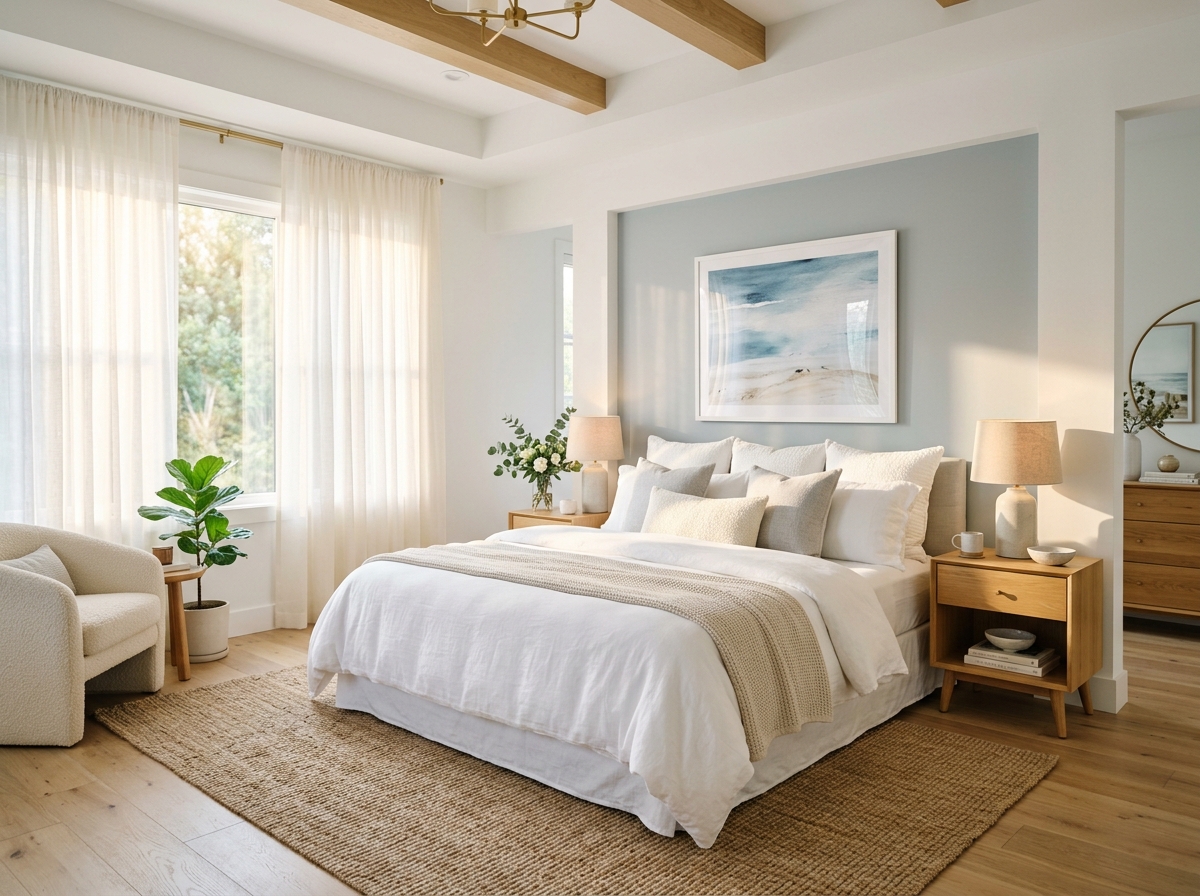
The master bedroom is one of the rooms buyers remember most when they walk out of a showing, and staging it thoughtfully can be the difference between a fast offer and a stale listing. Knowing how to stage a master bedroom to sell means creating a space that feels calm, spacious, and aspirational without looking like a showroom that nobody lives in.
Why the Master Bedroom Carries So Much Weight With Buyers
When buyers tour a home, they do a quiet calculation in their heads. They imagine their life inside the space. The master bedroom is where that imagination runs deepest because it represents rest, privacy, and personal retreat. If the room feels cramped, cluttered, or oddly decorated, buyers emotionally detach, even if the square footage is perfectly adequate.
Real estate professionals consistently rank the master bedroom among the top three rooms that influence a buyer's final decision. A well-staged room signals that the home has been cared for. It also photographs dramatically better, which matters enormously because most buyers today begin their search online and form impressions before they ever schedule a visit.
There is also a financial reason to prioritize this room. Staged homes tend to sell faster and closer to asking price than non-staged homes. If you are weighing whether professional staging is worth the cost, the BoldRM staging calculator can help you see the potential return before you commit to anything.
Start With a Clean Slate: Declutter and Depersonalize
Before you move a single piece of furniture, you need to strip the room back to its bones. This step is less about design and more about psychology.
Remove these items first:
- Family photos and personal mementos
- Visible medications, toiletries, or supplements on nightstands
- Excess throw pillows that look chaotic rather than inviting
- Mismatched furniture that interrupts visual flow
- Electronics, charging cables, and tangled cords
- Clothing left on chairs, hooks, or door handles
Buyers need to project themselves into the space. The moment they see your family photos or your gym equipment in the corner, the mental switch flips from "could this be my home?" to "this is someone else's home." Closets are part of this equation too. Overstuffed closets signal a lack of storage, so pull out at least a third of the contents and store them elsewhere during the listing period.
Walls should be neutral but not clinical. If your bedroom is painted a bold or dark color, repainting in a warm white, soft greige, or pale blue-gray is one of the highest-ROI moves you can make before listing. It is relatively inexpensive, takes a weekend, and dramatically expands the perceived size of the room in listing photos.
Furniture Placement: The Art of Making Space Feel Bigger
Most master bedrooms have more furniture than they need, and the placement is often driven by habit rather than intention. For staging purposes, you want the floor plan to feel generous and easy to move through.
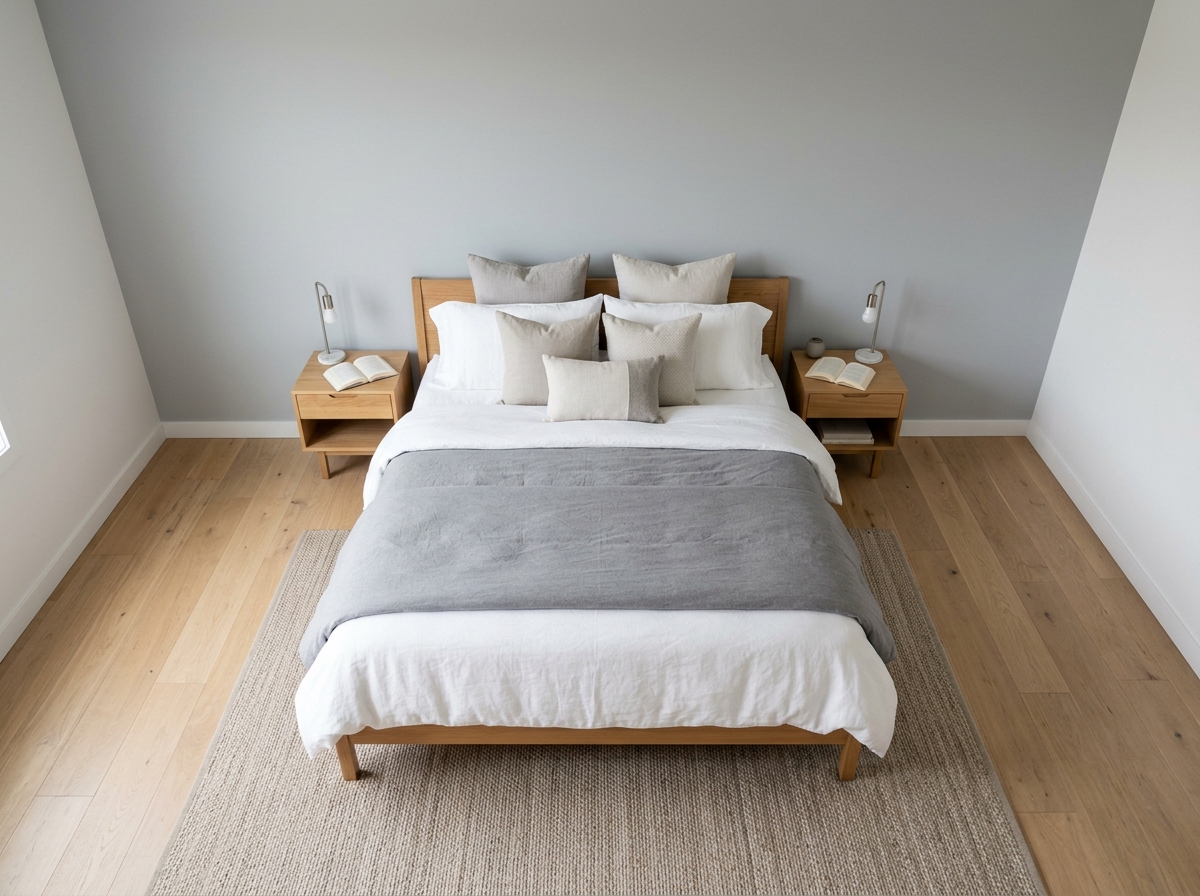
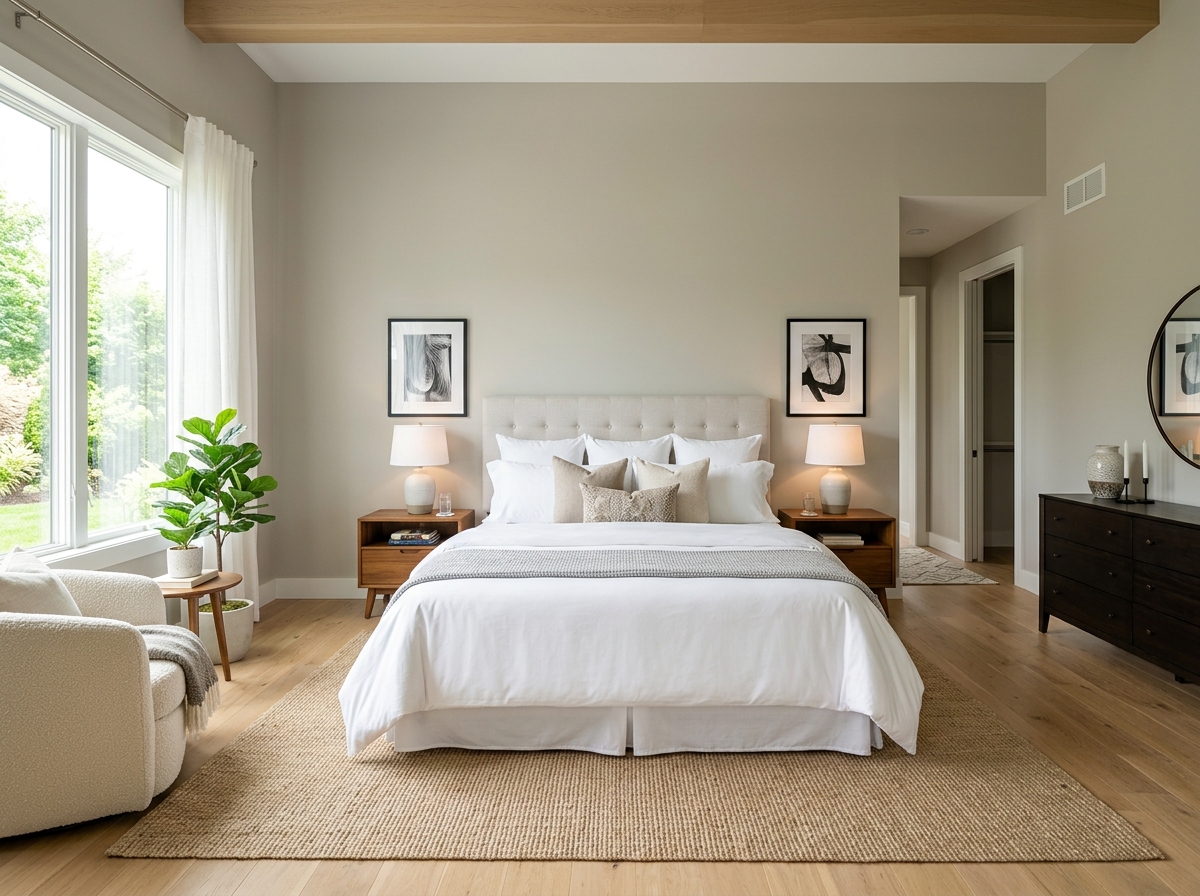
The bed should be the focal point. Center it on the main wall, ideally the wall visible from the doorway. Symmetrical nightstands on both sides create a sense of balance that buyers respond to strongly. If your nightstands do not match, consider swapping them for a matching pair from a furniture rental company or a budget-friendly retailer.
Pull furniture away from walls where possible. This sounds counterintuitive, but floating pieces slightly into the room actually makes the space feel larger rather than smaller. It also creates defined zones, which helps buyers understand how the room functions.
If the room has a sitting area, stage it. A small upholstered bench at the foot of the bed, or two accent chairs near a window, communicates luxury and square footage. If the room is too small for that, skip it entirely; overcrowding kills the effect.
Remove anything that does not serve a clear purpose. That means the exercise bike in the corner, the oversized armoire that blocks the window, and the extra dresser you kept for storage. When in doubt, take it out.
Bedding, Textiles, and the Feeling of Luxury on a Budget
You do not need to spend a fortune to make a bed look like it belongs in a boutique hotel, but the bedding is the single most photographed element in the room, so it deserves your attention.
Start with a crisp, wrinkle-free duvet or comforter in a neutral tone: white, ivory, soft taupe, or a muted sage. Layer a folded throw blanket at the foot for texture and warmth. Add two Euro shams behind the standard pillows to build visual height. Keep the color palette tight: two or three coordinating tones maximum.
Throw pillows should be plush and intentional. A standard arrangement includes two sleeping pillows in shams, two standard decorative pillows, and one or two smaller accent pillows in front. Beyond that, you are adding clutter rather than style.
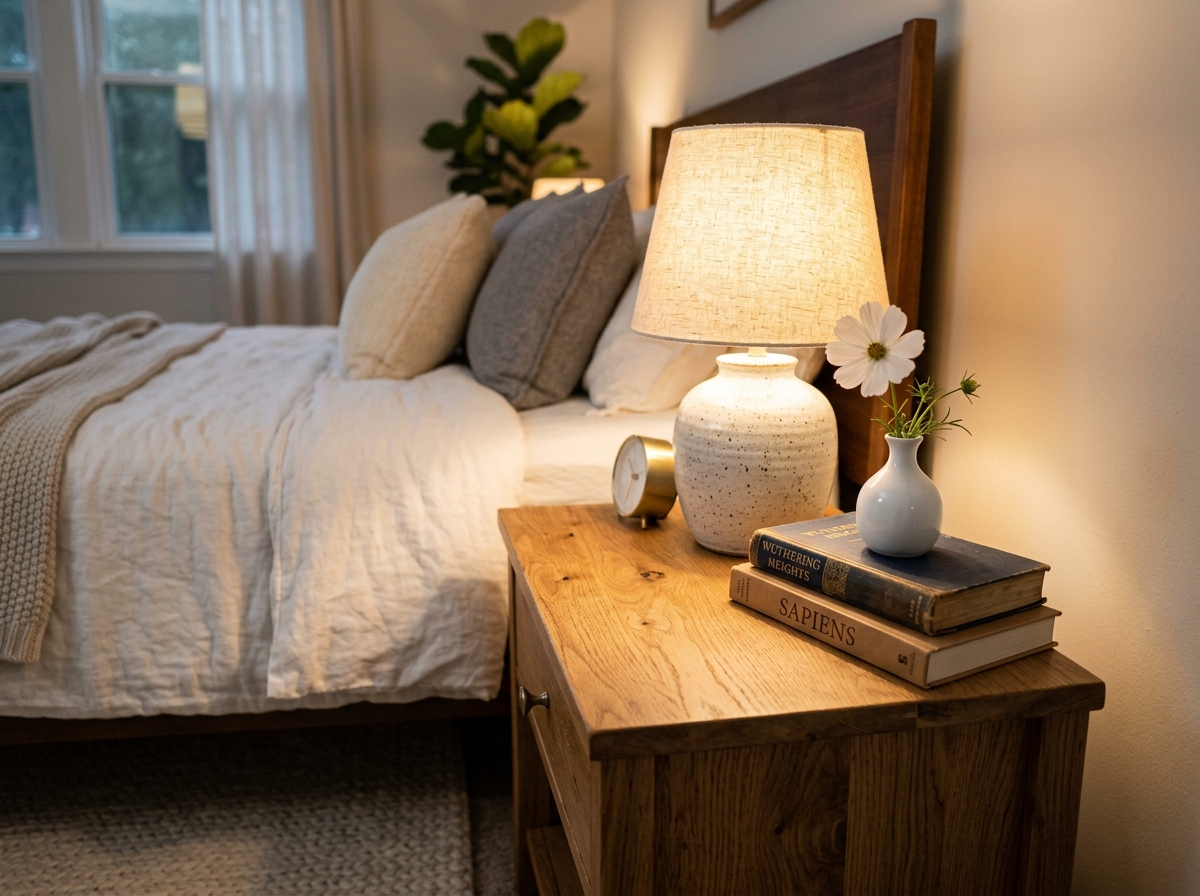
Nightstand styling follows a simple rule: one lamp, one small stack of books or a single decorative object, and nothing else. A small bud vase with a few stems of eucalyptus or white tulips adds life without screaming "I staged this room this morning."
Window treatments matter more than most sellers realize. Heavy blackout curtains in a dark color make the room feel smaller and dated. Replace them with sheer panels that let light pass through, or hang simple linen drapes in a neutral. Mount curtain rods close to the ceiling and extend them well past the window frame on each side. This makes windows look dramatically larger and ceilings feel higher.
Lighting: The Fastest Way to Change the Mood of a Room
Bad lighting is one of the most common and most fixable problems in staged bedrooms. Overhead fixtures with harsh bulbs flatten the room and make it feel institutional. You want warm, layered light that makes the space feel relaxed and inviting.
A practical lighting plan for a master bedroom:
- Swap any cool-white bulbs for warm-white LED bulbs (2700K to 3000K range)
- Add table lamps on both nightstands, even if the room has ceiling fixtures
- Use a floor lamp in a corner if the room has any dark zones
- Make sure all lampshades are in good condition, clean, and appropriately sized
For showings and photography, turn every light on, open every blind, and pull curtains to the side. A bright room photographs better and feels more welcoming to buyers walking through.
If your ceiling fan light kit produces harsh light, consider replacing the globe with a warmer alternative or installing a dimmer switch. These are inexpensive changes that can meaningfully improve how the room reads during showings.
You can see real examples of how lighting and layout changes transform spaces in the BoldRM before after gallery, which shows actual client rooms before and after professional staging.
The Details That Separate Good Staging From Great Staging
Once the major moves are made, the finishing details are what elevate a staged room from "looks clean" to "buyers are putting in an offer tonight."
Mirrors add light and perceived square footage. A large mirror on the wall opposite a window reflects natural light back into the room and makes the space feel significantly bigger. Lean a full-length mirror against a wall for an intentional, styled look.
Art should be simple and inoffensive. A single large print above the headboard, or two smaller coordinating pieces on a side wall, is enough. Abstract, landscape, or botanical prints tend to appeal to the widest range of buyers. Avoid anything overtly personal, religious, or polarizing.
Scent is a staging tool that is often overlooked. Buyers register smell the moment they walk in. Avoid artificial air fresheners that announce themselves too loudly. Instead, use a subtle linen spray on the bedding, a light reed diffuser on the dresser, or simply open windows an hour before a showing to freshen the air.
Flooring should be clean and in good condition. If the carpet has visible stains or heavy wear, a professional cleaning is worth the cost. If hardwood floors are scratched or dull, a quick buff and polish can restore them significantly. A simple area rug anchors the bed and adds warmth if the floors are cold or worn.
The BoldRM team offers detailed services that cover all of these elements, from furniture arrangement and accessory sourcing to full room transformations for sellers who want professional results without the guesswork.
Working With What You Have vs. Bringing In New Pieces
Not every seller needs to start from scratch. A good staging strategy works with existing furniture wherever possible and only brings in new or rented pieces when something is actively hurting the presentation.
Keep your existing pieces if they are in good condition, appropriately scaled for the room, and neutral enough not to polarize buyers. Replace or remove anything that is heavily worn, overly personal in style, or too large or too small for the space.
If you decide to rent staging furniture for the master bedroom, focus the budget on the bed frame and bedding first, followed by nightstands and lamps. These are the elements that appear most prominently in listing photos and carry the strongest first impression.
For sellers who want to see what professional staging looks like across a range of home types and price points, the BoldRM portfolio showcases real transformations from properties across a variety of markets.
How Professional Staging Fits Into Your Selling Strategy
If you are selling a home in 2026, the market rewards preparation. Buyers have access to more listing photos, virtual tours, and market data than at any previous point in real estate history. A room that looks mediocre online is simply skipped. A room that looks aspirational gets showings, and showings lead to offers.
Professional staging is not just for luxury listings. Homes at nearly every price point benefit from the credibility and visual polish that staging provides. The question most sellers have is whether the cost justifies the return, and the honest answer is that it depends on your specific home, market, and timeline.
That is exactly why BoldRM built a staging calculator. Rather than guessing, you can input your details and get a clearer picture of what staging might be worth for your specific situation. If you are ready to talk through your options, contact us and a staging specialist can walk you through the process from start to finish.
Knowing how to stage a master bedroom to sell is ultimately about shifting your mindset from homeowner to seller. The goal is not to make the room look like yours. The goal is to make it look like the one a buyer has been dreaming about.
Frequently Asked Questions
Q: How to stage a master bedroom for sale?
Clear the room of personal items, neutralize the color palette, center the bed on the focal wall, and layer the bedding with hotel-style linens and coordinated throw pillows.
Focus on symmetry, lighting, and a clean, decluttered floor plan. Small investments like new bedding, updated lamps, and a fresh coat of neutral paint tend to deliver strong visual results without major expense.
Q: What are the 7 golden rules for bedroom design?
The most widely cited principles include scale, balance, contrast, rhythm, emphasis, harmony, and functionality, all working together to create a cohesive and comfortable space.
In a staging context, emphasis and balance carry the most weight because they affect how a room photographs and how buyers move through it emotionally. Keep the arrangement intentional and the palette cohesive.
Q: How do I stage my living room for sale?
Remove excess furniture to open the floor plan, anchor the seating area with a rug, and style surfaces with minimal, intentional accessories that suggest comfort without clutter.
The living room and master bedroom are the two spaces buyers connect with most emotionally. Applying the same neutral, decluttered, well-lit approach across both rooms creates a consistent impression throughout the home.
Q: How to make a master bedroom look expensive?
Upgrade the bedding to a crisp, hotel-quality duvet, add matching lamps on both nightstands, mount curtains close to the ceiling, and incorporate one or two large-scale art pieces.
The perception of luxury comes from consistency, proportion, and quality of materials, not necessarily price. A tight, well-executed color palette with layered textures reads as high-end even on a modest budget.
Q: What are the trends for master bedrooms in 2026?
In 2026, buyers are gravitating toward warm neutral palettes, natural materials like linen and wood, minimalist furniture silhouettes, and soft ambient lighting over harsh overhead fixtures.
Earthy tones, curved furniture edges, and organic textures are appearing across listings that sell quickly in competitive markets. Staging to these preferences helps your home feel current and move-in ready to today's buyers.
Make Your Master Bedroom the Room That Closes the Deal
Understanding how to stage a master bedroom to sell gives you a real strategic advantage in any market. The steps covered here, from decluttering and furniture placement to lighting and finishing details, are actionable whether you are working with a professional staging team or handling it yourself.
If you want to take the guesswork out of the process, BoldRM's staging specialists are ready to help. Start by using the staging calculator to get a sense of what your investment could look like, then contact us to book a consultation and move your listing forward with confidence.