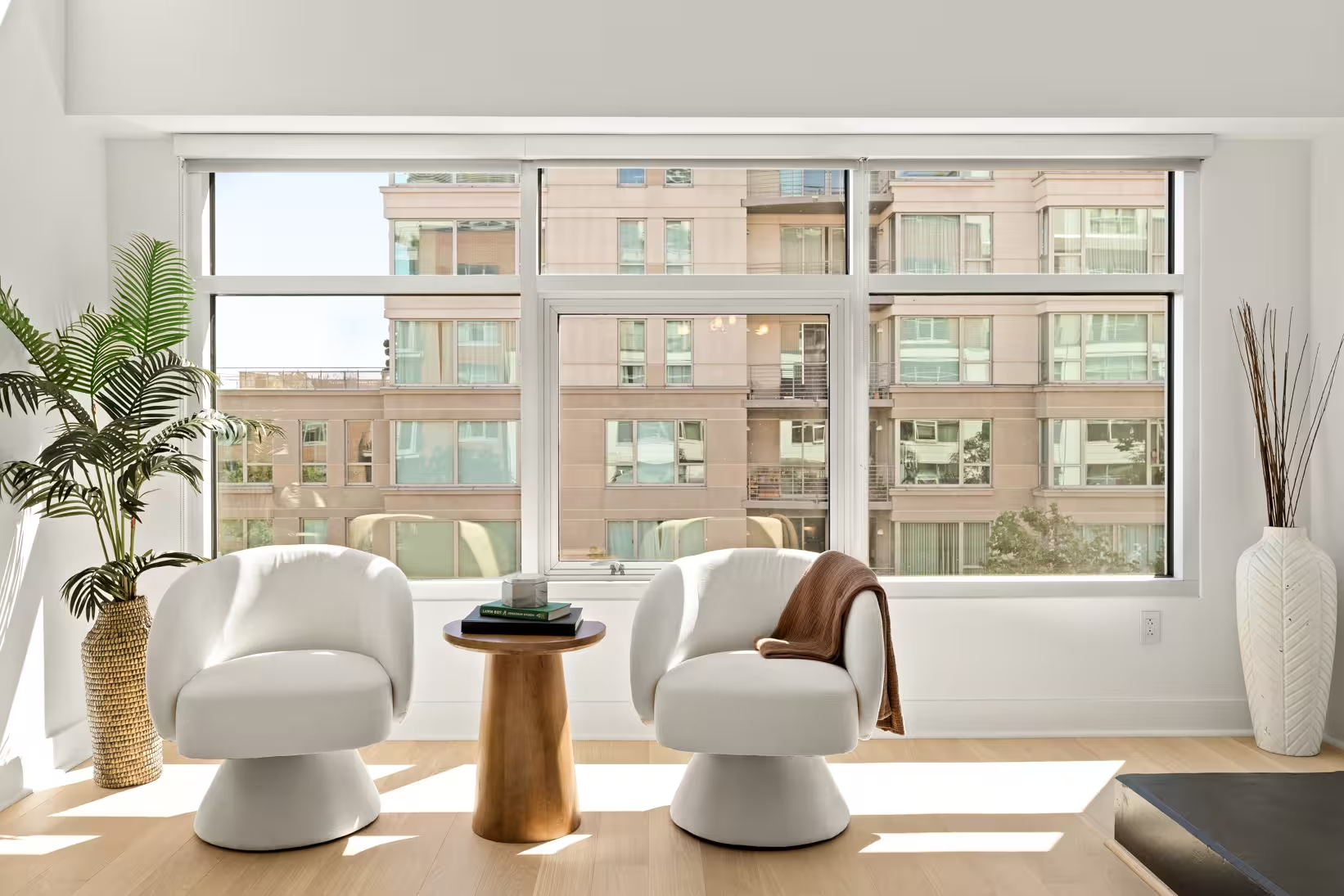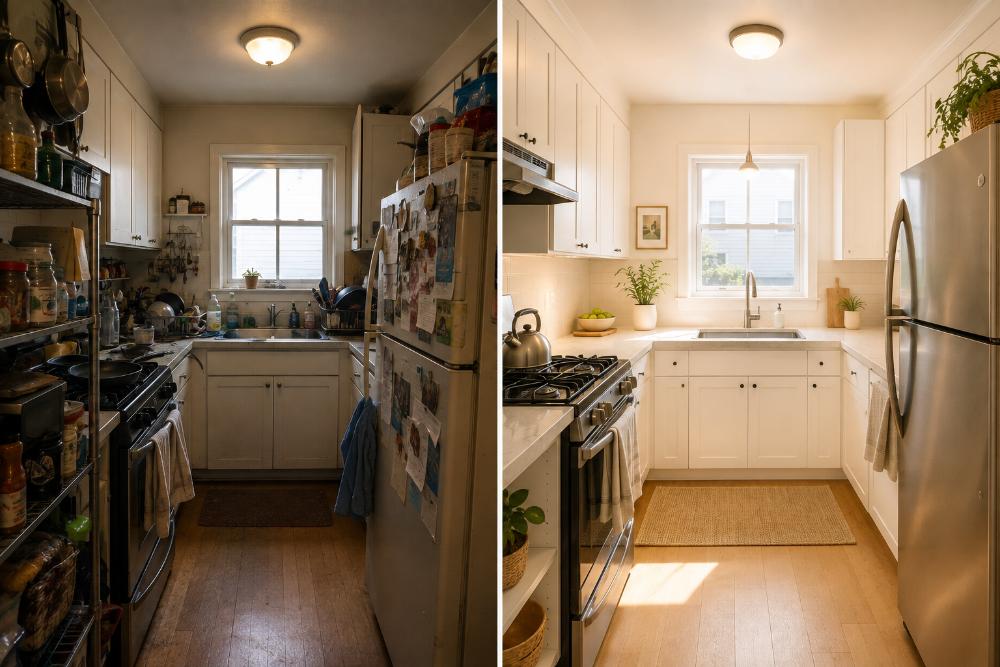
Staging a small kitchen well can mean the difference between a quick sale at asking price and weeks of sitting on the market. When you know how to stage a small kitchen in your Bay Area home using space-maximizing tips, you give buyers the visual clarity they need to picture themselves living there.
Bay Area homes, especially older Victorians in San Francisco, bungalows in Oakland, or ranch-style properties in San Jose, often come with kitchens that feel tight by modern standards. Buyers touring homes in a competitive market like this one are evaluating every square foot. The kitchen is almost always near the top of their checklist, and a cramped, cluttered one will make even a well-priced listing feel like a compromise. The good news is that you do not need a full renovation to change that perception. You need a smart staging approach.
Things to Know
- Bay Area buyers tend to skew toward design-conscious purchasers who notice details like countertop clutter and mismatched storage solutions.
- Staging a small kitchen costs significantly less than even minor renovations, yet it delivers some of the highest ROI of any pre-sale investment.
- According to the National Association of Realtors, staged homes sell 88% faster and for up to 20% more than non-staged homes.
- Natural light is one of the most powerful tools in a small kitchen. Even one extra window treatment change can shift the perceived size dramatically.
- In competitive Bay Area markets, homes often receive multiple offers within days. A poorly staged kitchen can be the single factor that stops an offer from coming in.
- Neutral color palettes in kitchens are shown to appeal to the widest pool of buyers, reducing the risk of a personal taste mismatch.
Why the Kitchen Carries So Much Weight With Bay Area Buyers
The kitchen is the emotional center of a home. Buyers instinctively spend more time there during tours, and their gut reaction in that space often drives the overall impression of the property. In the Bay Area, where the median home price regularly exceeds $1 million, buyers expect a lot for their money. When they walk into a small kitchen that feels organized, intentional, and bright, they mentally upgrade the entire home.
What makes this especially important in the Bay Area market is buyer competition. You are often appealing to tech professionals, young families, and remote workers who want a kitchen that functions well and photographs beautifully for social media. Your kitchen needs to check both of those boxes before your listing goes live.
BoldRM specializes in exactly this kind of strategic staging. If you want to see what a professional transformation looks like, take a look at their before after gallery to understand just how much the right staging approach can change a space.
Declutter First, Then Stage: The Order Matters
Before you arrange a single bowl of lemons on the counter, you need to strip the kitchen down to its bones. Decluttering is not just about tidiness. It is about creating visual breathing room so the space feels larger than it is.
Here is a practical declutter checklist for a small kitchen:
- Remove all small appliances from the countertop except one or two that support a lifestyle narrative (a quality coffee maker, a sleek stand mixer).
- Clear the refrigerator exterior completely. No magnets, no photos, no grocery lists.
- Empty out at least 30% of your cabinet space so buyers who open doors see organized, spacious shelves rather than packed ones.
- Store personal items including vitamins, mail, kids' artwork, and paperwork entirely out of the kitchen.
- Replace mismatched dish towels, sponges, and cleaning supplies with neutral, matching versions or remove them entirely.
Once you have cleared the space, you are working with the actual architecture of the kitchen rather than fighting against layers of accumulated stuff. That is where real staging begins.
The Space-Maximizing Staging Techniques That Work
This is the heart of how to stage a small kitchen in your Bay Area home using space-maximizing tips. The following techniques are used by professional stagers specifically because they create the optical illusion of more space while also making the kitchen feel livable and aspirational.
1. Use Vertical Space Strategically
Small kitchens often waste vertical space. A single open floating shelf above the counter can display two or three styled pieces (a small plant, a simple bowl, one cookbook) without taking up counter real estate. This draws the eye upward and signals that the kitchen has thoughtful storage potential.
2. Stick to a Tight Color Palette
Choose two to three colors maximum. In the Bay Area market, soft whites, warm creiges (creamy beiges), and muted sage greens photograph extremely well and feel calming in person. Avoid bold colors that make walls feel closer. If your cabinets are a dark wood tone, consider whether a coat of soft white paint could transform the perception of the space before your listing photos are taken.
3. Lighting Is Non-Negotiable
Replace any burned-out bulbs immediately and aim for at least 2,700K to 3,000K warmth in all fixtures. If your kitchen has under-cabinet lighting, turn it on for showings and photos. Add a small countertop lamp in a corner if overhead lighting is weak. Light makes square footage feel generous.
4. Use Mirrors and Reflective Surfaces
A small mirror on an open wall, a backsplash with a glass tile element, or glossy cabinet finishes all bounce light and give the eye more to travel across. This is a subtle but effective technique for making a small kitchen appear larger without structural changes.
5. Style the Counter Like a Magazine Shoot
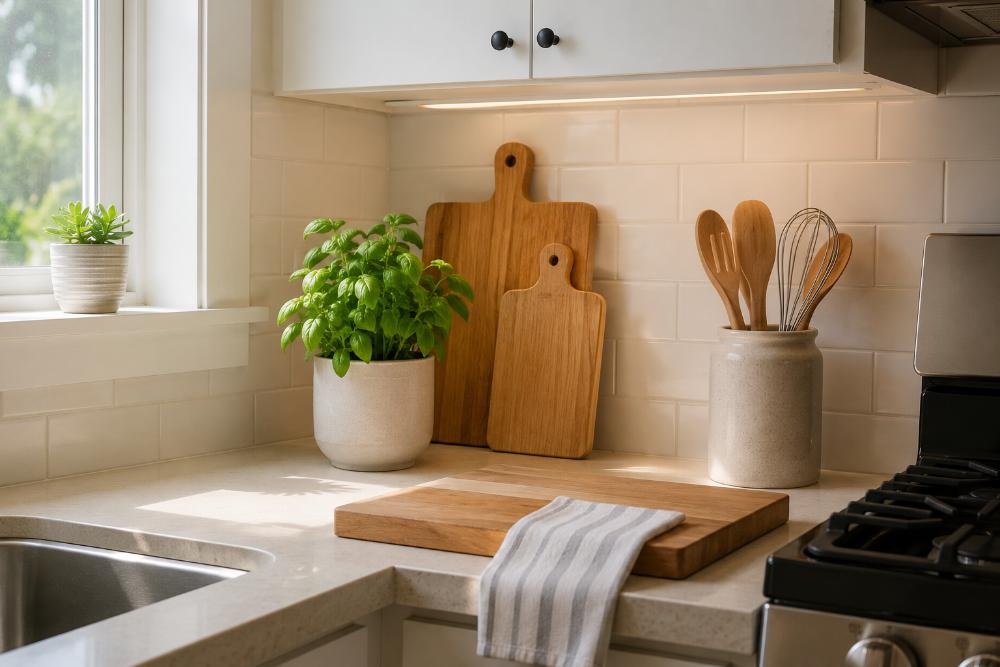
The countertop is the main stage. Use the rule of three: a small wooden cutting board leaning against the backsplash, a potted herb or small plant, and one high-quality kitchen item like a French press or ceramic utensil holder. Keep everything grouped and intentional.
Choosing the Right Staging Support in the Bay Area
DIY staging has its limits, especially in a high-stakes market where your listing photos need to compete with dozens of other beautifully presented homes. Professional staging services bring the furniture, the accessories, the expertise, and the market-specific insight to make your kitchen land differently in the eyes of buyers.
BoldRM offers tailored services designed specifically for Bay Area homes, including kitchens of all sizes. Their team understands what local buyers respond to and how to translate that into a staging plan that fits your specific floor plan and price point.
You can also browse their portfolio to see how they approach a variety of home styles and sizes across the Bay Area. From compact San Francisco flats to larger Oakland homes with dated kitchens, the portfolio gives you a real sense of what is possible.
Common Mistakes That Shrink a Small Kitchen Even More
Even well-intentioned sellers make staging mistakes that work against them. Knowing what not to do is just as important as knowing the right moves.
The most common errors include:
- Over-staging: Too many decorative items signal clutter even when each piece is nice. Restraint is more powerful.
- Ignoring the smell: Kitchens absorb odors over years of cooking. Before showings, clean the garbage disposal, wipe down the inside of the refrigerator, and avoid heavy cooking the day before. Use a neutral diffuser if needed, nothing too strong.
- Keeping personal cookware visible: Your well-used, stained pots and pans are functional for you but distracting for buyers. Store them and replace with a simple, clean set.
- Forgetting the sink area: Buyers almost always look at the sink. A clean, simple setup with a white dish cloth and a small plant nearby is all you need.
- Using rugs that are too small: A kitchen rug that is undersized for the space makes the room feel more cramped. Either size up or remove it entirely.
Organizing Storage Without Enough Cabinets
Many Bay Area kitchens, particularly in older properties, were built before open-concept layouts and modern storage expectations became standard. If your kitchen is short on cabinet space, staging it well means being creative and intentional about visible storage.
Here is what works:
- A simple rolling cart or butcher block island adds storage and counter space without permanent renovation.
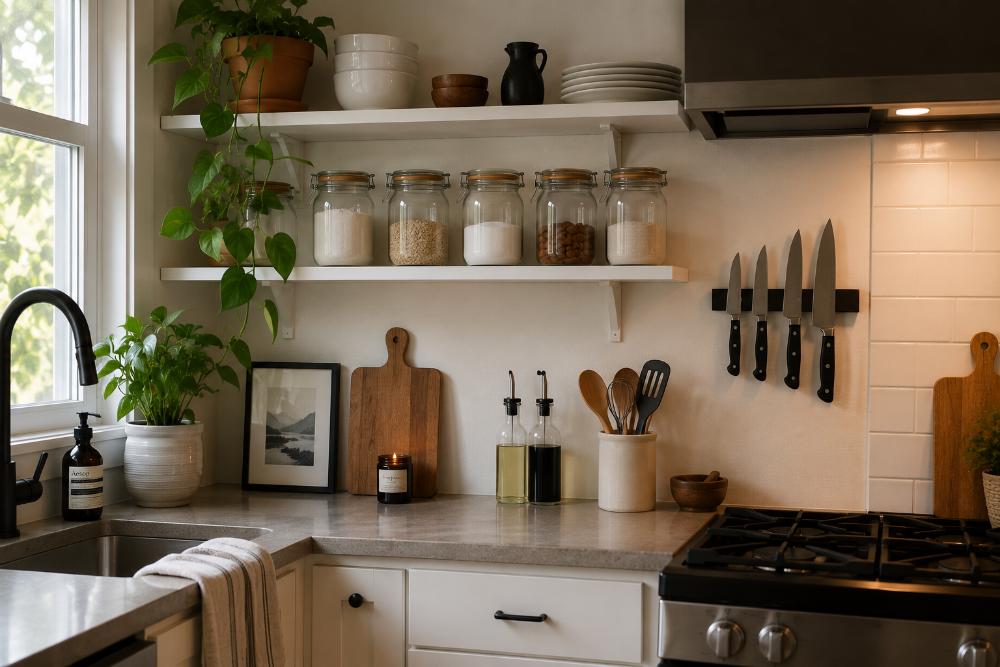
- Open shelving styled with matching containers and a few curated pieces can make a storage limitation look like a design choice.
- A wall-mounted magnetic knife strip and hanging utensil hooks keep tools accessible without using drawer space.
- Matching glass jars for pantry staples like pasta, rice, and coffee look intentional rather than improvised.
- A small, stylish step stool stored neatly in a corner signals thoughtful vertical use to buyers.
The goal is to show buyers that the kitchen, despite its size, has been fully thought through. Storage solutions that look intentional communicate that the home has been well cared for.
Frequently Asked Questions
Q: How to maximize space in a very small kitchen?
Remove everything non-essential from surfaces and inside cabinets, then use vertical space and reflective finishes to create visual depth.
Start by clearing at least 30% of cabinet interiors so they feel spacious when buyers open doors. Add one floating shelf to draw the eye upward, and use light colors and layered lighting to expand how the space feels without touching the floor plan.
Q: How to stage a small kitchen?
Focus on decluttering first, then use a limited color palette, intentional counter styling, and strategic lighting to make the kitchen feel larger and more livable.
Limit counter items to three well-chosen pieces, ensure all lighting is warm and functional, and remove all personal items including magnets, papers, and mismatched tools. Professional staging services like those offered by BoldRM can take this process further with market-tested accessories and a buyer-focused approach.
Q: How to make a small kitchen appear larger?
Use light colors, mirrors or reflective surfaces, under-cabinet lighting, and vertical storage to visually expand a compact kitchen.
Glossy cabinet finishes, glass tile backsplashes, and strategic lighting placement all contribute to a sense of openness. Avoiding dark colors and keeping surfaces as clear as possible reinforces the effect.
Q: What are common mistakes to avoid in a small kitchen?
The biggest mistakes are over-decorating, ignoring odors, using undersized rugs, and leaving personal cookware or clutter visible during showings.
Each of these distracts buyers from the kitchen's potential. Staging should guide the buyer's eye toward the space's strengths, not toward your personal habits or worn household items.
Q: How to organize a small kitchen without cabinets?
Use a rolling cart, open shelving with matching containers, wall-mounted magnetic strips, and hanging utensil hooks to create organized, visible storage that feels intentional.
Matching glass jars and consistent containers signal that the space has been thought through rather than improvised. When storage is on display, make sure it is styled, not just functional.
The Bottom Line on How to Stage a Small Kitchen in Your Bay Area Home
You now have a clear picture of how to stage a small kitchen in your Bay Area home with space-maximizing tips that genuinely move buyers. The process starts with ruthless decluttering, moves through strategic lighting, color, and vertical styling choices, and ends with a kitchen that photographs beautifully and shows even better in person.
If you want professional help getting there, BoldRM is built for exactly this market. Start by visiting to use their staging calculator and get an instant sense of what professional staging could look like for your home. When you are ready to take the next step, contact us and let their team put together a plan tailored to your property, your timeline, and your goals.