Kid-Friendly Interior Design in 5 Practical Steps
Designing a beautiful home does not mean sacrificing practicality when children are part of daily life. In fact, the most successful family homes are not the ones that avoid mess or activity but the ones designed to support it. A well-designed space should feel safe, functional, and comfortable for everyday living, while still maintaining a sense of visual clarity and refinement.
After staging many family homes across the San Francisco Bay Area, we’ve seen a consistent pattern: homes that balance livability with thoughtful design tend to feel more valuable, more spacious, and more appealing not just to families, but to buyers as well. The goal is not perfection. It is intentional design that works with real life, not against it.
Key Takeaways for Kid-Friendly Interior Design
Before diving into the steps, here are a few guiding principles for designing family-friendly spaces:
- Prioritize safe furniture and layouts
- Choose durable, stain-resistant materials
- Incorporate storage that keeps clutter contained
- Use color strategically to balance vibrant toys
- Design spaces that support both daily life and visual harmony
These principles create homes that feel comfortable to live in while still presenting a clean, cohesive, and well-maintained appearance.
Prioritize Safety Without Compromising Style
Safety is often treated as a limitation in design but in reality, it can improve how a space functions. Furniture choices directly influence how people move, gather, and interact within a room. In family homes, this becomes even more important. For example:
- Rounded edges reduce friction in high-traffic areas
- Low-profile seating creates a more grounded and accessible layout
- Replacing your living room coffee table with a cushioned ottoman
- Avoiding glass tables reduces both physical risk and visual fragility
These choices don’t just protect children they make the space feel more relaxed and usable. From a design perspective, this also shifts the home away from “display mode” and into “living mode,” which is exactly what buyers respond to during showings.
A simple test if a space feels like it needs to be protected, it’s not fully supporting everyday life.
Keep Breakables Out of Reach (Without Removing Character)
Children naturally interact with their environment at lower levels, which means anything within reach becomes part of daily use. Instead of removing decorative elements entirely, the goal is to redistribute visual weight.
Practical adjustments include:
- Moving fragile décor to higher shelves
- Using secure mounting for artwork and mirrors
- Reducing delicate objects in shared zones
- Stabilizing items with clear museum gel where needed
This does more than prevent accidents, it also improves the visual structure of the room.
By shifting decorative elements upward through lighting, wall art, wallpaper on the ceiling or vertical styling you naturally draw the eye higher, which can make ceilings feel taller and spaces feel more balanced. Good design doesn’t eliminate personality. It organizes it more intelligently.
Turn Toys Into Part of the Design
One of the biggest challenges in family homes is visual clutter. But the issue is rarely the presence of toys, it’s the lack of structure around them. Instead of treating toys as something to hide, integrate them intentionally into the space:
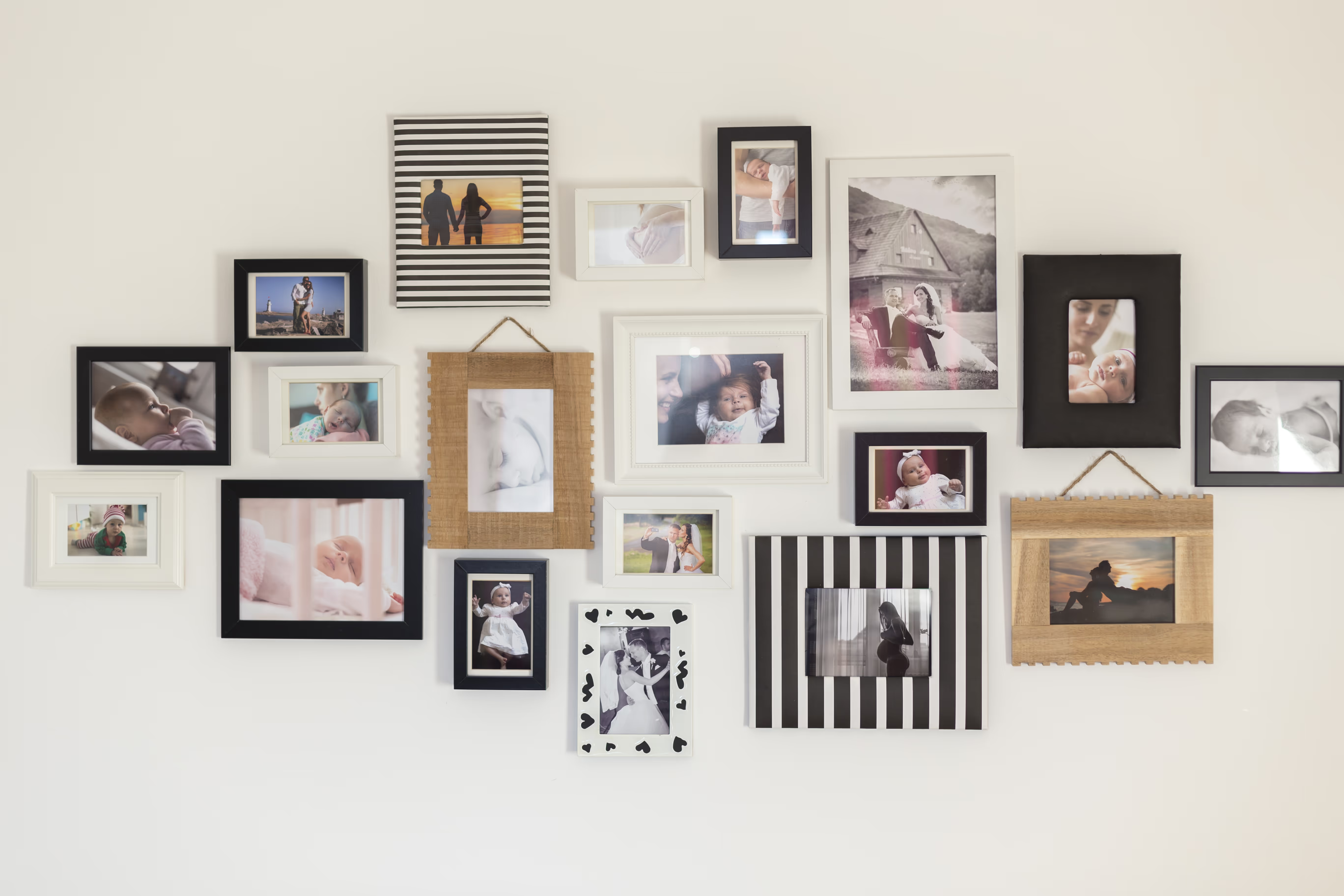
- Frame children’s artwork using consistent frames
- Use matching baskets or bins for storage
- Create curated shelving instead of open piles
- Store art supplies in rustic containers
- Create a children’s books display
This approach transforms toys from scattered objects into part of the room’s composition. There is also a psychological effect:
Spaces that feel “lived in but controlled” tend to feel more authentic and comfortable, both for homeowners and for buyers viewing the property.
In staging, we remove personal items but in real living environments, thoughtful integration often feels more natural than complete absence.
Use Color Strategically to Reduce Visual Noise
Color plays a critical role in how a room feels especially in environments where multiple colors are introduced daily through toys, books, and activity. Without a clear color strategy, this can quickly create visual noise. Instead of trying to eliminate color, the goal is to create a controlled framework around it. For example:
- Blue paired with yellow accents
- Muted green balanced with warm neutrals
- Navy anchored by beige or soft gray
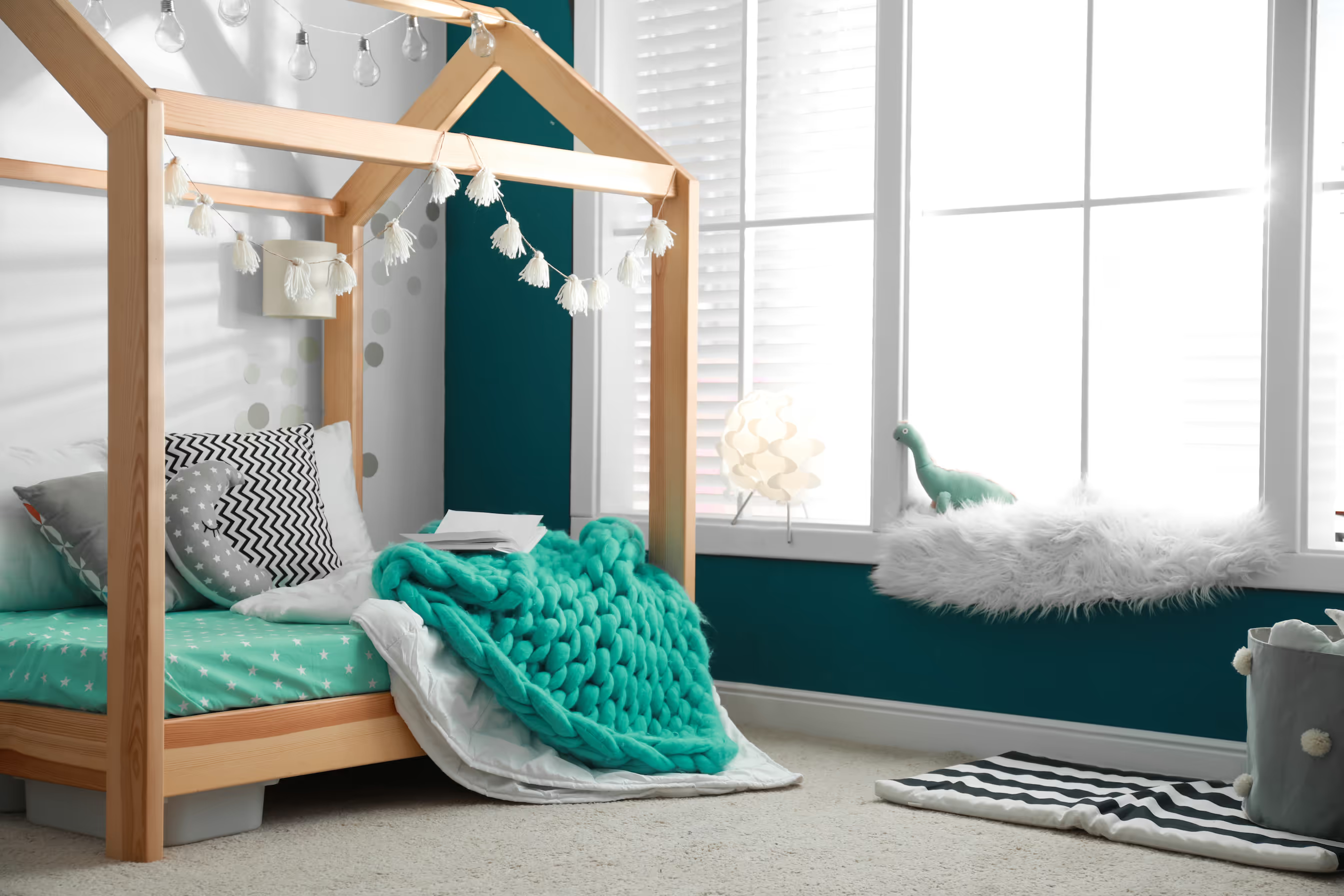
These palettes can then be reinforced through rugs, pillows, artwork and upholstery. It creates cohesion, even when the room is actively in use.
Embrace it, and camouflage the Frozen 2 play sets with colorful throw pillows and accent walls. Protip: stick to a single high-contrast color palette, like blue and yellow, or orange and green. For more info, the Learning Hub has a great post on color contrast in design.
From a staging and photography perspective, this is especially important. Cohesive color helps rooms appear more intentional, which improves both perceived value and visual clarity in listing photos.
Choose Durable, Stain-Resistant Materials
Durability is one of the most practical and strategic design decisions in a family home. Rather than trying to prevent wear entirely, it’s more effective to design spaces that can absorb daily use without looking worn.
Materials should support real behavior while maintaining a clean appearance over time. Consider:
- Performance fabrics that resist stains and spills
- Leather upholstery that can be easily cleaned and develops character
- Washable slipcovers for flexibility
- Patterned rugs that disguise wear
- Indoor–outdoor textiles for high-traffic areas
These materials do more than simplify maintenance. They also influence perception.
In short, work to hide stains not prevent them. Trade white and light-colored rugs for darker shades. Switch out solid colors for vibrant patterns. Add outdoor chairs to your interior design. And opt for more durable fabrics like vinyl or polyester blends. Another great option, if you’re able to spend a bit more, is leather. Leather is easy to wipe clean, and any scratches will only make the piece look more weathered and antique.
Remember: a kid-friendly interior design doesn’t necessarily mean childish. And kid-proof decor can be both safe and appealing.
In real estate, visible wear can create hesitation for buyers, even if the home is structurally sound. Durable materials help maintain a “well-kept” appearance, which supports stronger first impressions. Designing for durability is not just practical - it’s strategic.
Can a Kid-Friendly Home Still Feel Sophisticated?
Yes and in many cases, it feels more authentic. Sophistication in design is not about perfection. It’s about clarity, balance, and intention. A well-designed family home can feel:
- Warm and welcoming
- Visually balanced
- Durable and functional
- Clean without feeling staged
The difference comes from anticipating how the space will be used and designing accordingly. When a home supports real life seamlessly, it naturally feels more refined.
Kid-Friendly Design in Home Staging
When staging family homes, the goal shifts slightly. Instead of designing for a specific household, the space must appeal to a broad audience while still feeling livable. Buyers are evaluating more than aesthetics. They are asking:
- Can this space support my daily life?
- Will this home feel manageable?
- Does it feel functional and comfortable?
Effective staging answers these questions visually. A well-staged family home should feel clean & uncluttered, functional & flexible and warm but not overly personalized.
The balance is subtle: too minimal feels cold or unrealistic while too lived-in feels cluttered or overwhelming. Strategic home staging helps create that middle ground where the home feels both aspirational and practical.