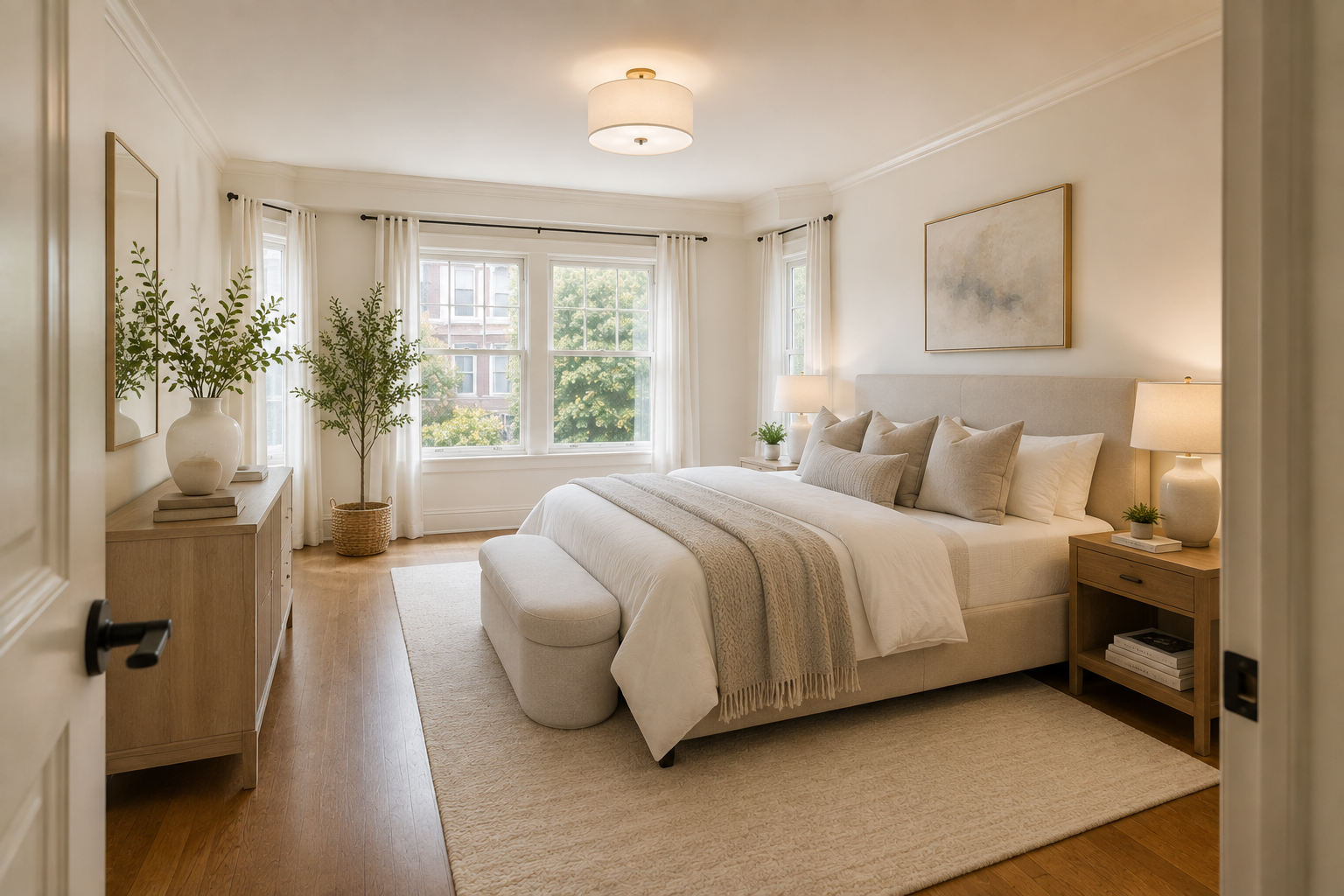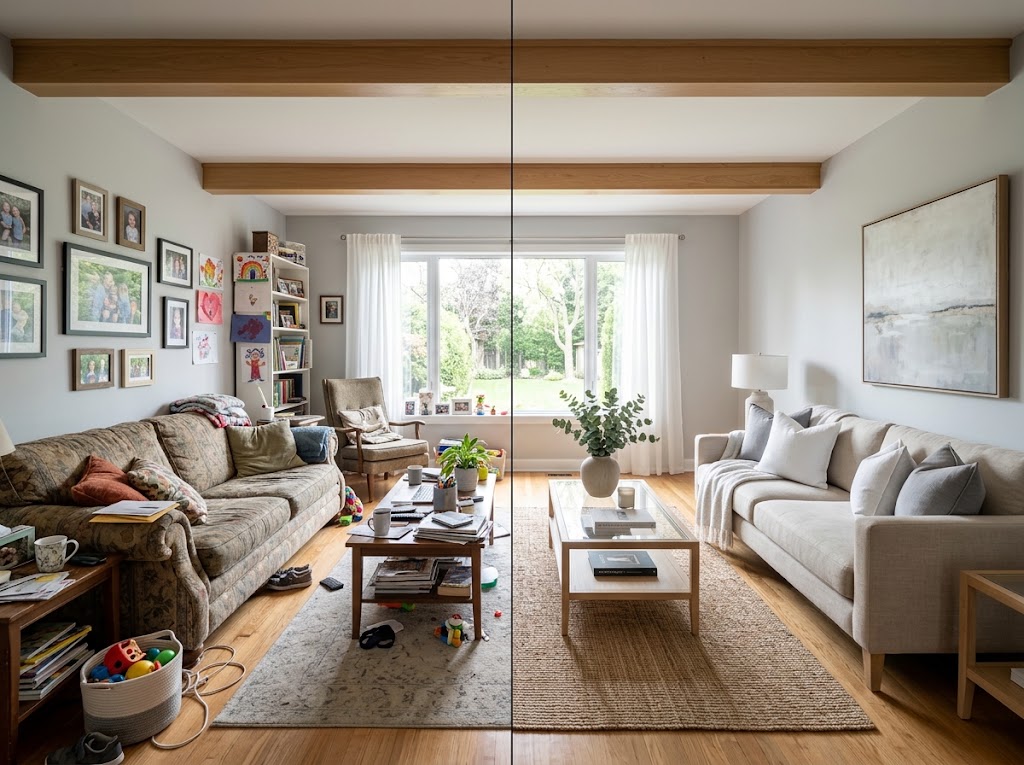
In most home sales, the seller pays for home staging. Listing agents sometimes cover part or all of the cost, usually as a marketing service, by paying for the consultation, or by fronting the bill and getting reimbursed at closing. In the National Association of Realtors 2025 Profile of Home Staging, 17% of sellers' agents said the seller pays to stage the home before listing, 23% said they personally offer to stage it, and 26% said it depends on the situation. A separate survey of stagers by the Real Estate Staging Association (RESA) found that just over 70% of stagers said sellers paid directly for vacant staging.
So the honest answer is: the seller pays by default, but who pays is negotiable. In the Bay Area, where vacant staging for a three-bedroom home often runs $4,000 to $9,000 or more, it's worth settling the question before you sign a listing agreement. This guide explains the common payment arrangements, what each one means for sellers and agents, what staging typically costs here, and the questions to ask so there are no surprises at closing.
Who Usually Pays for Home Staging?
The seller is the one who benefits most directly from a higher sale price and a shorter time on market, so staging is usually treated as a seller expense, like painting, repairs, or a deep clean. RESA's guidance puts it simply: agents pay sometimes, "but in most transactions the seller pays." Redfin's staging cost guide says the same thing, noting that a seller will likely pay to stage the home, though some agents include staging or a consultation in their marketing plan.
The survey data shows how often agents get involved anyway:
- Sellers' agents who stage every listing: 21% of sellers' agents in the NAR survey said they stage all of their sellers' homes before listing, and another 10% stage only homes that are difficult to sell.
- Agents who offer to pay: 23% of sellers' agents said they personally offer to stage the home, and 26% said who pays depends on the situation.
- Homes that sold over list: In RESA's dataset of homes that sold over list price in the first three quarters of 2025, almost 70% of staging was paid by the homeowner and just under 30% by the listing agent.
- Agents paying out of pocket: In a 2022 agent survey by Curbio, almost one in four agents said they had paid for staging out of their own pocket.
In short, roughly two out of three staging jobs are paid by the homeowner, and a meaningful minority are paid or partly paid by the listing agent. In competitive Bay Area markets, some agents use staging as a way to win listings, which is why it's always worth asking.
How Agents Help Cover Staging Costs
When an agent does contribute, it rarely means the agent writes a check for the entire project with no strings attached. RESA describes several common structures, and Bay Area agents use most of them:
- The agent pays for the consultation: The agent covers the initial walkthrough and staging plan, and the seller pays for furniture, installation, and the rental period.
- Staging is included as a marketing service: The agent bundles staging into the listing package along with photography and marketing, and pays the stager directly.
- The agent fronts the cost and is reimbursed at closing: The agent pays the stager up front, and the seller repays the agent from sale proceeds. One agent quoted by Curbio described it this way: "sometimes I would pay for the staging upfront and just collect it at closing."
- The cost is split: The agent pays part of the initial invoice or offers a marketing credit, and the seller pays the rest.
- A pay-at-close program: A third-party company pays the stager and is repaid from escrow. RESA reports that just over 6% of staging jobs are paid this way.
The table below compares the most common arrangements side by side.
| Arrangement | Who Pays | When It's Paid | Good Fit When |
|---|---|---|---|
| Seller pays directly | Seller | Up front or with a deposit, before installation | The seller wants full control over the stager and the design |
| Agent includes staging | Listing agent | Agent pays the stager directly | The agent offers staging as part of a full marketing package |
| Agent fronts, seller reimburses | Seller, at closing | Agent pays up front, seller repays from proceeds | The seller is short on cash before the sale |
| Split cost | Seller and agent | Each pays an agreed share | The agent covers the consultation or offers a marketing credit |
| Pay-at-close program | Seller, from escrow | Third party pays the stager, repaid at closing | The seller needs to defer the full cost and the stager accepts it |
Whichever option you choose, get it in writing. RESA notes that staging is "usually a separate, out-of-pocket cost" and not part of the commission unless the listing agreement explicitly says otherwise. If your agent is covering staging, the listing agreement or a separate addendum should say what's included, for how long, and what happens if the listing is cancelled or the home doesn't sell.

What Home Staging Costs in the Bay Area
Knowing the likely cost makes the who-pays conversation much easier. Typical Bay Area staging ranges are:
- Consultation only: $300 to $600
- Occupied home staging: $1,500 to $3,500
- Vacant three-bedroom home: $4,000 to $9,000 or more
- Luxury home: $10,000 to $20,000 or more
- Monthly extension: $500 to $2,000 per month after the initial rental period
Most staging packages include a 30 to 45 day rental period. Nationally, costs run lower: the NAR survey put the median cost of using a staging service at $1,500, and Redfin cites an average of about $1,800. Bay Area homes are larger, more expensive, and more often staged vacant, so local projects usually land higher. For a full breakdown, see our guide to how much home staging costs in the Bay Area, or get a starting number for your home from the BoldRM staging calculator.
The scope matters as much as the price. Occupied staging, where a stager edits and rearranges your own furniture and adds accent pieces, costs far less than furnishing an empty home. Our comparison of occupied vs. vacant staging costs covers the trade-offs. An agent may be happy to cover a consultation or occupied staging but expect the seller to pay for a full vacant stage.
Questions to Settle Before You Agree on Who Pays
Most staging payment problems come from things nobody discussed up front. Before you sign a listing agreement or a staging contract, settle these points with your agent and your stager.
Who Signs the Staging Contract?
The person who signs the contract is usually the one responsible for paying it, including any extensions or damage fees. If your agent is covering staging, find out whether the agent or the seller is the stager's client. That affects who the stager bills and who decides on changes.
What Happens If the Home Takes Longer to Sell?
Staging rental periods are fixed, and extensions cost extra. If the home is still on the market after 30 to 45 days, someone has to pay the monthly extension. Agree in advance whether the agent's contribution covers only the initial period or extensions too. RESA reports that just under 96% of stagers charge a renewal fee.
What If the Listing Is Cancelled?
If an agent fronts staging and expects reimbursement at closing, ask what happens if the home doesn't sell or you change agents. Some agreements require the seller to repay staging costs if the listing is withdrawn. Read the terms carefully, and ask a real estate attorney if anything is unclear.
How Is Payment Collected?
Stagers have their own payment terms. RESA found that around 48% of stagers require full payment up front, just over 36% require a deposit, and roughly 15% collect after installation. If you plan to pay at closing, confirm that your stager accepts that before you book.
Why Staging Is Worth Paying For, Whoever Pays
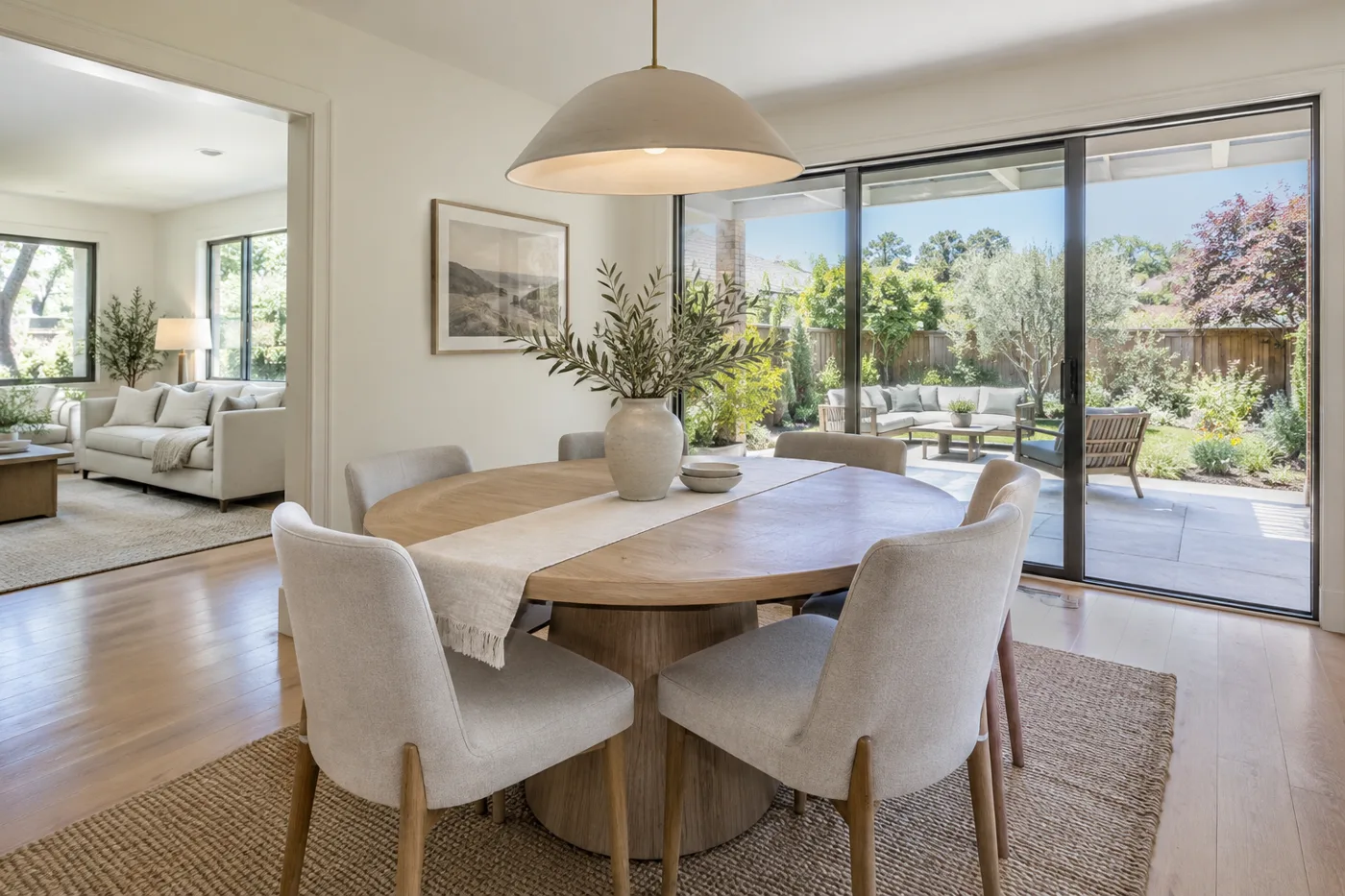
Whether the seller or the agent pays, staging is an investment in the sale. The NAR 2025 Profile of Home Staging found that:
- Buyers can picture themselves in the home: 83% of buyers' agents said staging made it easier for buyers to visualize the property as their future home.
- Offers can come in higher: 29% of sellers' agents reported a 1% to 10% increase in the dollar value offered on staged homes.
- Homes can sell faster: 49% of sellers' agents said staging reduced the time a home spent on the market.
On a Bay Area home, even a 1% increase in the offer price can be larger than the full cost of staging. That's why sellers usually come out ahead paying for staging themselves, and why many agents are willing to share the cost: a faster, stronger sale benefits both.
Listing photos are a big part of that return, since most buyers see a home online first. BoldRM includes professional-grade photography with every stage, handled in-house, and photos are usually taken the same day as the stage if the light allows. That means sellers and agents don't need to budget or schedule a separate photographer. You can see how staged homes photograph in our before-and-after gallery.

Things to Know
- In most home sales, the seller pays for home staging, and staging is usually a separate cost from the agent's commission.
- In NAR's 2025 Profile of Home Staging, 17% of sellers' agents said the seller pays for staging, 23% said they personally offer to stage the home, and 26% said it depends on the situation.
- RESA's 2025 stager survey found that just over 70% of stagers said sellers paid directly for vacant staging, and just over 6% of staging jobs were paid through pay-at-close programs.
- Common agent contributions include paying for the consultation, including staging as a marketing service, fronting the cost for reimbursement at closing, or splitting the bill.
- Bay Area staging typically costs $1,500 to $3,500 for an occupied home and $4,000 to $9,000 or more for a vacant three-bedroom home, with a 30 to 45 day rental period.
- 83% of buyers' agents told NAR that staging made it easier for buyers to visualize a property as their future home.
Frequently Asked Questions
Q: Do real estate agents pay for staging?
Real estate agents sometimes pay for staging, but in most transactions the seller pays.
In NAR's 2025 survey, 23% of sellers' agents said they personally offer to stage the home. Agents who contribute often pay for the consultation, include staging in a marketing package, or front the cost and get reimbursed at closing.
Q: Is staging included in a realtor's commission?
Staging is usually not included in a realtor's commission unless the listing agreement explicitly says so.
Some agents do include staging as part of their marketing services. If yours does, make sure the listing agreement spells out what's covered, including the rental period and who pays for extensions.
Q: How much does it cost to stage a house?
In the Bay Area, staging typically costs $1,500 to $3,500 for an occupied home and $4,000 to $9,000 or more for a vacant three-bedroom home.
Nationally, NAR reported a median of $1,500 for a staging service. Bay Area costs run higher because homes are larger and more often staged vacant. Luxury homes can cost $10,000 to $20,000 or more.
Q: Can you pay for home staging at closing?
Yes, you can sometimes pay for staging at closing, either through your listing agent or a third-party pay-at-close program.
RESA reports that just over 6% of staging jobs are paid through pay-at-close programs. Many stagers require payment up front or a deposit, so confirm terms with your stager before you book.
Q: Is home staging worth the cost for sellers?
For most sellers, staging is worth the cost because it helps buyers picture the home and can lead to higher offers and a faster sale.
In NAR's 2025 survey, 29% of sellers' agents reported a 1% to 10% increase in the dollar value offered on staged homes, and 49% said staging reduced time on market. Results vary by home and market.
The Bottom Line on Who Pays for Home Staging
The seller pays for home staging in most sales, but it's a negotiable cost. Many listing agents will cover a consultation, include staging in their marketing, split the bill, or front the cost until closing. Whichever arrangement you choose, put it in writing, including the rental period, extensions, and what happens if the listing ends early.
BoldRM stages homes across the Bay Area for sellers and agents, with in-house professional photography included with every stage. Browse our portfolio, see our services, or use the BoldRM staging calculator for an instant estimate. If you're still comparing stagers, our guide on how to choose the right home staging service can help. When you're ready, contact us to plan your stage.