Selling a home in winter in the Bay Area works, but the calendar inside the season matters. Listings that go live in November and December have historically sold for less over list and taken longer than spring listings, while January and February listings perform close to the spring peak. In single-family home data for Santa Clara County, December listings averaged 102.2% of list price with a median of 14 days on market, compared with 106.5% and 8 days for February listings, according to an analysis of MLSListings data by Compass broker Seb Frey (updated November 15, 2026, covering January 2023 through September 2026).
The practical takeaway: if you need to sell between November and February, there's no reason to wait for spring, but you do need to plan around short days, rain, and the holiday slowdown. Staging matters more in winter because fewer buyers are looking, and each one is comparing your listing photos against a small set of alternatives. This guide covers when to list, how to stage for gray skies and early sunsets, and what it costs.
Is Winter a Good Time to Sell a House in the Bay Area?
Winter is a good time to sell for many Bay Area sellers, especially from mid-January onward. The market slows in late November and December, then picks back up quickly after the new year. In the same MLSListings analysis, the number of single-family homes for sale in Santa Clara County fell to about 330 in December, compared with roughly 640 at the end of February and about 1,010 at the end of May. Fewer listings means less competition for the buyers who are out looking.
Those buyers also tend to be serious. Freddie Mac notes that winter shoppers are typically more motivated, and Bay Area agents point to people relocating for a January start date and buyers returning after year-end bonuses and stock vesting. Here's how the winter months usually break down:
- Early to mid-November: Still a workable window. Listings that go live before Thanksgiving get a couple of active weeks before the holidays.
- Late November through December: The slowest stretch. Many buyers are traveling or hosting, and December has historically been the weakest month for sale-to-list ratios in both Santa Clara and San Mateo counties.
- January: Buyers come back, but inventory is still low. Listing in the second or third week of January lets you prep over the holidays and launch as activity returns.
- February: Historically one of the strongest months to list on the Peninsula and in Silicon Valley, with results close to the spring peak and much less competition than April or May.
If your home is already on the market in December, don't panic. A well-priced, well-presented home can still sell, and the buyers who show up in December often have a deadline. If you're deciding whether to decorate a listed home, our guide on whether to decorate a listed home for the holidays covers what to use and what to skip.
How Winter Listings Compare to Spring in the Bay Area
The table below shows the historical average sale-to-list ratio and median days on market for single-family homes by the month they were listed. Figures come from the Seb Frey analysis of MLSListings data for 2023 through 2026.
| Listing Month | Santa Clara County | San Mateo County |
|---|---|---|
| November | 103.7% of list, 12 days | 103.3% of list, 16 days |
| December | 102.2% of list, 14 days | 101.5% of list, 19 days |
| January | 105.5% of list, 8.5 days | 104.8% of list, 10 days |
| February | 106.5% of list, 8 days | 106.5% of list, 10 days |
| March | 106.8% of list, 8 days | 106.0% of list, 10 days |
Two patterns stand out. First, the gap between December and February is large: about four to five percentage points of list price in both counties. On a $2,000,000 home, that's a difference of roughly $80,000 to $100,000 at those historical averages. Second, January and February listings perform much closer to March than to December. That's why many sellers who are ready in late fall choose to finish prep work, book staging, and launch in mid-January or February instead of listing into the holidays.
Every home and price point is different, and these are averages, not predictions. Your agent can show you how comparable homes in your neighborhood performed this season.
How to Stage a Bay Area Home for Winter
Bay Area winters don't bring snow, but they do bring rain, gray skies, cool interiors, and very short days. In much of December the sun sets before 5 p.m., which means most weekday showings happen in the dark. Good winter staging solves for all of that.
Light Every Room
Light is the single biggest difference between a home that feels warm in winter and one that feels gloomy. Open every blind and curtain during the day, replace burned-out bulbs, and use warm white bulbs (around 2700K to 3000K) so rooms don't look blue or cold. Add table and floor lamps to dark corners, and turn on every light before each showing, including closets and hallways. The National Association of Realtors recommends lights in every room, closet, and storage space for winter showings.
Make It Feel Warm, Not Cluttered
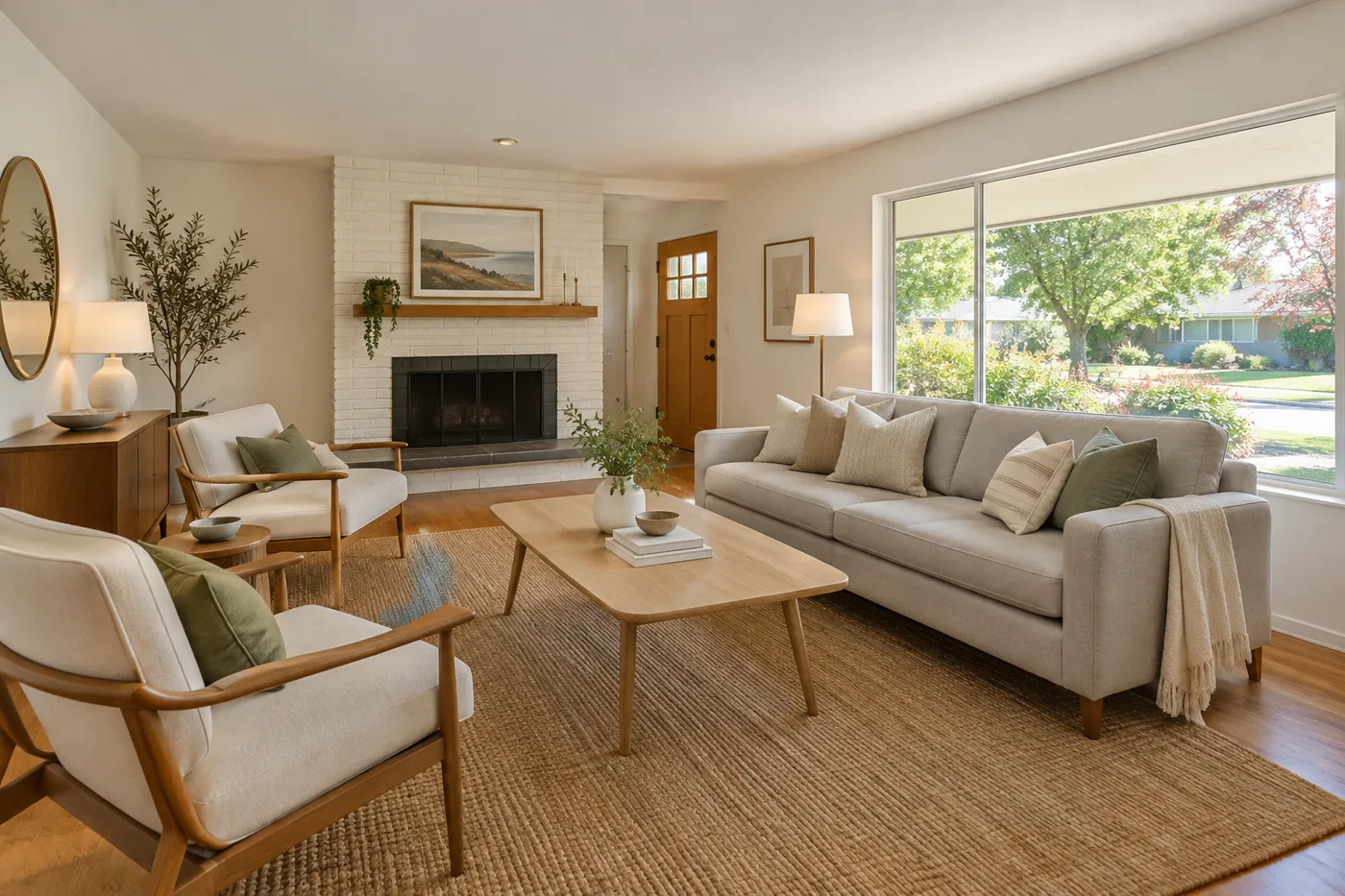
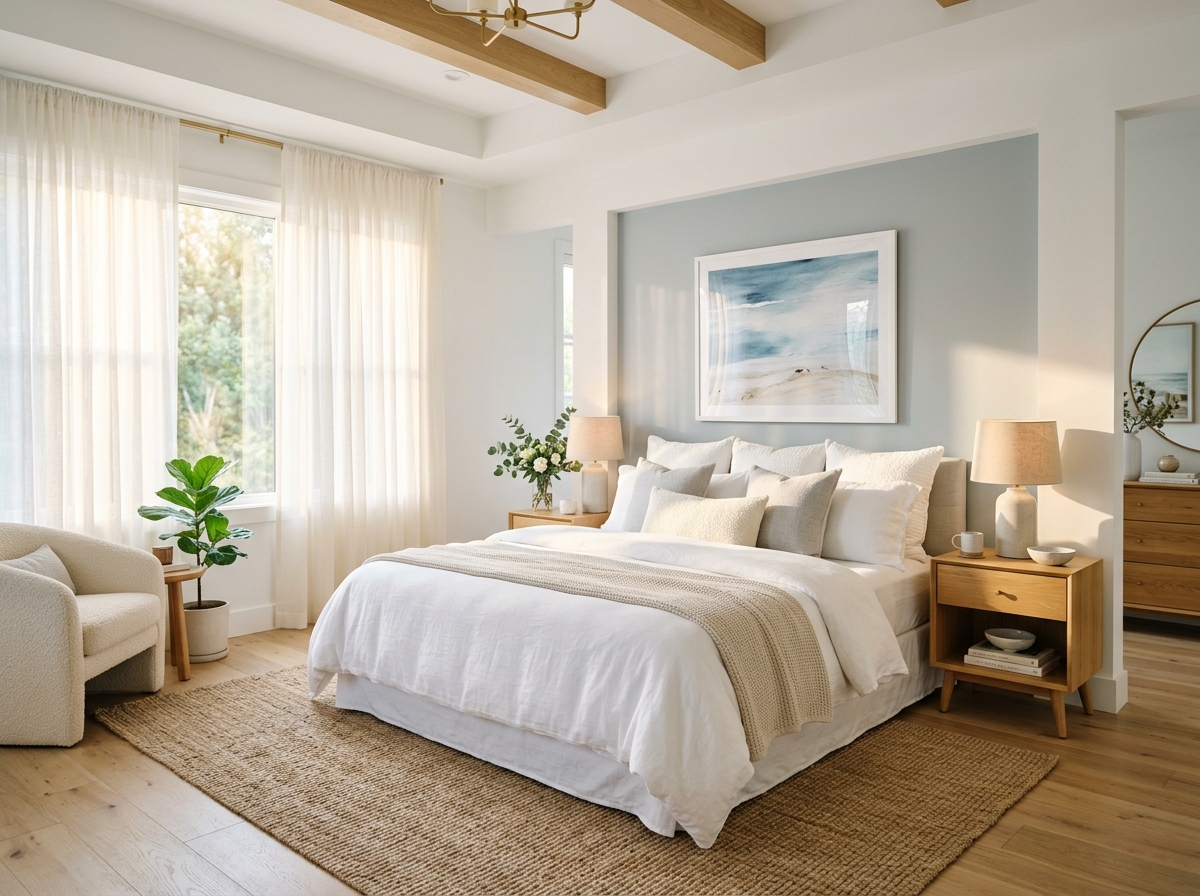
Buyers should feel comfortable the moment they walk in. Set the thermostat to a comfortable temperature, around 68 to 70 degrees, before showings. Layer soft textures like wool throws, knit blankets, and textured pillows on sofas and beds. A lit fireplace is a strong selling point in winter, so clean it and use it during open houses if it's safe. The goal is cozy, not crowded: keep surfaces clear and furniture scaled to the room.
Plan Around Rain
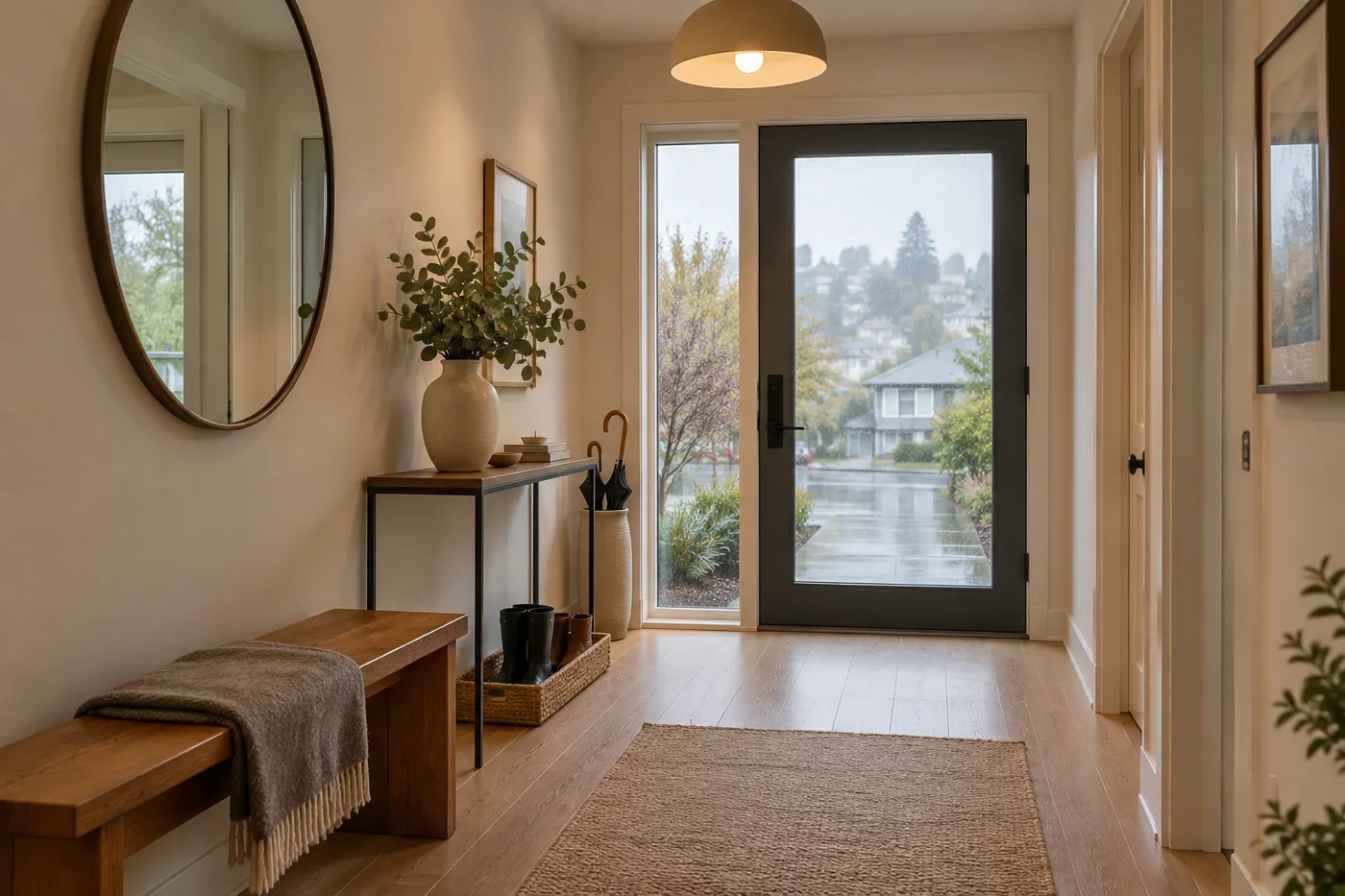
Rain is the Bay Area's version of winter weather, and buyers will notice how a home handles it. Clean gutters and downspouts, clear leaves from walkways and drains, and make sure the entry doesn't collect puddles. Inside, set up the entry for wet days with a durable doormat, an umbrella stand, and a boot tray so buyers don't feel awkward walking in. Fix any signs of leaks or water stains before listing, since buyers and inspectors will look closely at windows, ceilings, and the roof during the rainy season.
Keep Holiday Decor Light
Simple seasonal touches can make a home feel welcoming, but heavy decor competes with the house. Redfin's winter staging advice suggests keeping holiday decor minimal and neutral: a wreath on the door, a simple garland, or white lights rather than a fully decorated house. Take listing photos before you add anything, so your photos stay current after the holidays.
Winter Curb Appeal and Listing Photos
Buyers see the outside of your home first, both online and in person. In winter, bare trees, wet leaves, and early darkness can make a home look tired. A few steps go a long way:
- Clean up the yard: Rake leaves, trim back dead plants, and refresh mulch. Add potted evergreens or seasonal plants near the front door for color.
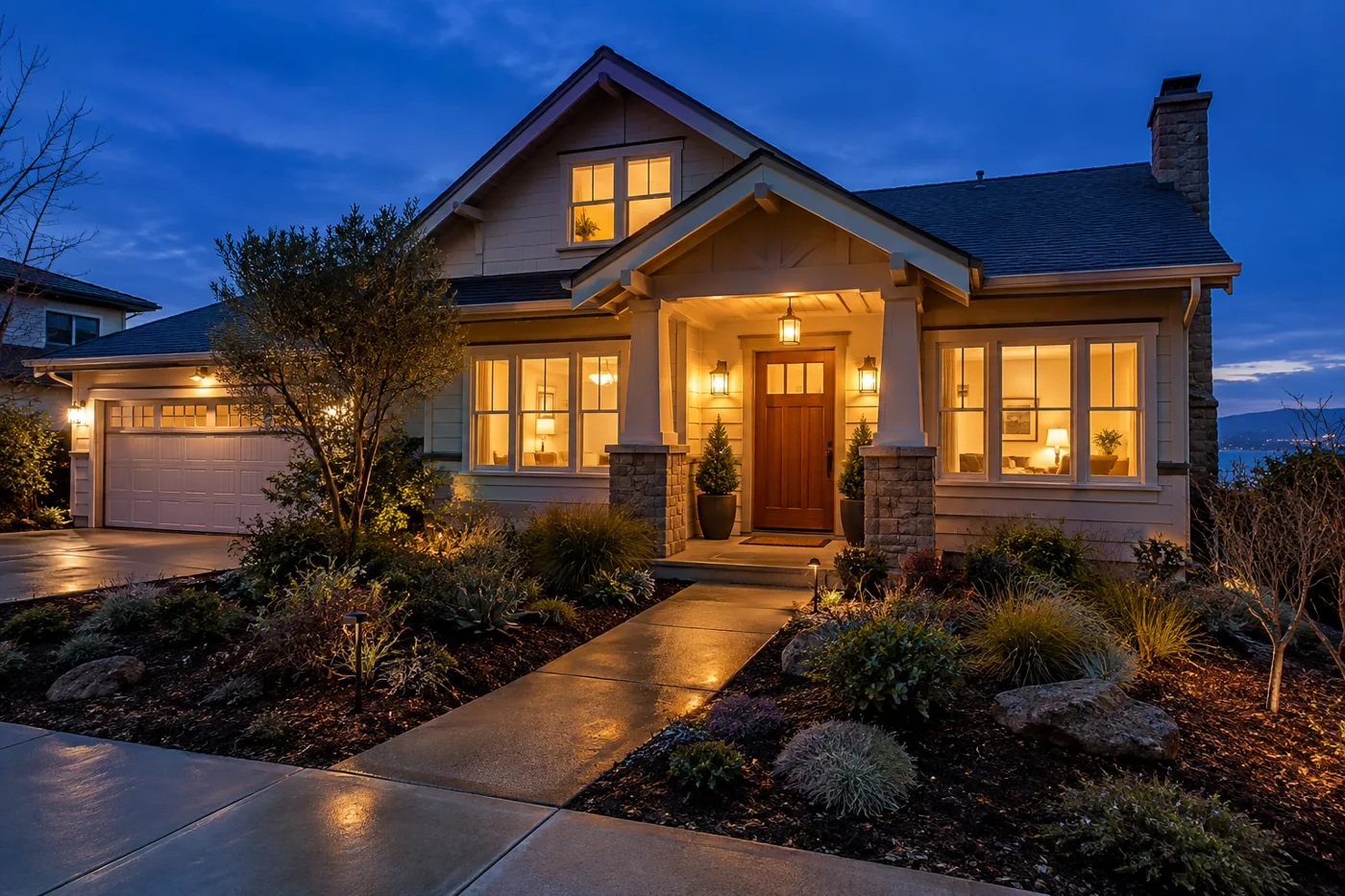
- Light the exterior: Make sure porch lights, path lights, and garage lights all work. Many winter showings happen after dark, and a well-lit exterior feels safe and welcoming.
- Keep walkways clear: Sweep wet leaves and debris before every showing so paths aren't slippery.
- Schedule photos for the best light: Book photography for a clear day if you can, and consider twilight exterior shots, which show off warm interior lighting against a dusk sky.
Photography timing is easier when staging and photos happen together. BoldRM includes professional-grade photography with every stage, handled in-house, and photos are usually taken the same day as the stage if the light allows. In winter, that flexibility helps you catch a bright day between storms instead of waiting on a separate photographer's schedule. You can see how staged homes photograph in our before-and-after gallery.
Winter Staging Costs and Timeline
Winter doesn't change what staging costs, but it does change how you plan the timeline. Typical Bay Area staging ranges are:
- Consultation only: $300 to $600
- Occupied home staging: $1,500 to $3,500
- Vacant three-bedroom home: $4,000 to $9,000 or more
- Luxury home: $10,000 to $20,000 or more
- Monthly extension: $500 to $2,000 per month after the initial rental period
Most staging packages include a 30 to 45 day rental period. In winter, that window matters more because homes can take longer to sell in late November and December. If you stage in early December, plan for the possibility of a monthly extension. If you're aiming for a mid-January or February launch, book your consultation in December so the design, delivery, and photography are ready the week you list. Our guide on how long home staging takes walks through each phase, and you can get a starting number from the BoldRM staging calculator.
If you're living in the home through the holidays, occupied staging is often the most practical option. A stager edits and rearranges your furniture, removes personal items, and adds accent pieces where needed. Our comparison of occupied vs. vacant staging costs covers the trade-offs.

Things to Know
- In Santa Clara County, single-family homes listed in December averaged 102.2% of list price with a median of 14 days on market, based on MLSListings data from 2023 to 2026 analyzed by Seb Frey.
- February listings in the same county averaged 106.5% of list price with a median of 8 days on market.
- In San Mateo County, December listings averaged 101.5% of list price and February listings averaged 106.5%.
- Santa Clara County had about 330 single-family homes for sale in December, compared with roughly 640 at the end of February and about 1,010 at the end of May.
- Staging a vacant three-bedroom Bay Area home typically costs $4,000 to $9,000 or more, with a 30 to 45 day rental period and monthly extensions of $500 to $2,000.
- Warm lighting, a comfortable indoor temperature, and an entry set up for rain are the most important winter staging adjustments in the Bay Area.
Frequently Asked Questions
Q: Is it a good idea to sell a house in winter?
Yes, selling a house in winter can be a good idea in the Bay Area, especially if you list in mid-January or February when buyers return and inventory is still low.
Late November and December are the slowest weeks, with lower historical sale-to-list ratios and longer days on market. Buyers who shop in winter tend to be motivated, and fewer competing listings means your home gets more attention if it's priced and presented well.
Q: Should I wait until spring to sell my house?
You usually don't need to wait until spring in the Bay Area, because February listings have historically performed close to March and April listings with much less competition.
Spring brings more buyers but also many more listings. In Santa Clara County, inventory has historically grown by more than half between the end of February and the end of May. If your home is ready, a late-winter launch lets you reach buyers before that competition arrives.
Q: What is the best month to sell a house in the Bay Area?
In recent MLSListings data for Santa Clara and San Mateo counties, homes listed in February and March have sold for the highest percentage over list price.
February listings averaged 106.5% of list in both counties from 2023 to 2026, and March listings were similar. December has historically been the weakest month to list in both counties.
Q: How do you stage a house in winter?
To stage a house in winter, focus on warm lighting, a comfortable temperature, soft textures, light seasonal decor, and an entry that handles rain.
Turn on every light before showings, use warm bulbs, and keep curtains open during the day. Clean gutters and walkways, set up a doormat and umbrella stand, and schedule listing photos for a bright day or a twilight shoot.
Q: Should you list your house during the holidays?
You can list during the holidays, but most Bay Area sellers get better results by listing before Thanksgiving or waiting until mid-January.
Buyers who shop in late December often have a deadline, such as a job relocation, so a well-priced home can still sell. If you list during the holidays, keep decor simple and take listing photos before adding any seasonal touches.
The Bottom Line on Selling a Home in Winter in the Bay Area
Winter is a real selling season in the Bay Area, as long as you time it well. The slowest weeks run from Thanksgiving through New Year's, while mid-January and February listings have historically sold almost as strongly as spring listings, with less competition. Whenever you list, winter staging should focus on light, warmth, and a home that handles rain gracefully, with photos taken on the best day you can get.
BoldRM stages homes across the Bay Area and includes in-house professional photography with every stage. Browse our portfolio, see our services, or use the BoldRM staging calculator for an instant estimate. When you're ready to plan a winter or early-spring listing, contact us and we'll help you build the timeline.