Staging a San Francisco condo means making a small space look bigger, brighter, and easier to live in, both in listing photos and in person. The market rewards it right now: in October 2026, the median San Francisco condo sold for $1,335,000, condos sold for 111% of their original list price on average, and they spent 14 days on market, according to the November 2026 San Francisco market update from The Front Steps. Condo inventory was also down about 19% from a year earlier, so well-presented units are moving quickly.
The short version: scale furniture down, define every zone, maximize light, and give buyers a clear picture of how they'd use each square foot. For most Bay Area condos, occupied staging costs $1,500 to $3,500, and vacant staging of a larger unit can run $4,000 to $9,000 or more. This guide covers what SF condo buyers look for, room-by-room small-space tips, costs, and timelines.
Why Condo Staging Matters in San Francisco
San Francisco condo buyers shop online first. They scroll through dozens of listings in neighborhoods like SoMa, Mission Bay, Hayes Valley, Nob Hill, and Pacific Heights, and many units share similar floor plans, finishes, and HOA amenities. When two units look alike on paper, the photos decide which one gets the showing.
Small spaces are also harder to read on camera than big ones. An empty condo can look smaller than it is because buyers have no sense of scale, and a lived-in condo can look crowded because every piece of furniture competes for the same few square feet. Staging fixes both problems by showing exactly how a sofa, dining table, and bed fit, with room to walk around them.
Here's how San Francisco condos compared with single-family homes in October 2026:
| San Francisco, October 2026 | Condos | Single-Family Homes |
|---|---|---|
| Median sale price | $1,335,000 | $2,375,000 |
| Days on market | 14 days | 12 days |
| Sale price vs. original list price | 111% | 127% |
| Homes for sale (inventory) | 466 | 212 |
| Months of supply | 2.2 | 1.1 |
| Value of a 1% price difference | About $13,350 | About $23,750 |
Condos sold a little more slowly and with smaller overbids than houses, and buyers had more units to choose from, with 2.2 months of supply versus 1.1 for houses. That extra competition is exactly where staging helps. At the October median, a 1% difference in the final price is about $13,350, which covers a typical occupied staging package several times over. These are monthly figures, so they can shift from one month to the next.
What San Francisco Condo Buyers Look For
Condo buyers in the city tend to be first-time buyers, downsizers, and professionals who want a short commute. Their priorities shape how a unit should be staged.
- Usable space, not just square footage: Buyers want proof that a queen bed fits in the bedroom, that four people can sit at the dining table, and that there's still room to move. Staging answers those questions before they're asked.
- Natural light and views: Light is a premium in a foggy city. Buyers notice bright rooms, bay windows, and any view of the skyline, the bay, or the hills.
- A place to work: Many buyers work from home at least part of the week. A small desk in a bedroom corner, alcove, or den shows the unit can handle it.
- Storage that works: Closets and cabinets that are half empty and neatly organized tell buyers there's room for their things.
- Outdoor space, however small: A balcony, deck, or shared roof terrace is a big selling point in the city, so it should look like an extra room.
Small-Space Staging Tips, Room by Room
The goal in every room is the same: show how the space is used, keep walkways clear, and let in as much light as possible. Here's how that plays out in each part of a typical condo.
Living Room
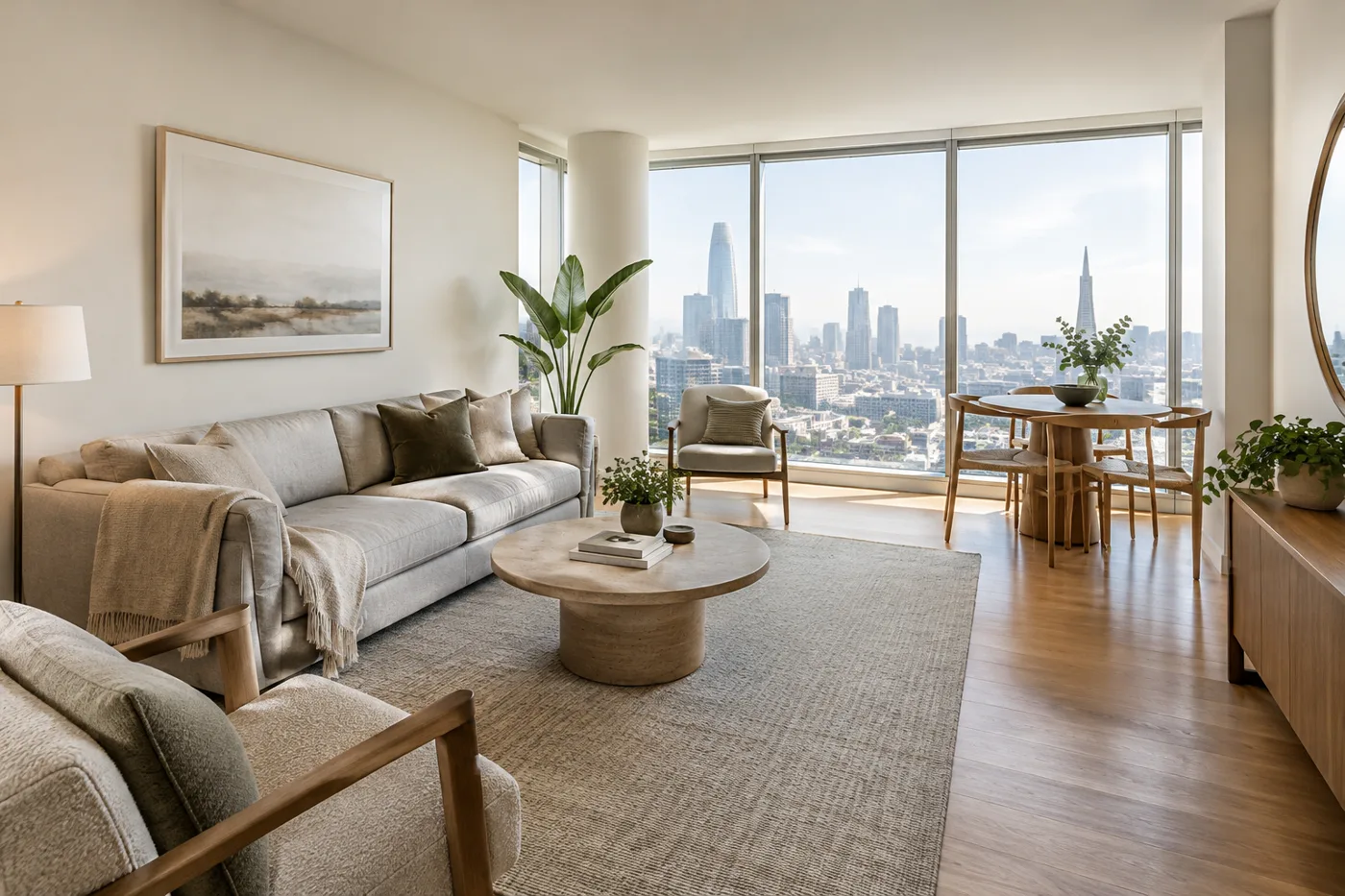
The living room is usually the lead listing photo, so it gets the most attention. Use an apartment-scale sofa, often 72 to 80 inches, instead of a large sectional, and pair it with one or two accent chairs that have exposed legs so light passes under them. A round or oval coffee table softens tight corners and keeps traffic moving. Anchor the seating area with a rug large enough for at least the front legs of each piece to sit on it, which makes the room feel bigger, not smaller.
Hang curtains high and wide, close to the ceiling and past the window frame, to make windows and ceilings look larger. For more on layout and scale, see our guide on how to stage a living room to sell.
Kitchen and Dining Area
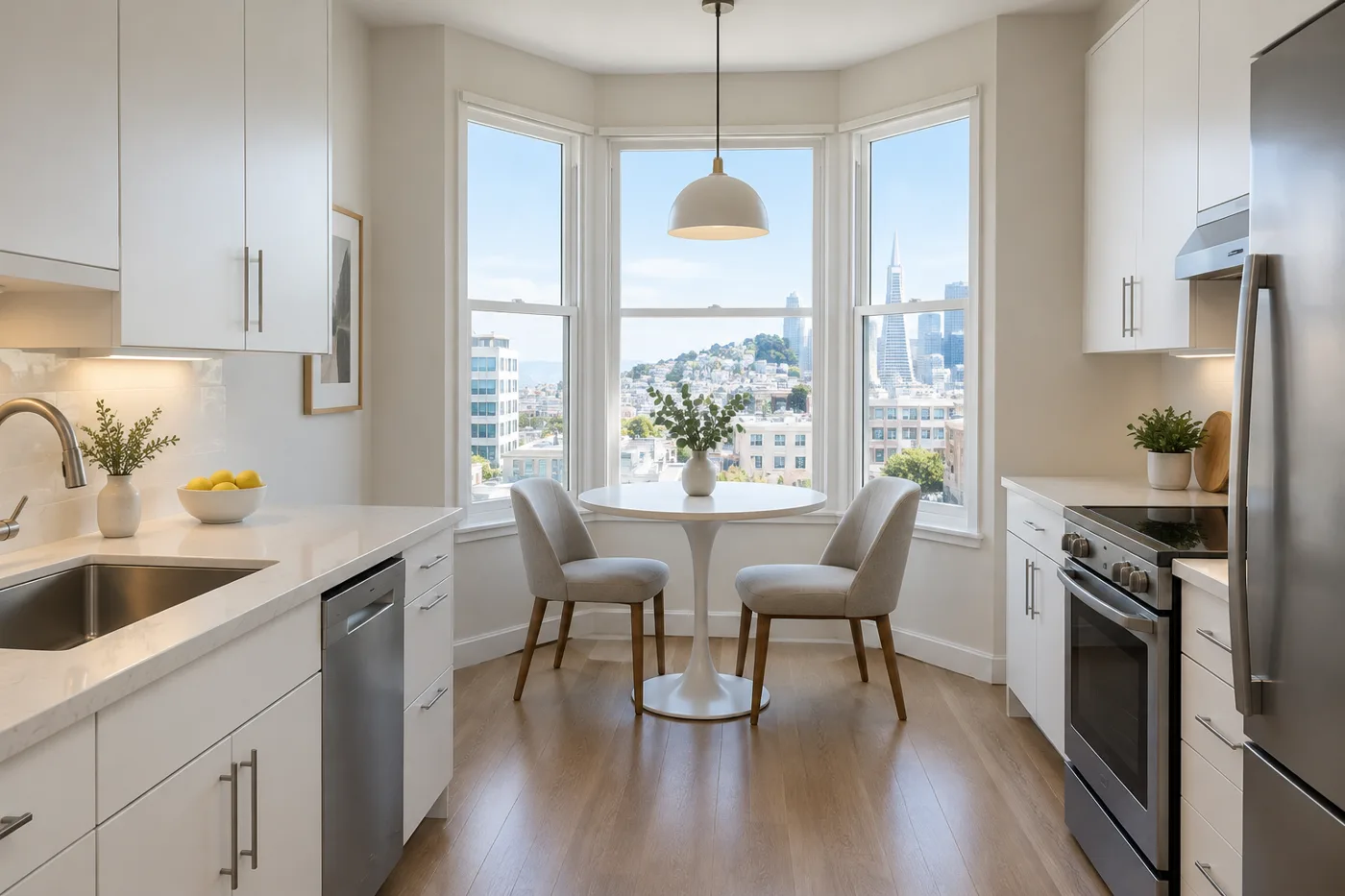
Condo kitchens are often galley or open-plan, so counters should be nearly bare. Store small appliances, leave one or two simple accents like a bowl of fruit or a cutting board, and make sure lighting under and over the cabinets works. If there's no formal dining room, define a dining zone with a round pedestal table and two to four chairs. A round table takes up less visual space and lets people move around it easily. A pendant light overhead helps the zone read clearly in photos.
Bedrooms
Show the largest bed that fits comfortably with walking space on both sides, usually a queen in a primary bedroom. Use slim nightstands or wall-mounted shelves, crisp light bedding, and matching lamps. In a second bedroom or a junior one-bedroom, stage a small desk and chair alongside the bed to show the room can double as an office.
Bathrooms
Clear every counter, add fresh white towels, a plant, and a simple tray with one or two items. Replace a worn shower curtain with a clean white one. In a small bathroom, these few details make the space feel clean and hotel-like in photos.
Balconies and Outdoor Space
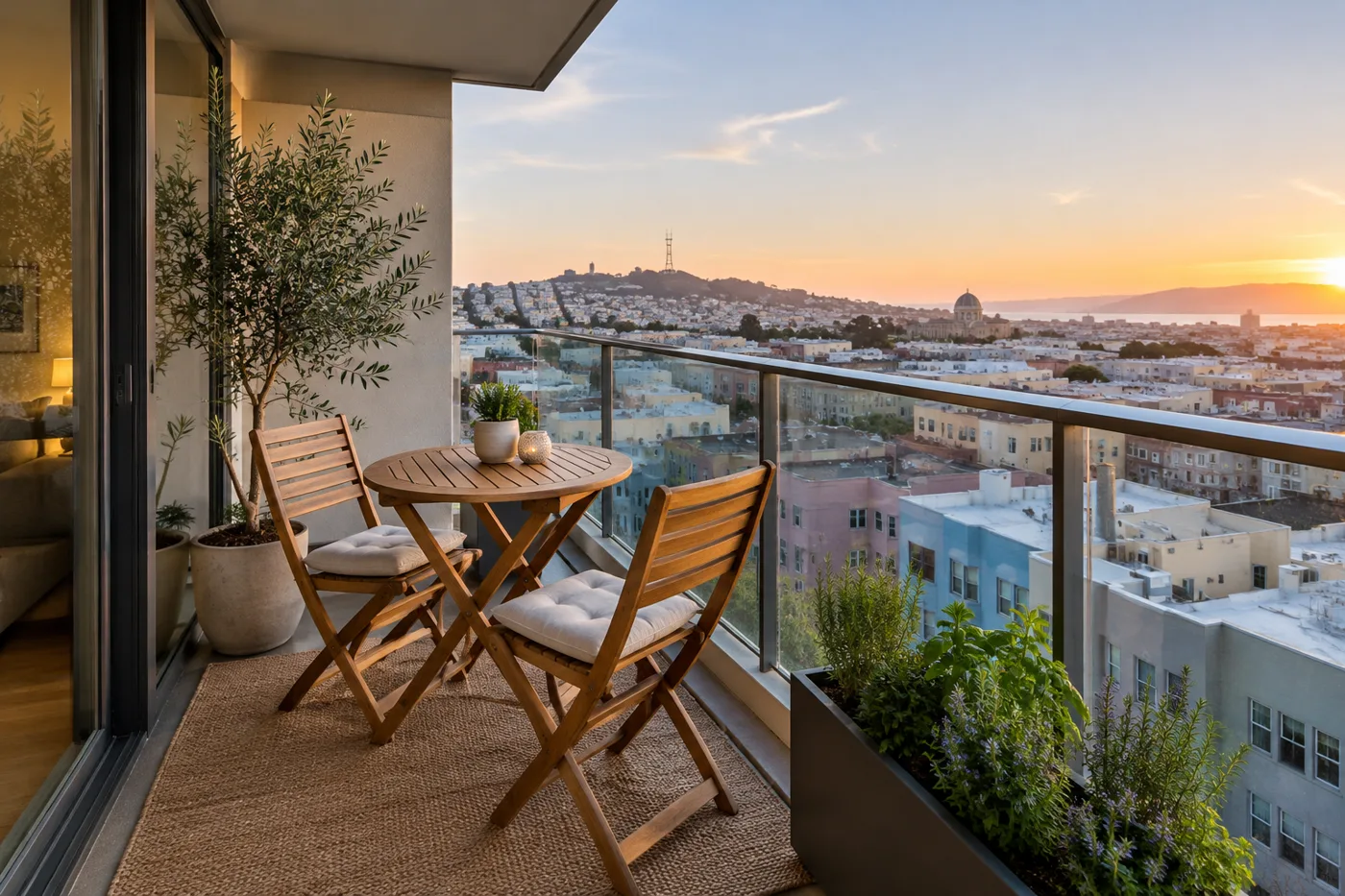
Treat even a narrow balcony as a room. A bistro table with two folding chairs, an outdoor rug, and a potted plant or two show buyers where they'll have coffee. If the building has a shared roof deck or garden, include it in the listing photos so buyers know it's part of the package.

Common Condo Staging Mistakes to Avoid
Small spaces leave little room for error. These are the mistakes that most often make a condo look smaller or harder to live in.
- Oversized furniture: A full-size sectional or king bed may fit, but if it blocks a window or a walkway, it makes the whole room feel cramped.
- Too many small pieces: A room full of small accent tables and decor reads as clutter. Fewer, well-chosen pieces work better.
- Pushing everything against the walls: Floating a sofa slightly off the wall with a rug underneath often makes a room feel more intentional and spacious.
- Dark or heavy window treatments: Blackout drapes and heavy blinds block the light buyers want to see. Use sheers or leave windows open.
- Ignoring the entry: Condo entries are often small, but they set the first impression. Keep shoes and coats out of sight and add a mirror or small console if space allows.
- Leaving rooms without a clear purpose: An empty den or alcove raises questions. Stage it as an office, reading nook, or guest space.
If you're still living in the unit, start by removing about half of what's on display. Our guide on why you should remove personal items when staging explains how to depersonalize without making the home feel empty.
What Condo Staging Costs and How Long It Takes
Condo staging usually costs less than staging a house because there are fewer rooms to furnish. The final price depends on the number of bedrooms, whether the unit is vacant or occupied, and the level of furniture and art the price point calls for. Typical Bay Area ranges:
- Consultation only: $300 to $600 for a walkthrough and a room-by-room plan you carry out yourself.
- Occupied staging: $1,500 to $3,500 to edit and rearrange your furniture and add accent pieces, art, and bedding.
- Vacant larger unit: $4,000 to $9,000 or more for a fully furnished three-bedroom, with smaller units generally costing less.
- Luxury condo or penthouse: $10,000 to $20,000 or more.
- Monthly extension: $500 to $2,000 per month after the initial 30 to 45 day rental period.
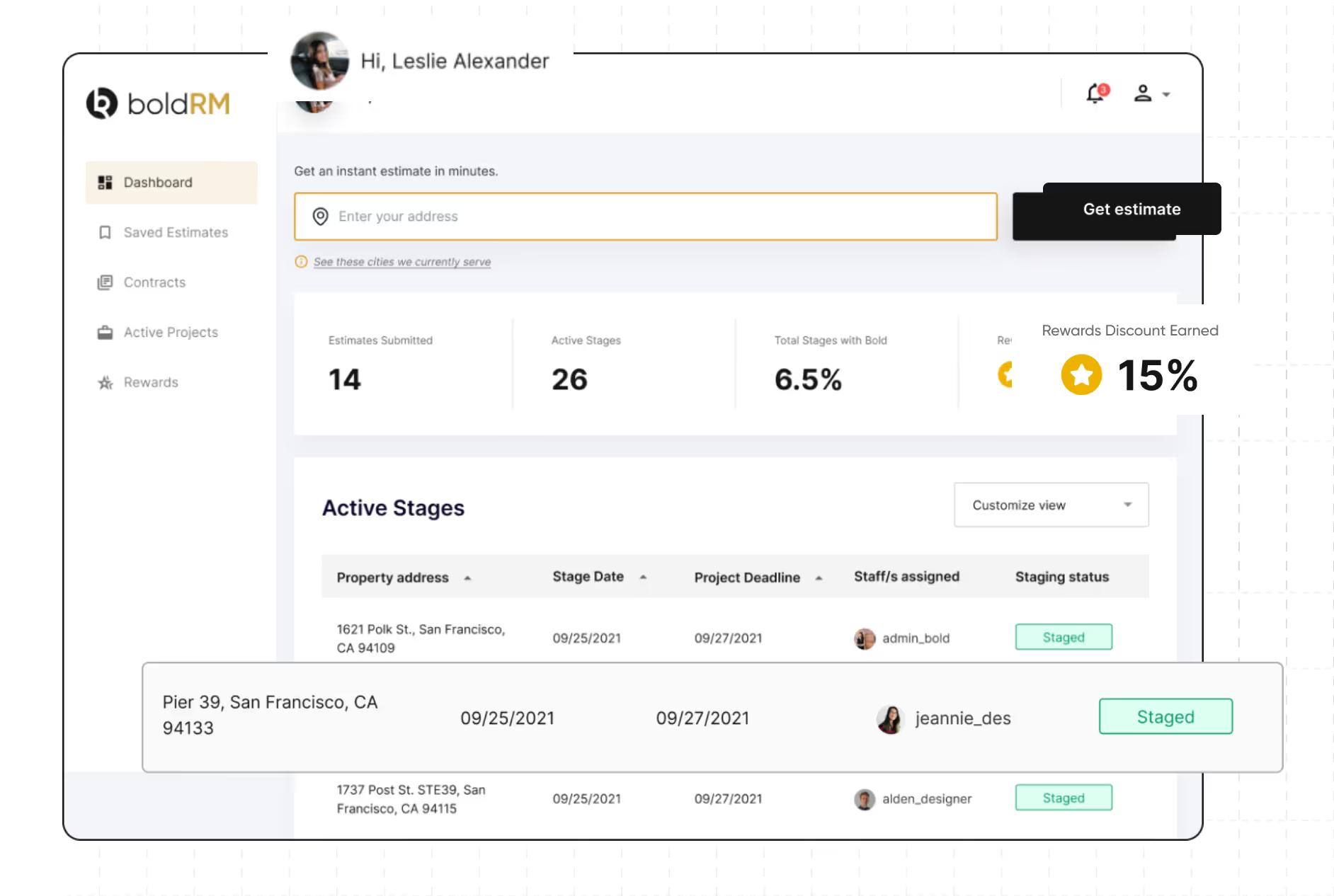
With San Francisco condos spending 14 days on market in October, a well-priced unit will usually sell within the standard rental period. For a full breakdown, read how much home staging costs in the Bay Area, or get a starting number from the BoldRM staging calculator.
Condos also bring a few logistics that houses don't. Many buildings require movers to reserve the freight elevator, carry a certificate of insurance, and work within set move-in hours. Check your HOA rules early and share them with your stager, since they can affect the install date. Once access is set, installing a condo usually takes a day.
BoldRM includes professional-grade photography with every stage, handled in-house, and photos are usually taken the same day as the stage if the light allows. That matters in San Francisco, where afternoon fog can change how a unit looks on camera.
Things to Know
- In October 2026, the median San Francisco condo sold for $1,335,000, according to The Front Steps' November 2026 market update.
- San Francisco condos sold at 111% of their original list price in October 2026, a series high in that report.
- San Francisco condos spent 14 days on market in October 2026, down from 26 days a year earlier.
- San Francisco had 2.2 months of condo supply in October 2026, compared with 1.1 months for single-family homes.
- Occupied staging in the Bay Area usually costs $1,500 to $3,500, and a consultation alone costs $300 to $600.
- Most staging packages include a 30 to 45 day rental period, with monthly extensions of $500 to $2,000.
Choosing a Stager for Your Condo
Look for a stager with experience in compact city units, not just large suburban homes. Review their portfolio and before-and-after photos for condos similar to yours, and ask a few direct questions:
- Inventory scale: Do they have apartment-scale sofas, round dining tables, and slim case goods, or mostly large pieces?
- Building logistics: Will they handle the certificate of insurance, elevator reservation, and HOA move-in rules?
- Photography: Are listing photos included, or do you need a separate photographer?
- Extensions: What does each additional month cost if the unit takes longer to sell?
BoldRM's services cover vacant and occupied staging across the Bay Area, with in-house photography included. For more on comparing local firms, see our guide to home staging companies in San Francisco. When you're ready to plan your stage, contact us.
Frequently Asked Questions
Q: Is it worth it to stage a condo?
Yes, staging is usually worth it for a San Francisco condo because a small price improvement can cover the cost several times over.
At October 2026's median condo price of $1,335,000, a 1% difference in the sale price is about $13,350, while occupied staging typically costs $1,500 to $3,500. Staging also helps a unit stand out among similar listings in the same building or neighborhood.
Q: How much does it cost to stage a condo?
Staging a condo in the Bay Area usually costs $1,500 to $3,500 if it's occupied, while vacant staging of a larger unit runs $4,000 to $9,000 or more.
Smaller vacant units, like studios and one-bedrooms, generally cost less than a three-bedroom, and luxury condos can run $10,000 to $20,000 or more. Most packages include a 30 to 45 day rental period, with monthly extensions of $500 to $2,000.
Q: How do you make a small condo look bigger?
Make a small condo look bigger by using scaled-down furniture, keeping walkways clear, maximizing natural light, and giving every area a clear purpose.
Choose apartment-scale sofas, round tables, and pieces with exposed legs. Hang curtains high and wide, use mirrors to bounce light, and cut decor down to a few larger accents instead of many small ones.
Q: Does staging benefit the buyer or the seller?
Staging mainly benefits the seller by helping the home show better and attract more interest, though it also helps buyers understand how a space can be used.
For buyers, a staged condo answers practical questions about furniture fit and room function. For sellers, that clarity tends to translate into more showings and stronger offers, especially in a competitive market.
Q: Should I stage or upgrade my condo before selling?
For most condos, staging and small fixes like fresh paint and new light fixtures give a better return than major upgrades before listing.
Large renovations take time and rarely pay back in full, while staging works with what you have and can be done in days. If the budget is tight, a consultation or occupied staging is a low-cost start. Our comparison of virtual staging vs. real staging covers another option for photos.
The Bottom Line on Staging a San Francisco Condo
San Francisco condos are selling quickly and above asking, but buyers have more units to compare than they do with houses. Staging helps your condo win that comparison by showing that every square foot works: furniture scaled to fit, clear walkways, bright rooms, and a defined purpose for each space, including the balcony.
BoldRM pairs condo staging with in-house professional photography, so your listing goes live looking its best. Use the BoldRM staging calculator to get an instant estimate, then reach out to plan your stage.